The Site
Where you build a vertical Manhattan. Geology decides; sovereignty closes.
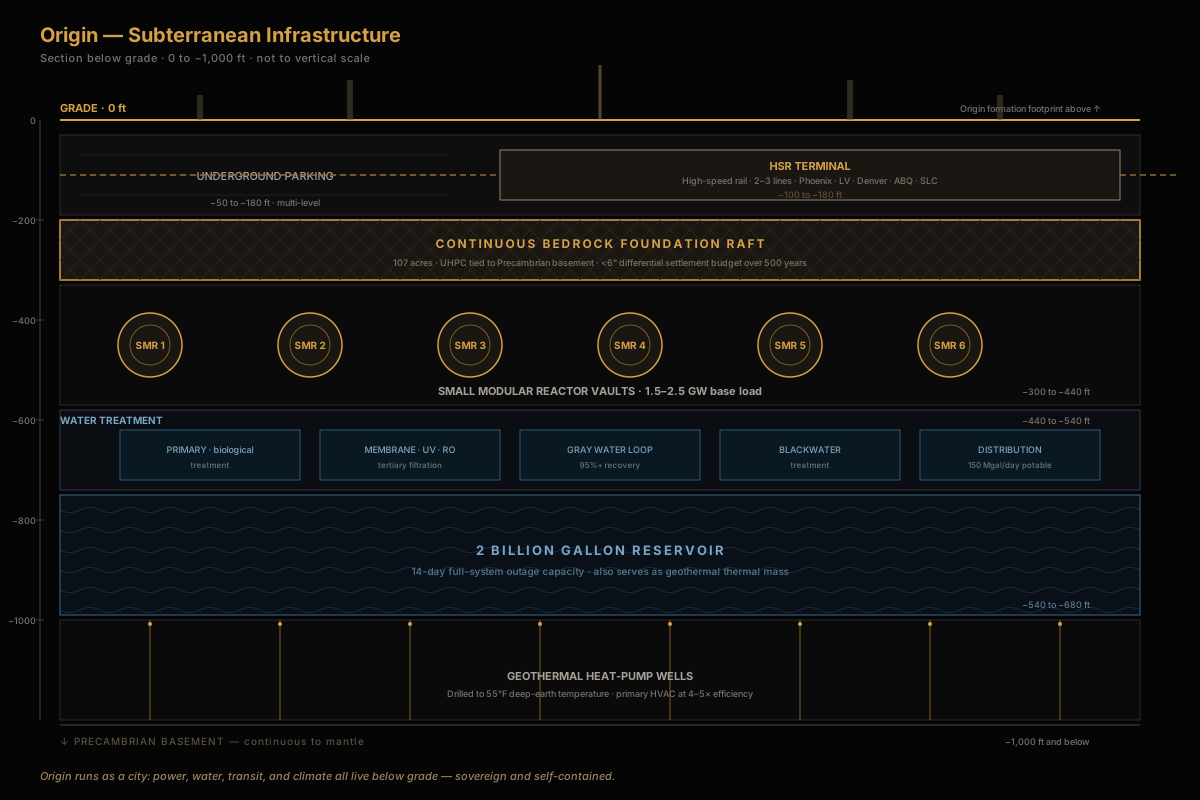
The structural concept demands a 107-acre continuous bedrock raft. Differential settlement of even six inches across the formation tears the skybridge tendons. That single requirement rules out almost every site on Earth.
What the ground has to be
Exposed Precambrian or Archean bedrock at or very near surface. One unbroken mechanical unit across the entire footprint — not pieces of bedrock, not thick soil over rock. Tectonically quiet (no active faults). Low precipitation. Stable temperature range. High elevation helps. Within American sovereign jurisdiction.
What's ruled out
Alluvial soil. Coastal floodplains (Florida is out — Cape Coral cannot host this). Active fault systems (most of California, Pacific Northwest, Alaska, Japan, Mediterranean rim, New Zealand, Chile, Himalayan belt). Hurricane corridors. Tornado alley high-frequency zones. Permafrost. Glacial rebound zones. Anything coastal.
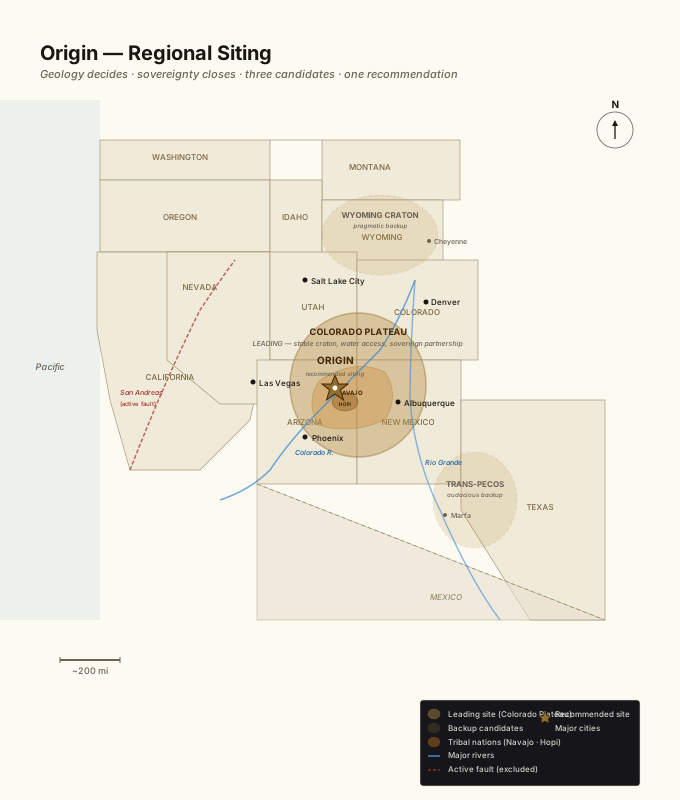
Leading: Four Corners region
Tectonically stable craton. 5,000–7,000 ft elevation. Massive federal and tribal land. Almost no precipitation. Iconic American landscape, visible 150+ miles in clear desert air. Water access via Colorado River. Power via existing grid plus on-site solar. Within reach of Phoenix, Albuquerque, Las Vegas, Denver corridors. Sedimentary cover over Precambrian basement — bedrock depth varies, requires site-specific survey, but exposed basement zones exist.
The recommendation
Colorado Plateau, in the Arizona/Utah quadrant, somewhere in the Navajo or Hopi nation territory, built as a sovereign partnership with the tribal government. Tribal land has unique legal status — the most sovereign-within-sovereign jurisdiction available in North America. Stable bedrock, generational political stability, iconic site, NeuraWeb's anti-extractive philosophy aligned by partnership rather than seizure.
Backup: Wyoming Craton
Among the oldest, most stable continental crust on Earth. Granite at or near surface in many places. Almost empty. Federal land available. Cold winters but not permafrost. Water access tighter. Less iconic, less visible. The pragmatic answer.
Audacious: West Texas Trans-Pecos
Stable platform. Granite and Precambrian exposures. Extremely low population. Texas state-level sovereignty advantages. Hot but stable climate. Visibility and isolation extraordinary.
The deal-breaker
Water. Origin needs 150M gallons/day. Pecos basin in genuine collapse. No ocean access for desalination. To put Origin in Trans-Pecos requires either massive desalination or a 500-mile pipeline — both possible, neither cheap. Texas is the audacious answer, deferred unless Colorado River allocation proves unobtainable.
Generational property rights
NeuraWeb's permanence thesis requires sovereignty arrangements that survive 500 years. Federal lease (Wyoming, Colorado public land), tribal partnership (Colorado Plateau), or state-level (Texas) all viable. Tribal partnership is the most durable for cultural reasons — tribal nations have held their relationship to land for thousands of years and have legal status no other entity has.
Heat, cold, weather, wind
Colorado Plateau: cold winters, dry, monsoon season — manageable. Wyoming: harsher cold, manageable. Texas: extreme heat, severe drought — punishing. All three viable on bedrock; climate is a cost factor, not a deal-breaker.