Altitude & Oxygen
Site at 1.5 mi. Apex at 3 mi. The upper third of Origin is permanent residence at altitudes humans don't normally live.
Origin's base sits 7,920 ft above sea level. Its summit reaches 15,840 ft — almost three miles up. The Crown and Apex tiers are permanent habitation at altitudes that, on Earth, are limited to indigenous high-altitude populations or transient mountaineers.
Solving for human physiology at this elevation is not optional. It defines the building envelope, the medical infrastructure, the residency policy, and the achievable interior aesthetic.
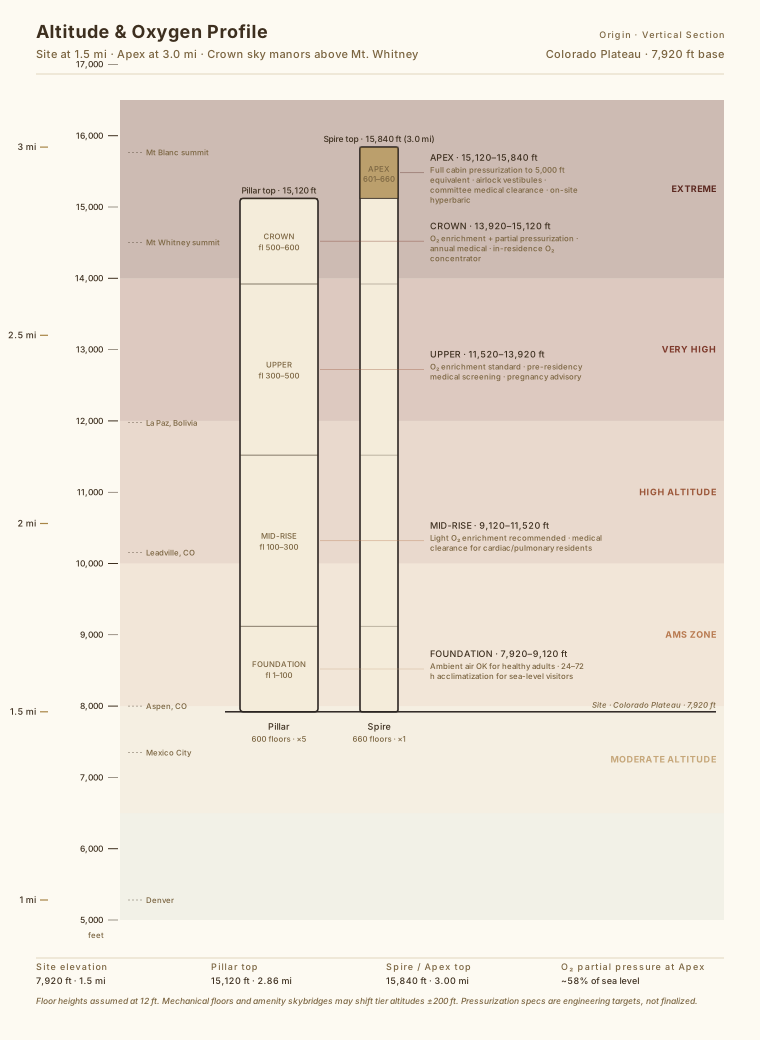
Tier altitudes and atmospheric pressure
Floor 1 sits at site grade. Assuming nominal 12 ft floor-to-floor, the tier altitudes work out as follows. Mechanical floors and skybridge amenity floors will shift residential altitudes by ±200 ft.
| Tier | Floors | Altitude (ft) | Altitude (mi) | Real-world reference |
|---|---|---|---|---|
| Foundation | 1–100 | 7,920–9,120 | 1.50–1.73 | Aspen, CO at the lower end |
| Mid-rise | 100–300 | 9,120–11,520 | 1.73–2.18 | Leadville, CO at the upper end |
| Upper | 300–500 | 11,520–13,920 | 2.18–2.64 | La Paz, Bolivia mid-tier |
| Crown | 500–600 | 13,920–15,120 | 2.64–2.86 | Above Mt. Whitney summit |
| Apex | 601–660 | 15,120–15,840 | 2.86–3.00 | Approaching Mt. Blanc summit |
Atmospheric pressure at the Apex is roughly 58% of sea level. Inhaled oxygen partial pressure drops from ~160 mmHg at sea level to ~90 mmHg at Apex — a 44% reduction. Effective inhaled O₂ at Apex feels closer to 12% than 21%.
Health considerations
Permanent residence is well-documented up to ~12,000 ft. Above that, residence has historically been limited to acclimatized indigenous populations or short-term scientific stations. Origin's buyer pool transits primarily from sea level, so the medically relevant zones are:
Foundation · 7,920–9,120 ft
Comparable to Mexico City or Aspen. ~10–25% of unacclimatized adults experience mild Acute Mountain Sickness (headache, fatigue, sleep disturbance) in the first 24–72 hours. Cardiac and pulmonary patients should clear with their physicians before residency. Pregnancy considered low-risk.
Mid-rise · 9,120–11,520 ft
AMS becomes common on first arrival. Sleep disturbance with periodic breathing routine for 1–2 weeks. Pregnancy advisory begins. COPD, severe asthma, sickle-cell disease, and decompensated heart failure are contraindications without medical management.
Upper · 11,520–13,920 ft
Pre-residency medical screening becomes mandatory. Pregnancy strongly advised against extended residence. Permanent residence requires demonstrated acclimatization. Sleep oxygen monitoring routine.
Crown · 13,920–15,120 ft
Above Mt. Whitney. Permanent residence at this altitude is medically unprecedented at scale. Annual cardiopulmonary review for residents. In-residence oxygen concentrators standard. Visitors limited to acclimatized parties unless using supplemental O₂.
Apex · 15,120–15,840 ft
Sustained habitation at this altitude has historically required either continuous supplemental oxygen or full cabin pressurization. Residents must hold committee medical clearance and maintain it annually. Children under 12 not permitted in permanent residence. Pregnancy not permitted.
Engineering response
The architecture spec assumes an integrated multi-layered approach scaled to altitude.
| Tier | Pressurization | O₂ enrichment | Resident equipment |
|---|---|---|---|
| Foundation | Ambient | None | None required |
| Mid-rise | Ambient | Optional (22% O₂) | None required |
| Upper | Ambient | Standard (24% O₂) | Bedroom O₂ outlet |
| Crown | Partial (−2,000 ft equivalent) | Standard (24% O₂) | In-residence O₂ concentrator |
| Apex | Full (5,000 ft cabin equivalent) | Standard (24% O₂) | Concentrator + emergency O₂ |
Pressurized bands at Crown and Apex
Sealed building envelopes, airlock vestibules between elevators and units, pressure-rated facade glazing, and mechanical systems sized for sustained pressure differentials (~3 psi at Apex). Aviation-cabin technologies adapted to architecture; the cost premium is substantial but bounded.
Oxygen enrichment limits
Above 24% materially increases material flammability and fire propagation rates. Crown and Apex interior specs accordingly mandate non-combustible finishes, hardened fire suppression, and fire-rated furniture upholstery. This shapes the achievable interior aesthetic — nothing flammable in the show kitchen, no upholstered millwork.
Vertical transit between bands
Express elevators serving the Apex pass through up to 5 pressure zones; cabin pressure adjusts dynamically during transit. Resident time spent in transit is a meaningful exposure to pressure cycling and is medically tracked.
Operational policy
- All residency applications include a cardiopulmonary screening from floor 300 up.
- Apex residency requires committee medical clearance, repeated annually.
- Origin Hospital operates a hyperbaric chamber and altitude-medicine specialty service 24/7.
- A staged-ascent vestibule on floor 100 lets new arrivals from sea level acclimatize before continuing higher.
- Every Apex unit ships with a medical-grade O₂ concentrator plus 8-hour emergency cylinder; both are utility infrastructure, not consumer equipment.
- Pregnant residents above floor 300 are offered temporary relocation to Foundation-tier units at Origin's expense for the duration of the pregnancy.
- Pediatric care below age 12 is restricted to Mid-rise and below; Crown/Apex residents with children of that age maintain a paired Mid-rise unit.
Floor-height assumption (12 ft) and pressurization targets are engineering directions, not finalized specs. Mechanical floors and skybridge tier-amenity floors will shift residential floor altitudes by ±200 ft. Final pressurization equivalents to be set by structural and HVAC design partners.