 · Israel

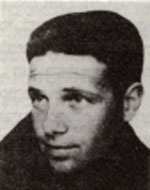
Rav Seren Uri-Israel Frand served in the Israel Defense Forces. Uri-Israel served with the Medical Corps. Uri-Israel served in the Yom Kippur War. Uri-Israel was 36 years old.
Uri-Israel, the only son of Hava and Yaakov, was born on 5 Kislev 5697 (19.11.1936) in Israel. His father, Dr. Yaakov Frand, of blessed memory, was a physician and well-known public figure. He was one of the founders of the Bnei Akiva youth movement in Poland, a member of Zionist congresses in Israel and abroad, and one of the leaders of the B'nai B'rith movement.
Uri grew up in a home steeped in faith and in Zionist and national values. He studied at the Ahad Ha'am elementary school in Tel Aviv, continued his studies at Tichon Ironi Aleph high school and completed them in the biology-sciences track. He was a diligent pupil, excelled in his studies, and loved to learn and acquire knowledge. During his elementary school years he was a member of a sports movement and of the Scouts movement, and in time became a counselor in the movement.
Uri, who was raised on love of the land and love of mankind, was free of selfish considerations, and from his early youth to his last days he devoted most of his time to public and social activity. He was a sociable boy who knew how to understand the soul of others. In his great sensitivity he could not come to terms with the suffering of people, and all his life he sought to help them, to ease their suffering and to improve their living conditions. He combined excellent qualities that he inherited from his parents, whom he admired, respected and loved. He was a loyal and devoted son, helped his mother as much as he could, and aspired to continue his father's path.
While still a pupil in the sixth grade of high school he joined the B'nai B'rith order as a trainee, and when he was in the seventh grade he was sent on a tour of Europe on behalf of the order. In that year his father died, and a short time afterwards Uri was accepted as a brother in the order that his father, of blessed memory, had founded. This was a considerable achievement, since it is very hard to be accepted into this order, whose purpose is to extend help in secret to anyone in need.
Uri was drafted into the IDF at the beginning of September 1954 under the academic reserve program, but during basic training he was discharged from regular service for medical reasons. He began to study at the medical school attached to the Hebrew University of Jerusalem in 1954 and completed his studies in 1960. He was a good student, and devoted his free time to activity in the student institutions and to political activity, even though he was obliged to work for his living. He worked at various jobs connected with helping others, such as youth guidance and teaching the Hebrew language. He also taught hygiene at a seminar of Ihud HaKvutzot.
In 1960 he married Mira, his fellow student. In 1961 he began his internship at Tel HaShomer hospital, and in 1962 he was awarded the degree of "Doctor of Medicine".
During the Sinai War he volunteered to serve in the army, although he was exempt, and served in the Medical Corps in Gaza. Throughout all those years he waged a private war to raise his medical profile so that he could be drafted into the IDF again. In 1962 his struggle was crowned with success, and he was drafted and served as a medical officer in a combat engineering unit. During his service he volunteered for every military operation and was well integrated into the life of the unit. As an officer he was responsible and had leadership ability, and was liked by all his comrades in the unit. His discharge certificate stated: "An exemplary military physician, who performed his duty with great devotion and efficiency". In 1964 he was discharged from the IDF and was posted to reserve service as the physician of a paratroopers unit.
Uri and his wife, who was a senior physician in a children's ward, established a warm home for their two children and raised them on the values that had served as the foundation of Uri's own upbringing. Their home was always full of joy and open to all, and served as a pleasant meeting place for their many friends.
During the period of alert before the Six-Day War, Uri was called up for reserve service. He used the waiting period to brief his soldiers, in order to impart to them some of what he had learned in the medical officers' courses. And indeed it later became clear how important this action was, as it helped save the lives of many people.
In the war his unit was sent to take part in the conquest of the Old City and took part in the bitter battles on "Ammunition Hill". In that terrible battle Uri acted to save lives with courage and at the risk of his own life, which earned him the nicknames "the Paratroopers' Doctor" and "the Doctor from Ammunition Hill". The first words the paratroopers said at the Western Wall were: "The doctor from Ammunition Hill was wonderful". Uri believed that he had done no more than what was required of him, while the soldiers told that he worked until his strength gave out as he treated the many wounded under heavy fire. They said that when the medical equipment ran out, he tore the shirts off the wounded in order to bandage them, and ran under a hail of bullets to evacuate them. He also treated Jordanian soldiers, and immediately after the capture of the Western Wall, with bullets still whistling, he hurried to deliver the baby of a Jordanian woman who was having difficulty giving birth, and some time later it turned out that she was a Jewish woman who had been abducted before 1948.
For his part in this battle he was awarded a commendation and the Medal of Distinction, whose citation states: "On the 6th of June 1967, in Jerusalem, Lieutenant Dr. Uri Frand treated the casualties of the battalion under enemy shelling in the area of the battalion collection station. He skipped over the battalion collection station during the shelling, and continued treating the wounded and organizing their evacuation".
After the war he returned to his work at Tel HaShomer hospital, but he was no longer the same man, since the horrors of the war were deeply engraved in his soul. He struggled between his work as a physician and the duty to serve the state, and as a result he came to El-Arish. At Tel HaShomer hospital he decided to adopt the hospital in El-Arish after the Egyptian medical staff had abandoned it. On the initiative of Dr. Shani and of Uri the hospital was rehabilitated, and they also trained male and female nurses from among the local residents. The team headed by Uri also extended medical help to the Bedouin residents of the area.
In 1969 he went with his family for advanced training in the United States under Dr. Henry Williams. In a letter of recommendation from Dr. Haim Sheba, of blessed memory, it was stated that Dr. Uri Frand stood out not only in his medical skills but also in his personal qualities.
Uri devoted half of his time to treating Arab patients in Shechem, in Jenin and in El-Arish, both for humanitarian reasons and as a step toward peace. In Dr. Sheba's opinion, Dr. Frand was without doubt the "man of the year" in the field of mutual aid for the benefit of humanity.
Uri returned to Israel in 1971 and was appointed Deputy Director General of the Ministry of Health in Jerusalem. Since he was called to this post personally, he did not refuse. He always went where he was most needed, even when this came at the expense of his comfort and well-being.
In the Yom Kippur War Uri served with his unit in the Suez Canal area. He set up the hospital at Fayid and once again fought to save the lives of the wounded, in the most difficult conditions. On 28 Tishrei 5734 (24.10.1973), the day of the cease-fire, his paratroopers unit was trapped in the city of Suez and had many casualties. Uri treated them all with devotion, and when it became necessary to evacuate them by helicopter and no accompanying physician was found, he climbed into the helicopter without saying a word. Shortly after it took off the helicopter was shot down and all its passengers were killed.
Uri was laid to eternal rest in the military section of the cemetery at Nahalat Yitzhak. He left a wife, two children and a mother. After his death he was promoted to the rank of Major.
In a letter of condolence to the bereaved family his commander wrote: "In his company and in all the units of the battalion he was known as an excellent and devoted commander, beloved by his subordinates and by his commanders;" Dr. Williams, under whom Uri had trained, wrote to the bereaved family: "Uri was one of the outstanding physicians with whom I have had the privilege to work. The high standards he set for himself and for others were a source of inspiration to all who came in contact with him, and his leadership ability left an indelible impression on us. His devotion, his curiosity and his brilliant mind were a constant challenge to all of us and a source of joy to us. He was destined to make a significant contribution to science".
At the Sheba hospital an intensive care unit for lung diseases and pulmonary clinics were dedicated in the name of Dr. Uri Frand, who was among their initiators and founders. In an inquiry conducted in 2017 it was emphasized that Major Uri-Israel Frand, of blessed memory, had been awarded the Medal of Distinction.
-
Rav SerenRank as published: רב סרן | Hebrew date: 28th of Tishrei 5734 | Resting place: Cemetery Nahalat Yitzhak (Military)
Branch
Highest rank
War
Honors · 2 decorations
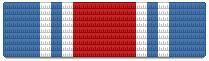
 Awards & Decorations
2
For valor
Medal of Distinguished Service
For service and achievement
Yom Kippur War Campaign Ribbon posthumous
 Burial Information
- The cemetery · the exact grave is not yet placed
- 8 monuments carrying the name
Laid nearby · Section 66
346 others are held in this section; the nearest 12 by row and grave.
 Doron AtzilRow 13 · Grave 13
 Yair PumasRow 13 · Grave 15
 Itzhak TubolskiRow 13 · Grave 16
 Tamir YaariRow 13 · Grave 12
 Benyamin Har-ZahavRow 13 · Grave 11
 Itzhak Shani SamokRow 13 · Grave 17
 Shlomo-Michael GvirtzRow 13 · Grave 10Uzi-Ezra AngelRow 13 · Grave 18
 Ben-Zion YehudaRow 13 · Grave 9
 Nisim Zamir ZonanaRow 13 · Grave 20
 Reuven PinhasRow 13 · Grave 8Naftali Shlomovitch TavoriRow 13 · Grave 7
This page is permanent and free. No fee to view it, no advertising, no tracking, and no account required. It will not be taken down.
Are you family? This record can be claimed and maintained by those who knew Uri-Israel. Claim this record.

Be the first to honor Uri-Israel.
Leave a Tribute