Add The New York Post on Google The next addition to your skincare routine might already be in your fridge.
A small new study suggests that a sweet, healthy snack with just 62 calories per serving could offer powerful protection against sun damage, helping strengthen the skin’s natural defenses at the genetic level.
The perks — which appeared in just two weeks — may not stop there. Researchers say it’s “nearly certain” that its effects could extend to other organs throughout the body.
For the study, scientists at Western New England University (WNEU) recruited 29 volunteers and put them on a strict two-week diet designed to eliminate foods that might interfere with the results.
The participants were then instructed to drink a mixture of standardized freeze-dried grape powder — intended to preserve the fruit’s naturally occurring bioactive compounds — and water twice a day for another two weeks.
That worked out to be about three servings of fresh grapes per day.
Before and after participants drank the grape mixture, the researchers collected small skin tissue samples from two areas on their bodies.
One sample came from skin exposed to low doses of ultraviolet (UV) light, a form of invisible, high-energy radiation from the sun.
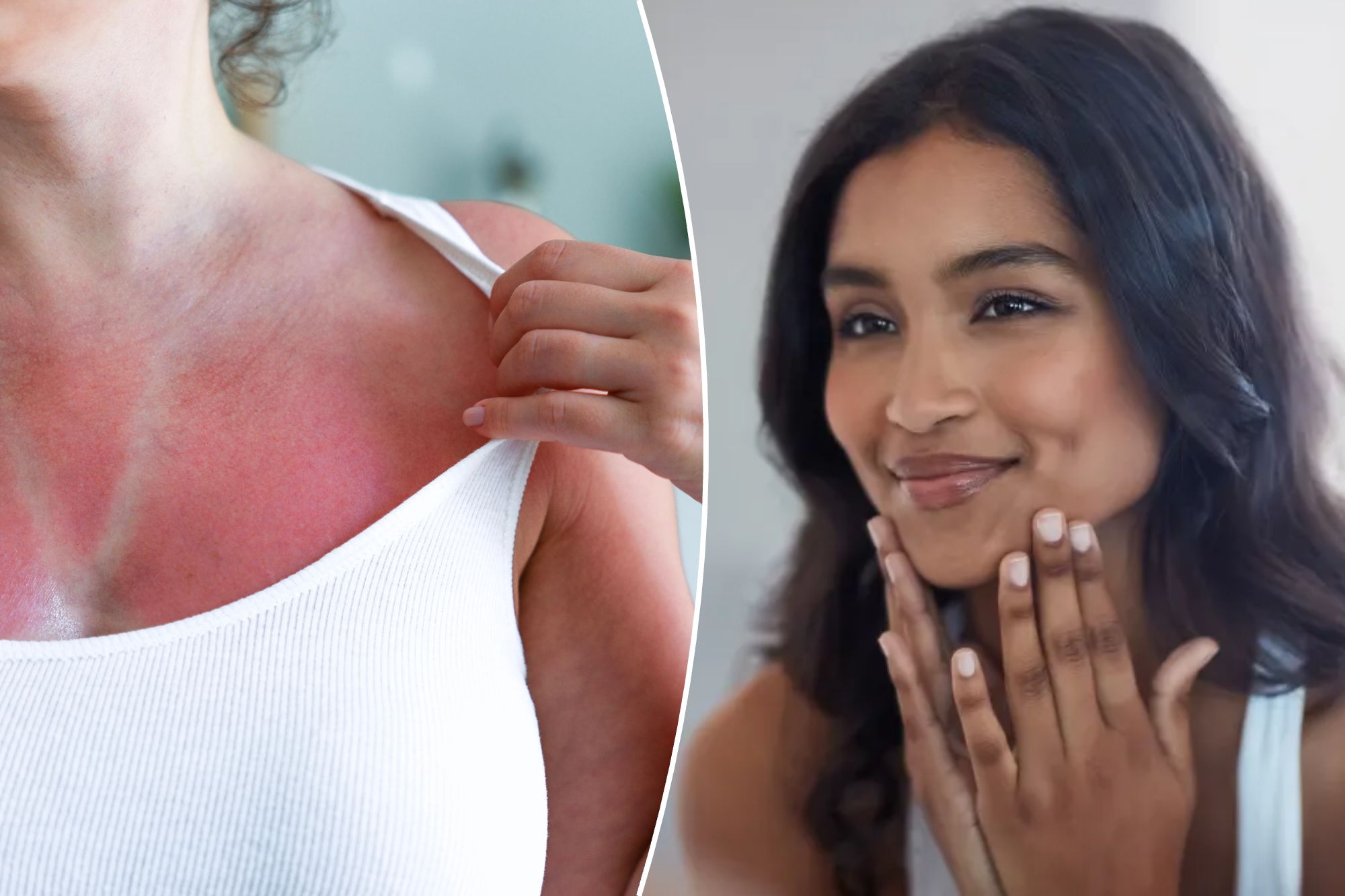
UV radiation penetrates the skin and can damage cellular DNA, leading to short-term effects like sunburn and long-term effects such as premature aging and an increased risk of skin cancer.
The second sample came from an area on the hips that had been shielded from UV exposure.
Of the 29 participants, only four ultimately produced complete, high-quality tissue sets suitable for analysis, yielding 16 usable skin samples.
All four were women with skin types that tend to burn moderately and tan gradually.
When the researchers analyzed the samples, they found that grape consumption was linked to lower levels of malondialdehyde in UV-exposed skin — a chemical marker that appears when UV light triggers damage in cell membranes.
Malondialdehyde is a sign of oxidative stress, a process that accelerates aging by breaking down collagen, damaging DNA and weakening the skin’s protective barrier.
On a genetic level, researchers also observed changes in activity tied to skin-barrier function. That includes increases in keratinization and cornification, two processes that help form the skin’s outer protective layer against environmental damage, injury and dehydration.
Taken together, the findings suggest grapes may help the skin respond to UV exposure by activating genes associated with stronger, more resilient skin.
“We are now certain that grapes act as a superfood and mediate a nutrigenomic response in humans,” Dr. John Pezzuto, one of the study’s authors and professor and dean of the College of Pharmacy and Health Sciences at WNEU, said in a news release.
“The changes in gene expression indicated improvements in skin health,” he explained. “But beyond skin, it is nearly certain that grape consumption affects gene expression in other somatic tissues of the body, such as liver, muscle, kidney and even brain.”
The findings build on earlier research suggesting grapes may improve the skin’s resistance to UV radiation in up to 50% of people.
But that doesn’t mean sunscreen can be replaced by anything in the produce aisle just yet.
The study focused on genetic and cellular changes, not real-world protection against sunburn, and results varied widely between participants — meaning more research is needed to better understand the effects.
For that reason, experts stress that standard sun protection still matters.
The FDA recommends applying a broad-spectrum sunscreen with an SPF of 15 or higher daily and reapplying at least every two hours, or more often if swimming or sweating.
For full coverage, most adults need about an ounce of sunscreen, roughly the amount that fills a shot glass.
Other ways to protect against UV rays include wearing clothing that covers exposed skin, using UV-blocking umbrellas and avoiding direct sun during peak hours, which are typically 10 a.m. to 2 p.m.
After all, sunburns carry consequences beyond a few painful days. Research shows that having five or more can double the risk of developing melanoma, the most serious form of skin cancer.
The findings come as skin cancer rates are on the rise in the US, with 1 in 5 Americans expected to be affected by age 70.
In 2026 alone, an estimated 234,680 new melanoma cases are projected to be diagnosed nationwide, marking a 10.6% increase from last year, according to the Skin Cancer Foundation.