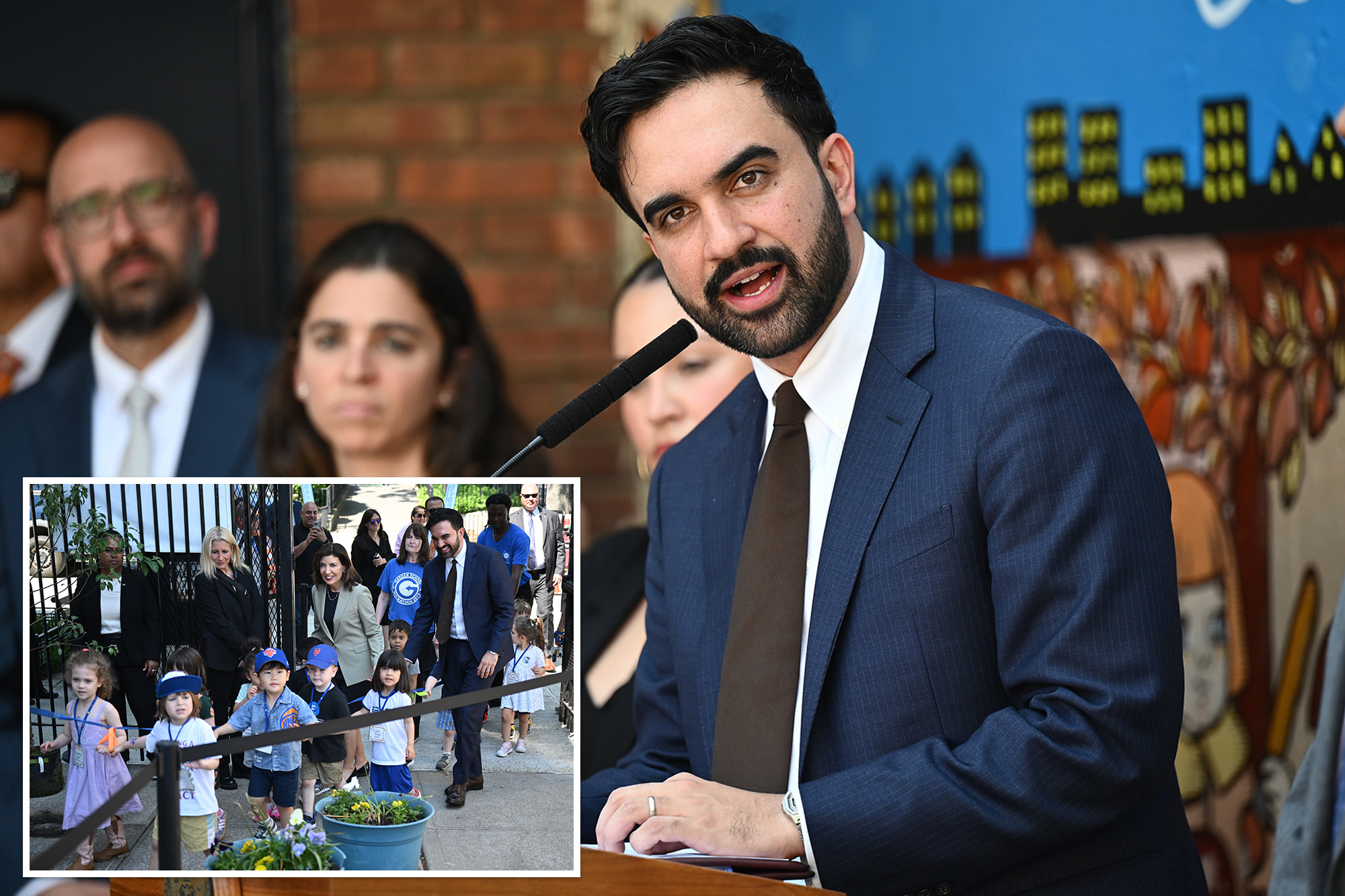
Mayor Zohran Mamdani makes a child care announcement at Garden School on May 19, 2026 in New York City. Erik Pendzich/Shutterstock See more of our coverage in your search results.
Add The New York Post on Google When New York City Mayor Zohran Mamdani donned a race bib last week and hit a high-school track in The Bronx, it wasn’t to compete in a sprint, but to profess concern about the problem of vacant housing.
He proudly announced a set of reforms for the city’s affordable-housing lottery, aimed at taming the bureaucratic morass that keeps apartments built with city financial support empty and unoccupied for months at a time.
The new Streamlining Procedures to Expedite Equitable Development plan — SPEED, hence the track-and-field theme — is meant to make it quicker for lucky low-income housing-lottery winners to move into some 10,000 subsidized units, thus easing the city’s severe housing crisis.
But that’s a drop in the bucket compared to the scope of the housing problem.
If Mamdani is truly concerned about filling empty affordable apartments, he should support the ongoing lawsuit brought by small rental-property owners that could get up to 50,000 “zombie” rent-stabilized units back on the market.
The suit, brought by the Institute for Justice on behalf of the Small Property Owners Association, aims to undo the 2019 state law that’s caused those vacancies.
Under Albany’s draconian Housing Stability and Tenant Protection Act, rent-stabilized landlords must essentially eat the cost of repairs, even as the city’s Rent Guidelines Board keeps rents for stabilized units artificially low.
But renting a unit requires landlords to make improvements mandated by the city’s housing code — improvements that cost more than restricted rents can cover.
The lawsuit, which was joined this month by the US Chamber of Commerce, is currently before Second Circuit federal Judge John Cronan.
The defendants, the state and city of New York, are set to make their arguments June 5.
If Mamdani really wants to ease the housing crunch, he could simply switch sides in the lawsuit — and lobby Albany to lift this shortsighted law.
Far from sympathizing with small landlords staggering under increasing costs, Mamdani has staged “rental ripoff” show trials instead.
As property owner Douglas Eisenberg recently told The New York Times, a $40,000 apartment upgrade would mean a rent increase of just $222 a month — if he’s lucky.
All while his rent-stabilized units are getting squeezed by higher property taxes, rising water and sewer costs and heftier insurance premiums.
These are the very buildings whose rent Mamdani proposes to freeze — and whose Rent Guidelines Board has signaled will receive limited rent increases of between zero and 2% this year.
He must surely know that continued cost pressure on the owners of rent-stabilized housing — especially the expensive-to-upgrade pre-war apartments that predominate in The Bronx — will only force them to leave more units vacant.
Perhaps that’s actually his goal: pushing distressed owners into defaulting on their property taxes, leaving the city to take ownership.
After all, his official “tenant advocate” Cia Weaver is on record, prior to joining City Hall, making calls to treat private housing as a “collective good” and advocating the seizure of private property.
And a massive increase in city ownership of what’s now private housing isn’t far-fetched: We’ve seen this movie before.
In the 1980s, under Mayor Ed Koch, some 100,000 apartments were classed as “in rem” housing — buildings whose owners had failed to pay their property taxes and had, as a result, become city property.
City Hall became those tenants’ de facto landlord, collecting rent on their dilapidated units.
About one in 25 “legacy” older buildings in the city face looming city liens because of “significant arrears on property taxes or related charges such as water and sewer fees,” the Furman Center reported in February.
That means the city could, once again, take ownership of thousands of largely rent-stabilized apartment buildings.
Koch chose to renovate those in rem buildings, spending $5 billion ($14 billion today) in city funds to do so — and then to slowly sell them to private and non-profit developers.
But a socialist Mayor Mamdani could seize the opportunity to retain public ownership.
He foreshadowed just that possibility in his campaign’s housing platform: “We can’t afford to wait for the private sector to solve this crisis,” Zohran for NYC proclaimed.
As with his city-owned supermarkets plan, Mamdani is likely under the illusion that government can do a better job managing housing.
He should take a closer look at the failures of the New York City Housing Authority, whose tenants were among those who demanded a chance to speak at those rental ripoff hearings.
Far better for the city to advocate for changes in the 2019 state housing law to help get vacant apartments back onto the market.
A law passed in the name of tenant protection can’t be said to be working when there are no tenants to protect.
Howard Husock is a fellow at the American Enterprise Institute and author of “The Projects: A New History of Public Housing.”