Add The New York Post on Google Two major online safety groups are urging the Federal Trade Commission to investigate Roblox – claiming that the wildly popular video game platform is allowing sex predators to “groom” kids, among other harmful alleged activities.
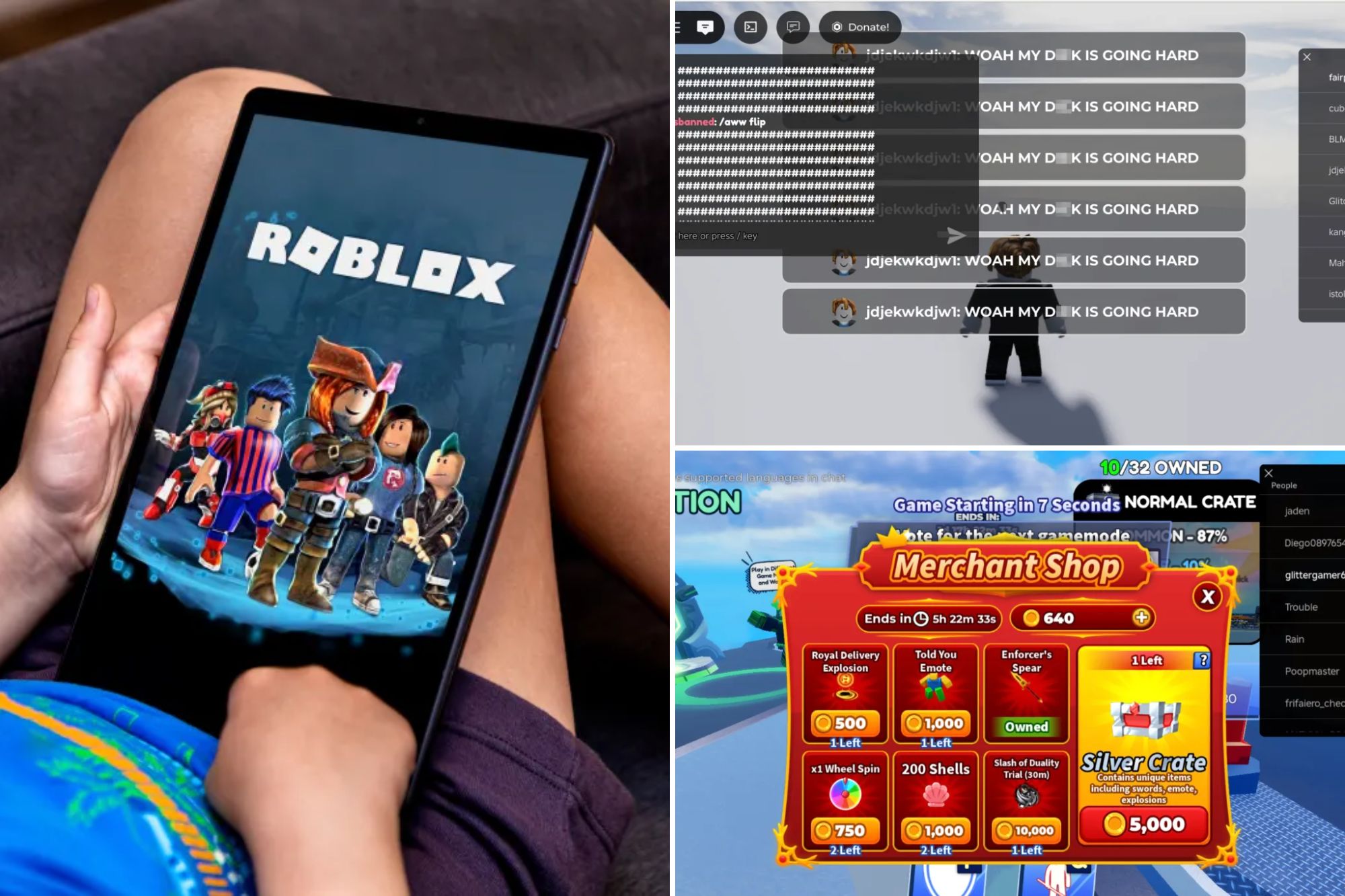
Fairplay and the National Center for Online Sexual Exploitation (NCOSE) said Wednesday that Roblox’s voice and text chat features “are a source of substantial harm to children, facilitating predation and abuse by enabling adult contact with minors.”
In one shocking incident, a test account created by NCOSE researchers in October and registered to a 5-year-old was “immediately” granted access to “dating, romance and … voice chat experiences where the user could be connected to strangers online.”
“Roblox’s design and business model put the company’s interests directly at odds with children’s developmental needs, causing them real-world harm,“ the groups wrote in an 87-page submission to the FTC, a copy of which was obtained by The Post.
As recently as February, Fairplay researchers testing under-13 accounts “witnessed the use of sexual references and racial slurs within minutes of entering an experience called ‘ChatSim,” which explicitly advertises in its thumbnail that players can ‘chat without restrictions,’” the report said.
According to the report, test accounts encountered users who made references to male genitalia and masturbation. The test accounts were also able to chat with strangers after receiving “connection requests,” though Fairplay said follow-up testing showed that “loophole may now be closed.”
The creepy encounters are just one area of concern. The groups also allege that Roblox uses a “complex virtual currency system” called Robux that manipulates kids into spending huge sums of their parents’ money without their knowledge. Roblox is also called out for allegedly using addictive and gambling-like design features like loot boxes and wheel-spins to get kids hooked.
In their “request for investigation,” or RFI filing, the safety advocates suggest Roblox could be violating Section 5 of the FTC Act by unfairly marketing digital currencies to kids, unfairly using addictive design features and making deceptive claims about the safety and appropriateness of its platform for minors.
The Post has reached out for comment to the FTC, whose chairman is Andrew Ferguson.
A Roblox spokesperson said the company “strongly disputes these claims.”
“Our platform is designed to provide a positive, healthy and enjoyable experience — we build for fun and connection, not short-term engagement,” the spokesperson said. “While no system can be perfect, we have a set of safeguards designed to support a safe and civil environment, and clear policies for game creators that require fair treatment of players.”
The safety groups’ report highlighted multiple news articles describing incidents in which perverts allegedly used Roblox to target kids.
The cases include a wrongful death lawsuit filed in September 2025 by the mother of an autistic teenager who died by suicide after falling victim to a “sextortion” plot by someone who made contact with him on Roblox. The company previously expressed its condolences while declining to comment on the specifics of the suit.
“While Roblox has made recent attempts to age gate certain voice and text chat capabilities, these measures contain significant loopholes,” the filing said. “We urge the FTC to investigate and to protect millions of children across the country who use Roblox.”
Roblox, led by CEO David Baszucki, has surged to massive popularity among children in recent years. As of January, the company estimated that 35% of its 144 million daily users was under age 13 and another 38% were between 13 and 17. The video game platform expects to earn as much as $7.6 billion in fiscal 2026.
That popularity has come with increased scrutiny from lawmakers and safety advocates — and more than 140 pending lawsuits in federal courts around the country accusing the company of facilitating child sexual exploitation, according to Reuters.
Roblox recently rolled out age-based accounts — one for users 5 to 8, and another for 9- to 15-year-olds — with launch expected in June. The company has also boosted parental controls on the platform and earlier this year began requiring users to submit to an “age check” to ensure proper safeguards are in place.
Fairplay and NCOSE allege that it still easy to bypass restrictions – in part because ones set up by Roblox do not apply to chat tools built by third-party developers that are active on the platform.
“Despite Roblox’s policy statements and assurances, communicating with child users on Roblox is easy, leaving them vulnerable to harmful contacts and attempts to lure them onto other platforms,” the groups said.
Elsewhere, the lengthy report rips Roblox for using “scarcity marketing” to push kids into spending money on pricey costumes and items for their digital avatars, often within time-limited windows that urge players to buy or lose out for good.
The result, according to Fairplay and NCOSE, is that Roblox is aiming to “capitalize on young users’ developmental vulnerabilities, exploit their desire for authentic self-expression, monetize their lack of impulse control, and turn in-game purchasing power into a form of social status.
“Parents have described incurring hundreds and thousands of dollars in unexpected Roblox charges when their children have figured out how to buy Robux,” the report said. “Online forums are rife with similar stories.”
The Roblox spokesperson said most games on the platform are free to play, with less than 2% of its daily users making payments.
“In addition, we have clear policies prohibiting both actual and simulated gambling, and a set of rules governing how game creators can use gameplay mechanics like paid random items,” the spokesperson added.