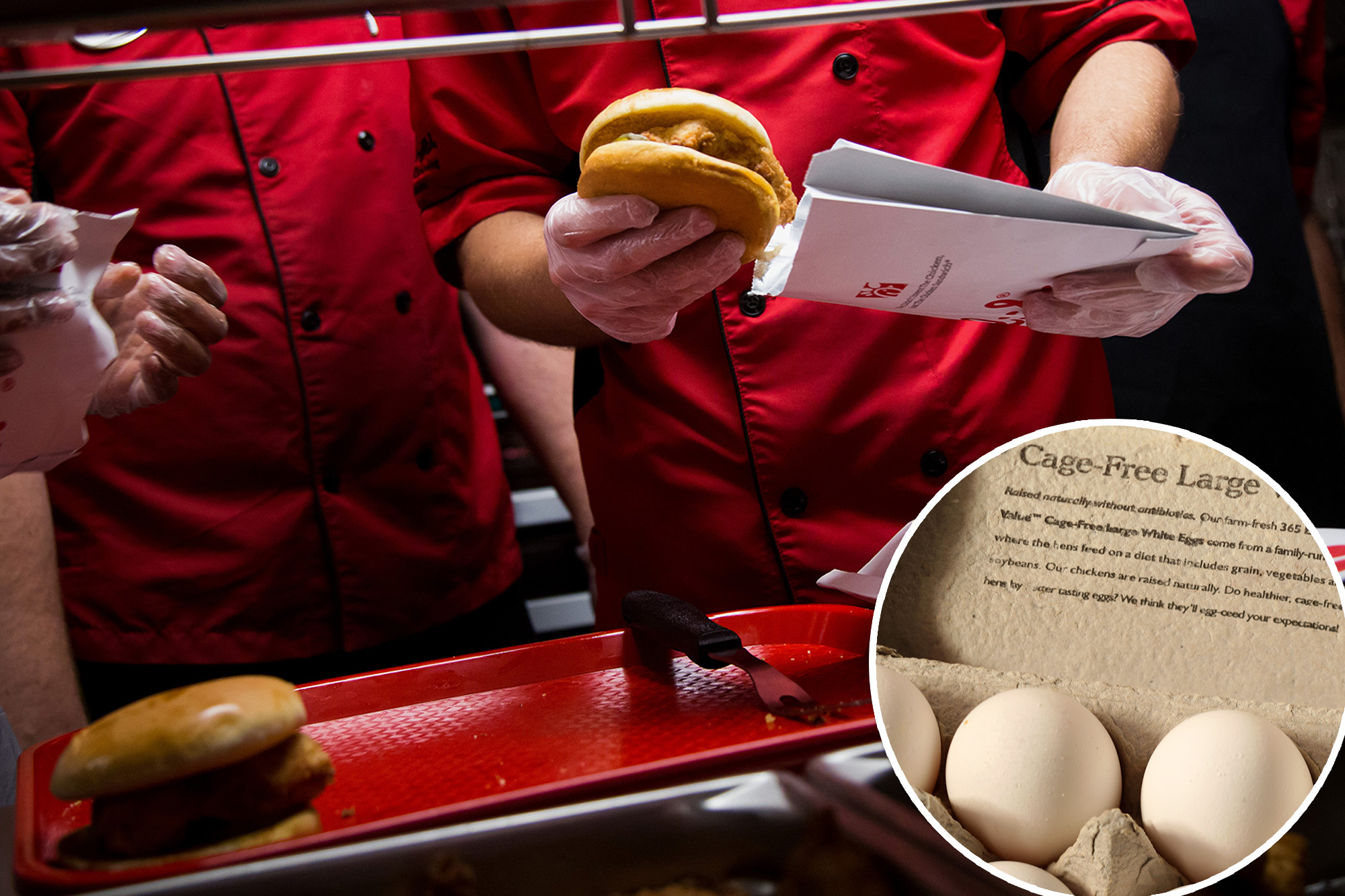
After nearly a decade of clucking about a cleaner conscience, Chick-fil-A is walking back its once-crystal-clear promise to go 100% cage-free — at least on schedule.
The Atlanta-based chicken giant first made the pledge in 2016, vowing to ditch conventional eggs entirely by the end of 2026 as part of a broader push toward “transparent and responsible sourcing.”
But with the deadline now in sight, that sunny-side-up ambition is looking a little scrambled.
“In 2016, Chick-fil-A communicated we would source only 100% cage-free eggs by 2026,” the company now says on its website.
“Currently, our ability to meet this commitment in the stated time frame is uncertain due to numerous industry dynamics and the significant impact the bird flu has had over the past several months and continues to have on our industry.”
The chain is pointing the finger squarely at avian influenza — a feather-ruffling crisis that’s disrupted egg supplies nationwide — along with broader “industry dynamics.”
While it didn’t crack open exactly how close it is to its cage-free goal, Chick-fil-A insists its suppliers still meet “strict quality standards” and comply with state laws.
As reported by Fox News Digital, at least nine states — including California, Massachusetts and Colorado — already require cage-free eggs, putting added pressure on big players to fall in line.
Still, Chick-fil-A is starting to look like the odd bird out.
Competitors like McDonald’s and Starbucks have reportedly already crossed the cage-free finish line, while others in the fast-food flock have quietly met similar commitments.
Meanwhile, cage-free eggs are no longer a niche luxury — they now account for nearly half of all egg-laying hens in the U.S.
In other words, the industry has been moving, even if Chick-fil-A is hitting a bird flu-sized speed bump.
The outbreak has wreaked havoc on poultry farms in recent years, thinning flocks and tightening supply.
But some data suggests cage-free operations may have actually fared better than their caged counterparts — adding a wrinkle to the chain’s explanation.
Then there’s the cost factor. Once a pricey upgrade, cage-free eggs have become far more accessible, with price gaps narrowing as supply grows.
So the days of blaming sticker shock may be numbered.
Animal welfare advocates, for their part, have long pushed cage-free as a bare minimum — though the label itself isn’t quite as idyllic as it sounds.
Hens may be free from cages, but they’re still typically housed indoors in crowded barns, not exactly living their best pastoral lives.
Chick-fil-A maintains it hasn’t lost sight of the bigger picture.
“We are constantly evaluating our policies and seeking to ensure our policy best reflects what is best both for our guests and animal well-being,” the company says.
For now, though, its cage-free commitment is stuck in limbo — not quite broken, but no longer a sure thing.
Guess you could say this promise is… on the sunny side of uncertain.