New York Post photo composite There’s a reason your phone alarm makes you want to throw it across the room.
It, like all traditional alarms before it, is designed to be an aggressive, context-free jolt fit for one purpose: interrupt whatever stage of sleep you’re in.
The Hatch alarm clock, Restore, takes the opposite approach. In fact, calling it an alarm clock does it a disservice. It’s a smart sleep device that uses light and sound to build an evening wind-down routine and then wake you gradually with a simulated sunrise.
Hatch launched the original Restore a few years ago and has since rolled out the Restore 2 and Restore 3, the most current edition. The Restore 3 runs about $170, which is steep for something that lives on your nightstand. But Hatch isn’t selling you a fancy alarm clock. It’s a full sleep system: sound machine, reading light, sunrise alarm clock and a gentle nudge to keep your phone out of the bedroom entirely.
Very first take? It works. The longer version involves some caveats about app dependency and whether you actually need the newest model.
I’ll be honest, I was skeptical. I’ve tried white noise apps, sleep masks, melatonin gummies, the whole rotation. My problem isn’t really falling asleep. It was the hour before bed where I’d tell myself, “Tonight’s the night I can only scroll TikTok for a few minutes,” and suddenly it’s 1 a.m., and I’m reading about unsolved disappearances in national parks.
The Hatch Restore 3 changed that faster than I expected.
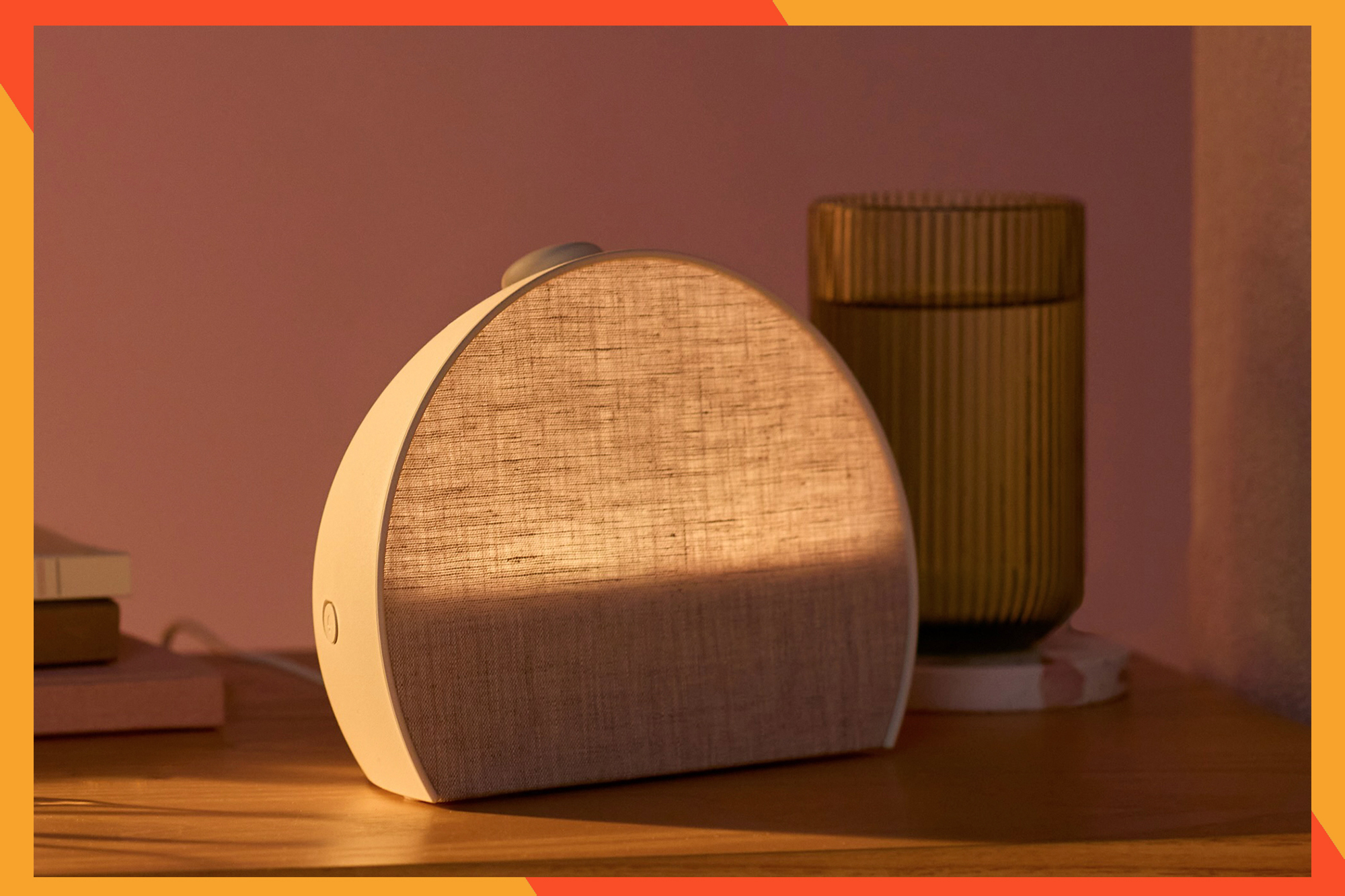
Out of the box, the Restore 3 looks clean. Matte finish, rounded shape, small enough not to dominate a nightstand but substantial enough not to look like a toy. You download the Hatch app, connect over Wi-Fi and start building routines in a matter of minutes.
That app setup is the one speed bump. There are a lot of options. You’re choosing light colors, brightness levels, sounds, fade durations and alarm tones — if you’re the type who lives in various states of analysis paralysis, budget more than just a few minutes for this part.
Once your core routines are locked in, you can mostly leave it alone. The physical dial and buttons on the Restore 3 handle the nightly basics like starting your wind-down or dismissing your alarm.
When you want to change your wake-up time on the fly, swap your soundscape, or tweak a light color mid-routine, you’re back in the app. It’s not a dealbreaker, but it’s worth knowing if you prefer more analog routine.
This is where the Hatch earns its keep. I set a 9:30 p.m. routine because I’m an old man and I am completely fine with that.
My routine dims the light to a warm glow and plays low ambient sounds. It’s a signal. Not from a screen, not from a notification. Just a warm glow that tells my brain it’s time to start calming the nervous system at night instead of feeding it more content.
Within a week, I was putting my phone down by 10. That alone changed things. We didn’t make it to leaving it in other rooms on the regular yet, but I did try.
The light starts building about 30 minutes before alarm time. It shifts from deep red to warm orange to bright daylight tones. By the time the sound kicks in, you’re already half awake. No jolt. No cortisol spike. Just a slow ramp that feels closer to how humans woke up before electricity took over.
On dark winter mornings, this thing is legitimately great. I tested it through late February into March, and the difference between waking to a sunrise simulation versus waking in pitch black was noticeable from day one.
This surprised me. For a device this size, the speaker has real depth. The rain setting doesn’t sound like rain hitting a tin can roof. It has a low, room-filling rumble, the kind that actually helps mask street noise (or a partner’s snoring). Brown noise comes through thick and warm. White noise stays smooth without that high-pitched hiss that cheap machines get.
The bird chirping on the sunrise alarm is the one place it gets a little synthetic. You’re not going to mistake it for your backyard. But paired with the light slowly filling the room, it worked well enough that I never really cared and even stopped noticing after a few mornings.
The library includes ocean sounds, ambient tracks, various nature recordings and even textures that I can’t quite figure out. (Is that really what linen sounds like?)
No, it’s not Sonos quality, but it doesn’t need to be. What matters is whether it fills a bedroom convincingly at low volume, and it does.
Hatch offers a premium membership that unlocks additional sleep content, meditations and soundscapes. You don’t need it. The core functionality of light and sound for sleep works perfectly without paying extra. If you’re someone who wants guided meditations or sleep stories, the subscription adds value. If you just want a sunrise alarm clock and a sound machine, save your money.
The Hatch Restore 3 is a premium smart sleep device that completely reimagines how you start and end your day. Far more than a traditional alarm clock, it functions as a comprehensive sleep system by combining a reading light, high-quality sound machine and sunrise simulator into one sleek, aesthetically pleasing device available in three calming colors.
Designed to eliminate jarring morning jolts and reduce late-night doom-scrolling, the Restore 3 encourages you to build customized evening wind-down routines with warm, ambient lighting and rich soundscapes that signal your brain it’s time to rest. In the morning, a gradual simulated sunrise wakes you naturally, shifting from deep red to bright daylight before your chosen alarm tone even plays. With new physical buttons and dials, you can manage your sleep routines completely screen-free once your initial setup in the Hatch app is complete.
Compared to a basic sound machine like the LectroFan or Dohm, the Hatch does significantly more but costs three to four times as much.
Compared to the Philips Wake-Up Light, the Hatch wins in customization and sound quality but loses in simplicity. If you want a dedicated smart sleep device that consolidates multiple bedside gadgets, the Hatch is the best option in the category. If you just want white noise, you can find something for less.
For more of our tested sleep picks, see our favorite sleep products.
The Restore 3 is 30% brighter than the Restore 2. That matters most for the sunrise alarm, especially if your bedroom doesn’t get any ambient light in the morning.
The bigger upgrade is the physical controls. The Restore 3 added buttons and a dial so you can adjust some settings without opening the app. The Restore 2 relied more heavily on the touchpad and phone, which somewhat defeated the purpose of a phone-free bedtime routine.
If you already own a Restore 2 and it’s working, the upgrade isn’t essential. If you’re buying fresh, do yourself a favor and get the 3.
At $170, the Hatch Restore is not an impulse buy. But writing it off as “an expensive alarm clock” completely misses the point. It’s a smart sleep device that replaces your sound machine, your reading light, and most importantly, the reason you’re still holding your phone at midnight.
I’ve been using it for a month. I fall asleep faster, especially after those nightly bathroom breaks. I wake up more easily in the morning and have noticed feeling less groggy. Plus, I stopped spending the last hour of my day doom-scrolling, which might be the biggest win of all.
If bad sleep is costing you energy, focus or sanity, $170 is a rounding error compared to what you’re losing. Plus, Hatch offers a 30-night bedside trial with free shipping and returns and a 1-year warranty, so you have time to live with it if you’re not sure. I think it’s worth a shot.
TL;DR: The Hatch Restore 3 is a premium smart sleep clock that uses light and sound to create a real evening wind-down routine and gently wake you with a sunrise alarm. It’s pricey, the app takes some patience to navigate at first, and, unless you like the premium add-ons, the $4.99/month ($49.99/year) subscription is skippable. But the core experience is genuinely good. If you want a phone-free bedtime routine that actually sticks in a well-designed, aesthetically pleasing package, this is the device to get.
I placed the Hatch Restore 3 on my nightstand and used it as my sole alarm clock and sound machine for 30 consecutive nights. I tested the sunrise alarm at multiple wake times, experimented with different sound and light combinations for the evening routine, and tracked my sleep using an Apple Watch for comparison data. I evaluated ease of setup, app usability, physical controls, sound quality and whether the device actually reduced my phone use at night.
For over 200 years, the New York Post has been America’s go-to source for bold news, engaging stories, in-depth reporting, and now, insightful shopping guidance. We’re not just thorough reporters – we sift through mountains of information, test and compare products, and consult experts on any topics we aren’t already schooled specialists in to deliver useful, realistic product recommendations based on our extensive and hands-on analysis. Here at The Post, we’re known for being brutally honest – we clearly label partnership content, and whether we receive anything from affiliate links, so you always know where we stand. We routinely update content to reflect current research and expert advice, provide context (and wit) and ensure our links work. Please note that deals can expire, and all prices are subject to change.
Looking for a headline-worthy haul? Keep shopping Post Wanted.