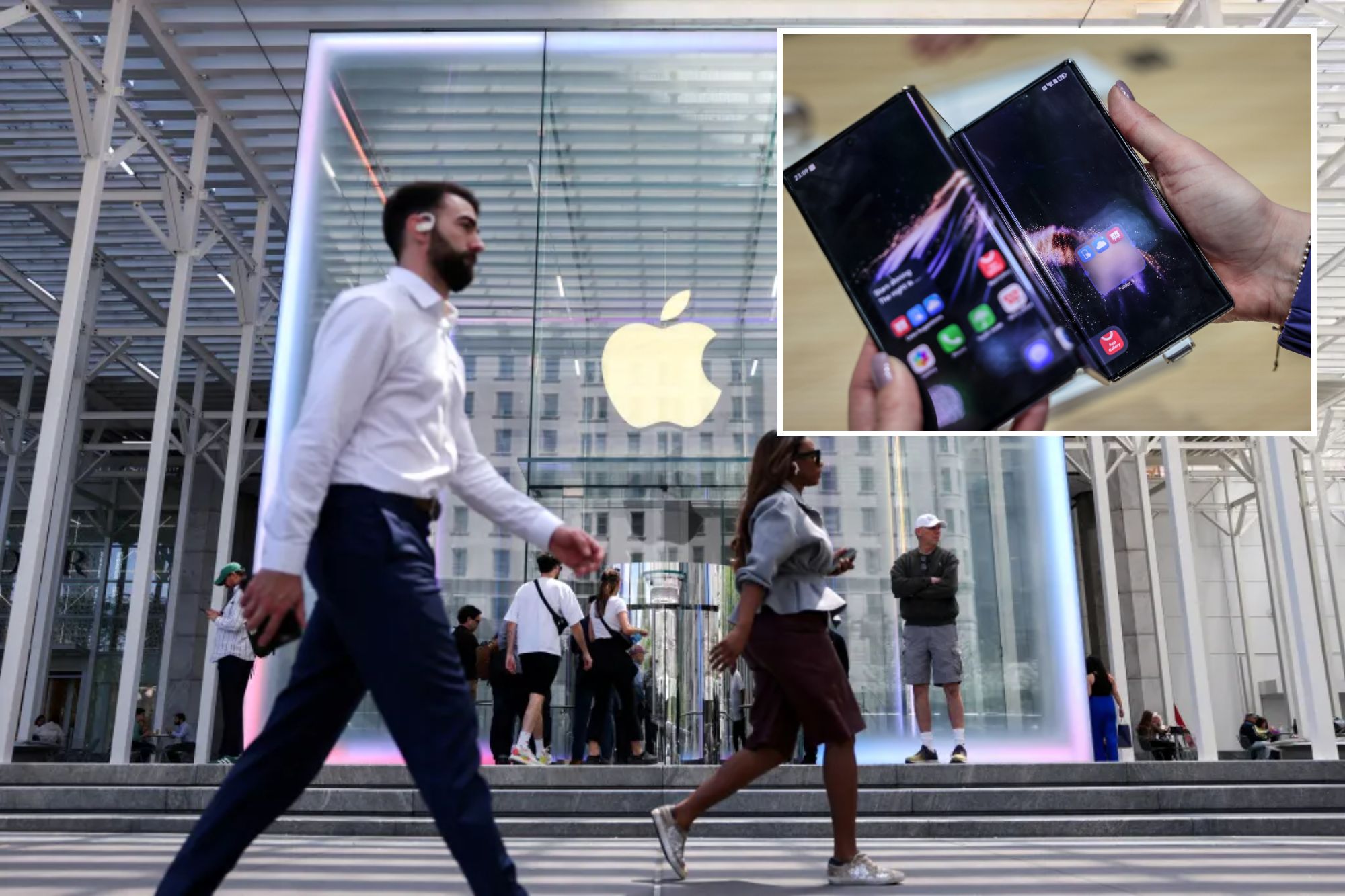
Apple has reportedly hit unexpected snags in early testing of its first-ever, $2,000 foldable iPhone — forcing engineers to grapple with issues that are “more complex” and time-consuming than originally anticipated, according to a report.
Shares of Apple slid as much as 5.1% on Tuesday after Nikkei Asia cited people familiar with the matter as saying the problems were serious enough to potentially delay the device’s rollout by months.
The setbacks emerged during a critical engineering test phase, with some suppliers warned that production timelines could be pushed back as Apple scrambles to resolve the technical challenges.
But the stock clawed back losses later in the day, after Bloomberg News reported that the foldable iPhone remains on track for a September debut alongside the company’s latest models of flagship products.
“It’s true that more issues than expected have emerged during the early test production phase, and additional time will be needed to resolve them and make necessary adjustments … The current situation could put the mass production timeline at risk,” one of the people familiar with the matter told Nikkei Asia on Tuesday.
“April will mark a crucial stage of the engineering verification test, and this month till early May is extremely critical,” the source added.
An unidentified source told Bloomberg News that Apple could limit initial supply of the foldable devices for several weeks, though the company is still planning to offer up the product for sale at around the same time — or shortly after — the non-foldable models are rolled out.
Apple has been racing to catch up with rivals like Samsung Electronics and Huawei, which have rolled out multiple generations of foldable smartphones since 2019.
Apple has so far stayed out of the foldable category while working through engineering challenges tied to the device’s design and durability.
Bloomberg News reported that Apple believes it has solved persistent problems that have plagued foldable phones, including screen quality, durability and the visibility of the display crease when unfolded.
The company is betting that its long-awaited entry into foldables — expected to cost more than $2,000 — will help it better compete with rivals and lift revenue by pushing up the iPhone’s average selling price.
The device is part of Apple’s broader plan to overhaul the iPhone lineup with new designs and more premium models over the next several years.