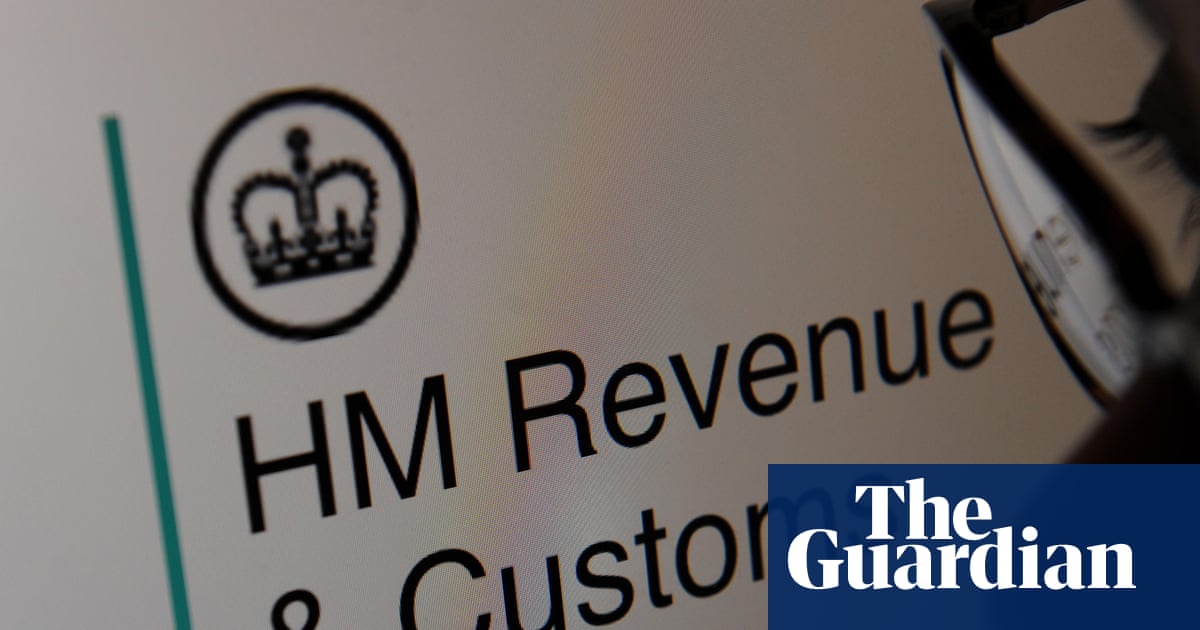
HMRC has apologised and admitted that 71% of parents targeted were in fact eligible for the benefit. Photograph: Louisa Svensson/AlamyView image in fullscreenHMRC has apologised and admitted that 71% of parents targeted were in fact eligible for the benefit. Photograph: Louisa Svensson/AlamyHMRC scheme that wrongly cut child benefits did not ‘adequately consider’ impact, report findsNAO inquiry follows suspension of payments after erroneous records that claimants had emigrated
An HM Revenue and Customs (HMRC) anti-fraud crackdown that stripped 23,000 families of their child benefit failed to “adequately consider” the policy’s impact on claimants, an official report has found.
The report by the National Audit Office followed HMRC’s decision to suspend payments after flight records provided by the Home Office purportedly showed thousands of parents had emigrated.
The initial introduction of the scheme was suspended at the end of last year after an expose by the Guardian and the Belfast investigative website The Detail showed thousands of those parents had simply gone on holiday but the Home Office had no record of their return to the country.
It included one parent who was booked to go to a wedding in Norway but the wedding was cancelled, so they didn’t travel. Another was recorded as having emigrated to Italy, but she and her family did not board the plane because a child had a seizure at the departure gate.
HMRC apologised twice last year for the botched crackdown and told a House of Commons select committee that 71% of parents targeted were in fact eligible for child benefit.
In an initial pilot scheme, HMRC cross-checked flight manifests given to them by the Home Office with pay-as-you-earn (PAYE) data, allowing it to filter out people who were residing in the UK. But when the scheme was first launched those PAYE checks were not included.
“The first rollout did not adequately consider the impact on claimants, suspending payments for more eligible claimants than it needed to, combined with more onerous requirements for many of them to prove their eligibility,” the NAO said.
Its investigation also found that HMRC had removed the PAYE checks in the first rollout of the scheme because it did not have the experienced staff to do the checks and relied on inexperienced workers who were not qualified to check tax records.
Parents first learned their benefits were being suspended after receiving letters demanding they answer 70 questions to prove they had not emigrated without sufficient thought.
The letters were sent despite HMRC holding records of people in the UK in work and paying tax. “Some operational changes to the intervention did not adequately consider the impact on claimants,” the NAO said.
Read moreHMRC told the NAO that it “relied on feedback via phone calls, letters and MP representations to identify that this was causing problems for claimants” and it has subsequently reintroduced PAYE checks.
It also removed travellers from Northern Ireland who returned home via Dublin airport, who were recorded as having emigrated because the Home Office had no record of their return.
Parents complained of the stress of answering the questions, which included demands for school and GP records for children. One woman told how her payments had stopped after taking a week’s holiday in 2023. She flew to Warsaw and returned via Edinburgh airport, but the Home Office had no record of her return, leaving the onus on her to prove otherwise.
“The letter came as a huge shock for me and I have found the whole experience very stressful and upsetting. I have tried to speak to HMRC, but it is like hitting a wall,” said Agnieszka, a Polish-British dual national who worked in financial services at the time.
HMRC told the NAO it had received 22,500 calls from customers between August 2025 and February 2026, reflecting the extent of the blunder. In future, HMRC should consider the human cost of what it acknowledged was an “innovative” scheme to crack down on fraud, the report said.
“Its arrangements should ensure there is consideration of using innovation to tackle fraud and error, while also minimising impacts and potential hardship for eligible claimants,” it said.
HMRC acknowledged to the NAO there were “weaknesses” in its oversight, including the fact that it “did not appoint a single senior responsible owner” of the scheme, leaving key decisions “without sufficient scrutiny”.
A spokesperson for HMRC said cases opened between August and October 2025 had “protected around £60m in taxpayers’ money” and that figures showed that about £270m was incorrectly claimed in 2024-25 by people living overseas.
“We welcome this report, which recognises how data can help tackle child benefit error and fraud. We’ve acknowledged that some mistakes were made initially, but we took swift action to put things right and strengthened our approach with extra safeguards,” they said.
“Our work so far has prevented thousands of customers claiming incorrectly, protecting tens of millions of pounds of taxpayers’ money.”