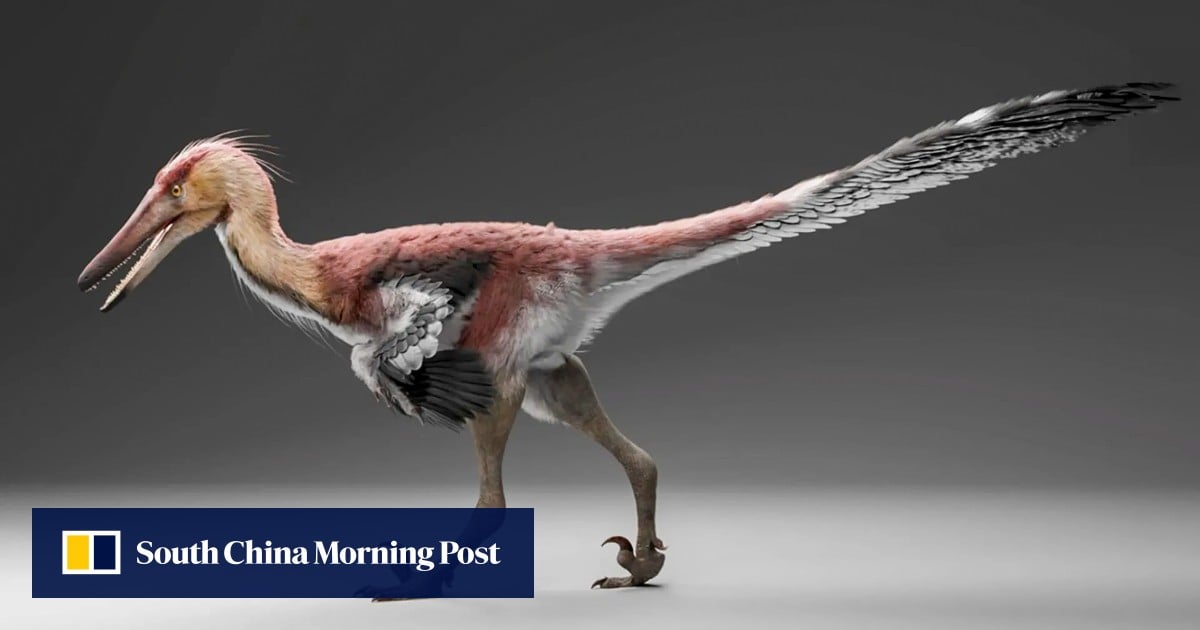
Unearthed on opposite sides of the world, fossils of Kank australis and velociraptors sport matching claws, revealing evolutionary ties
5-MIN READ5-MINEmiliano Martínez ViademontePublished: 6:00pm, 27 Jun 2026Scientists have uncovered a new species of raptor in Argentina that sports the same telltale curved claw as the velociraptors found in China, some 19,000km (11,800 miles) away.Though they were found on opposite ends of the world, these two dinosaurs were close kin – tracing back to a common ancestor from an era when the continents were knitted together to form one big land mass.This discovery, published late last month in the Journal of Vertebrate Paleontology, has prompted scientists to rethink just how widely the ancient creatures roamed.
“What is remarkable is the preservation of certain anatomical structures in animals with very different lifestyles,” said Matias Motta, a postdoctoral researcher at the Bernardino Rivadavia Natural Sciences Museum (MACN) and lead author of the study.
In southern Argentine Patagonia, near mountains blanketed in snow, a group of palaeontologists has been studying a new species of dinosaur since 2018.
They were looking to answer the intriguing question of what the far south was like during the Late Cretaceous period 143 million to 66 million years ago. They found one of the fossils just before a snowstorm halted their excavation for days.
“At first, we were not sure what it was because the fossil was embedded in the rock. Then we realised that it was a raptor,” the research team said.