The US has temporarily allowed Iran to export oil and indicated it will provide billions to relieve the crisis triggered by the war. With ordinary Iranians at their limit, however, Tehran already fears new protests.
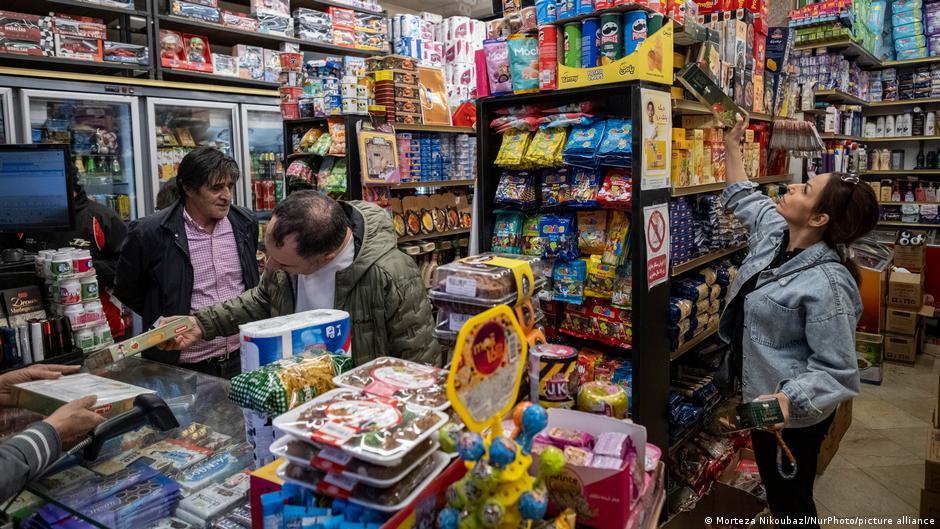
https://p.dw.com/p/5FyjrGrocery prices continue to rise in Iran and experts fear more inflation is comingImage: Morteza Nikoubazl/NurPhoto/picture allianceAdvertisementAs Washington and Tehran negotiate the implementation of an interim peace deal that ended the Iran war, the US has lifted restrictions on Iranian oil trade until August 21.
The sanctions relief is a central pillar of the peace framework that the two sides signed last week.
At the same time, the US and Qatar are looking into the release of around $6 billion (around €5.3 billion) from frozen Iranian oil revenues. According to US President Donald Trump, the money will be "used for the purchase of food and medical supplies, exclusively from the United States, including Corn, Wheat, and Soybeans from our great American farmers. These are things that are desperately needed by Iran."
Tehran denies any obligation to buy food from American farmers.
But it is clear that Iran badly needs the money — according to preliminary estimates by the Iranian government, the war with the US and Israel caused around €229 billion in damages.
The Memorandum of Understanding between Iran and the US also mentions a $300 billion payout for reconstruction, but the details on that remain unclear.
Republicans balk at deal Donald Trump struck with IranTo view this video please enable JavaScript, and consider upgrading to a web browser that supports HTML5 video
Iran's government has already been forced to borrow large amounts of money from the central bank in order to cover war expenses, according to Iran's Economy and Finance Minister Seyed Ali Madanizedah.
The loan is expected to boost inflation in the coming months.
"An agreement with the US will not fully normalize the Iranian economy," said Madanizedah, who got his PhD from the University of Chicago.
Economy expert Ahmad Alavi does not expect any noticeable short-term improvements. Talking to DW, Alavi pointed to the now-defunct JCPOA deal from over a decade ago — increased oil revenues and lower outside pressure kept Iran's economy on "life support," but without deep structural reforms, the effects remained limited and short-lived.
The roots of Iran's economic crisis reach deep into years of sanctions, mismanagement and corruption. On top of that, the war and the recent US blockade of Iranian ports have made the situation even worse.
The crisis is most noticeable in grocery shops — a carton of 15 eggs that used to cost 70,000 toman (€0.37, $0.40) just a year ago is now at over 200,000 toman. Prices of cooking oil and imported rice have also gone up sharply.
"The prices are rising literally every day," a 28-year-old Iranian told DW. "My husband and I both work and we have a small child. We still need to give up so many things. I don't think the prices are ever coming down again."
The dollar exchange rate, according to Iranian news outlet Tabnak, is now at around 150,000 toman for one US dollar. That marks a noticeable drop from the recent rate of 190,000 toman per dollar, but the reduction seems not to have translated into any economic relief for the customers.
Iran-US peace deal leaves many major issues unresolvedTo view this video please enable JavaScript, and consider upgrading to a web browser that supports HTML5 video
A mother of a school-age child from Tehran speaks for many of the city's families, saying: as rents continue to go up, more and more people are forced to give up their apartments for more modest accommodations or move in with relatives.
"Even a short vacation at the Caspian Sea is out of reach for many, including us," she told DW.
Even regime officials are voicing concerns of social unrest. According to a survey done by an agency affiliated to Iran's Interior Ministry, much of the country's population suffers due to economic strain.
The head of the agency, former Education Minister Mohammad Bathaei, warned of widespread tensions, saying that some 60% of survey participants said they could no longer deal with the economic crisis. The same share of respondents is pessimistic about the future, and around 80% feel they are treated unjustly.
Bathaei called on political decision-makers to take these issues seriously.
Separately, President Masoud Pezeshkian also warned that economic issues could lead to protest.
"I feel that we will not be able to sufficiently meet the population's needs and that this displeasure could once again be expressed on the street," he said.
Sociologist Mehrdad Dabishpout, an Iran researcher and professor at the Mälardalen university in Sweden, says Iran's political system is fighting for survival. The recent war did not just cause widespread devastation, but also left deep social and psychological scars and further reduced space for politics. Social movements have been weakened, and expectations reduced.
"The central question is if society can be reorganized after suffering defeats, repression and collective trauma. My answer is 'yes.' The resilience of Iranian society should not be underestimated."
'I will be living proof of the violent oppression in Iran'To view this video please enable JavaScript, and consider upgrading to a web browser that supports HTML5 video
Politicians, according to Darvishpour, will not be able to turn back the clock on all positive changes. He points to the "Woman, Life, Freedom" movement of 2022 and its permanent effects on Iran's power structures, despite the regime's violent clampdown. To this day, despite the pushback, many women in Iran go out with their heads uncovered.
This article was originally written in German.