Vigilante groups and right-wing populist forces are stoking anti-immigrant sentiment and demanding that they leave the country by June 30. Experts fear serious economic implications for the country and the region.
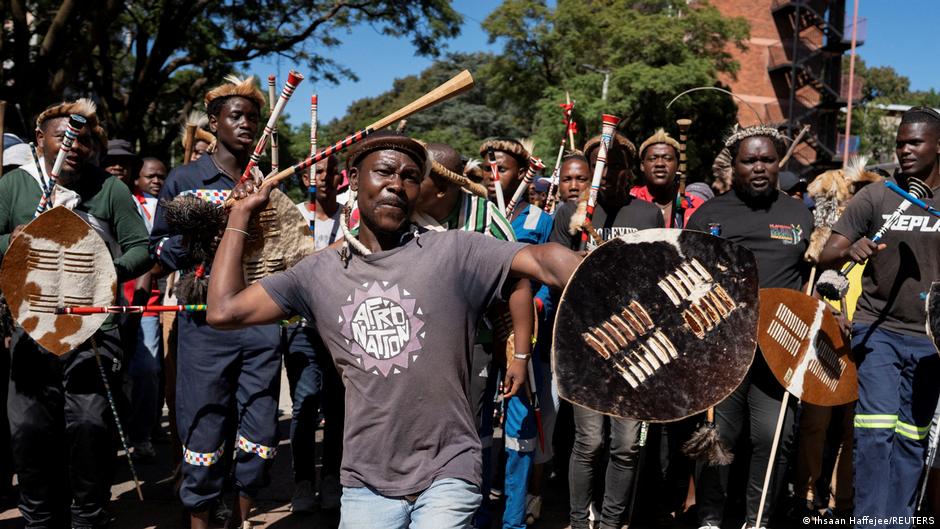
https://p.dw.com/p/5FxwSSouth Africa has been gripped by anti-migrant protests that have caused mass evacuation of African foreignersImage: Ihsaan Haffejee/REUTERSAdvertisementIn South Africa, hostility toward foreigners has flared repeatedly for decades. Now, protests against irregular migration have turned increasingly violent in multiple cities, driven by right-wing movements and vigilante groups demanding that undocumented migrants leave by June 30. Fears of escalation are rising.
Jo Veary, co-director of the African Center for Migration & Society at the University of the Witwatersrand, links radical protest groups to right-wing populist parties such as ActionSA, which she says are backing them.
Groups like "March and March" and "Operation Dudula" are central. Veary also points to ties with former President Jacob Zuma's MK Party. "They blame foreign residents for the shortcomings in the country's social services. Ultimately, it's about gaining political support and votes in the elections," Veary told DW.
Xenophobia in South Africa: Who’s really paying the price?To view this video please enable JavaScript, and consider upgrading to a web browser that supports HTML5 video
With local elections due in November 2026, tensions are high. "What we are currently witnessing is a government crisis in South Africa, in which foreigners are being made scapegoats and held responsible for the state's failure to fulfill its duties and promises," she stated, highlighting inequality and unemployment.
Yet migrants play a significant economic role. Foreign investors and entrepreneurs contribute to jobs, trade and industry. Zimbabwean telecoms entrepreneur Strive Masiyiwa's Cassava Technologies is partnering with Nvidia to build Africa's first Artificial Intelligence (AI) factory. Angola's state-run oil giant Sonangol, Mozambique's Matola Gas Company and Nigeria's Dangote Groupare also active across energy and manufacturing.
Many South Africans benefit from these businesses. Still, a 2025 Afrobarometer survey found that 69% believe immigrants harm the economy, despite estimates that each migrant creates about two jobs.
"Even if all foreigners were deported from the country—they make up only about 4% of South Africa's total population (65 million)—this would not suddenly lead to job creation or solve these larger structural problems for which the South African government is responsible," Vearey said.
She warned that current protests are already causing socioeconomic damage. "The forced closure of foreign-owned businesses means that South Africans are losing their jobs. In addition, the revenue generated by these companies—including tax contributions—is being lost."
Disruption also affects regional trade. Foreign traders traveling to Johannesburg support the textile sector and tax base. According to Veary, losing this flow weakens incomes and "creates further incentives for migration."
Some protesters on social media are now calling for foreign workers to return so production can continue. Major unions, including COSATU, have urged de-escalationand warned members against joining June 30 protests. "Removing foreign nationals from workplaces, communities, or public spaces will not reopen factories, repair communities, strengthen public health care, or create sustainable jobs," the unions said, echoing President Cyril Ramaphosa.They also cautioned against repeating the deadly 2008 xenophobic violence.
"As June 30 approaches, foreigners—especially African entrepreneurs and some Asian ones—are afraid, regardless of their immigration status," Aimee Noel Mbiyozo of the Institute for Security Studies said. "Foreign-owned companies as well as small business owners, such as the operators of 'spaza shops' (kiosks), are very unsettled. Larger foreign-owned companies fear economic repercussions."
Although anti-migrant groups claim to target only undocumented migrants, violence is often indiscriminate. "The larger companies are likely watching the situation, and it is not developing in South Africa's favor," Mbiyozo said, warning of reputational damage and lost investment.
South Africa's 'spaza' shop shutdown sparks tensionsTo view this video please enable JavaScript, and consider upgrading to a web browser that supports HTML5 video
She stressed the need to distinguish between vulnerable migrant workers and organized crime networks, urging more targeted enforcement.
Veary added that xenophobia has persisted since 1994, compounded by weak government communication and a lack of accountability. Attacks rarely lead to arrests, and policing can reflect similar biases. "In this climate, fueled by vigilante groups, regional companies think twice about investing in South Africa."
This article was originally written in German