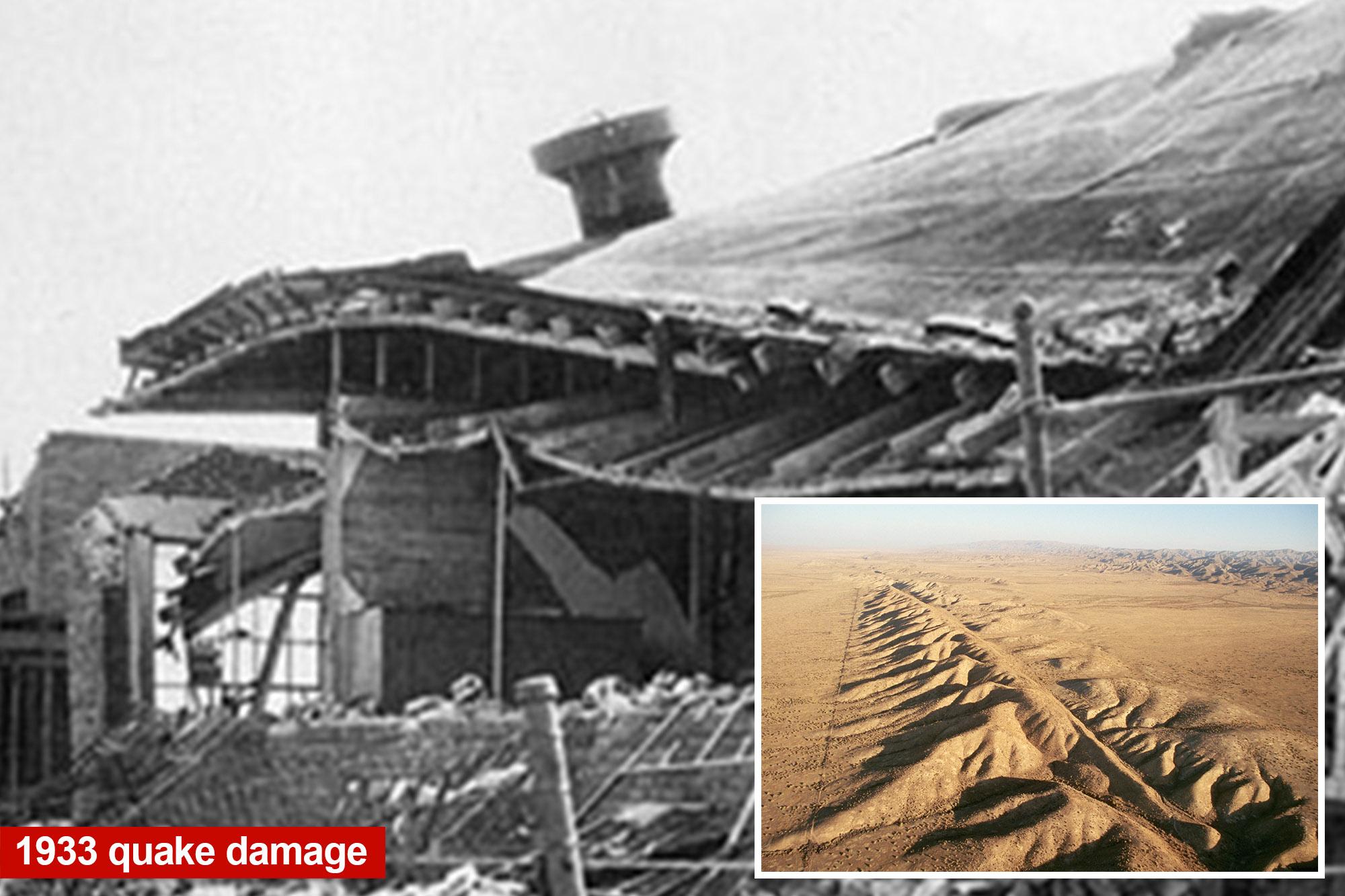
Add The California Post on Google Stress levels beneath Southern California’s two most dangerous fault systems have climbed to their highest in at least 1,000 years, prompting fresh concerns that the long-feared “Big One” may be drawing closer.
The alarming findings come from a new study from AGU Journal examining the San Andreas and San Jacinto fault systems, in which researchers found that tectonic stress has reached levels not seen in a millennium.
Scientists can’t predict when a major earthquake will happen; however, the study shows that geological conditions for a potentially catastrophic earthquake are becoming more noticeable.
Researchers reconstructed about 1,000 years of earthquake activity using geological evidence, radiocarbon dating, historical records, and advanced computer simulations that track how stress accumulates and moves between faults over time.
Their model showed that stress levels along both fault systems have now reached exceptionally high levels, raising concerns about a large rupture spreading across multiple faults.
The area drawing the most attention is Cajon Pass, northeast of Los Angeles, where the San Andreas and San Jacinto faults converge.
Researchers refer to it as the “earthquake gate” because it can show whether a rupture stays on one fault or spreads to nearby fault systems.
A rupture starting on one fault could spread across a broader network, affecting communities from Los Angeles to San Bernardino, Riverside and the Coachella Valley.
Researchers also found stress levels on the San Andreas and San Jacinto faults have become more similar — creating conditions that may make it easier for an earthquake to jump between the two systems.
The findings are a strong reminder that Southern California remains at risk of a major earthquake.
Nearly 170 years after the magnitude 7.9 Fort Tejon earthquake hit the San Andreas Fault, it remains one of the strongest earthquakes in California’s history.
Today, Southern California has millions more residents, along with transportation networks and critical infrastructure that didn’t exist when the Fort Tejon quake struck.
For Californians who have heard warnings about the “Big One” for years, stress beneath some of the state’s most dangerous faults is now higher than it has been in at least a thousand years.
California Post News: Facebook, Instagram, TikTok, X, YouTube, WhatsApp, LinkedInCalifornia Post Sports Facebook, Instagram, TikTok, YouTube, XCalifornia Post Opinion California Post Newsletters: Sign up here!California Post App: Download here!Home delivery: Sign up here!Page Six Hollywood: Sign up here!