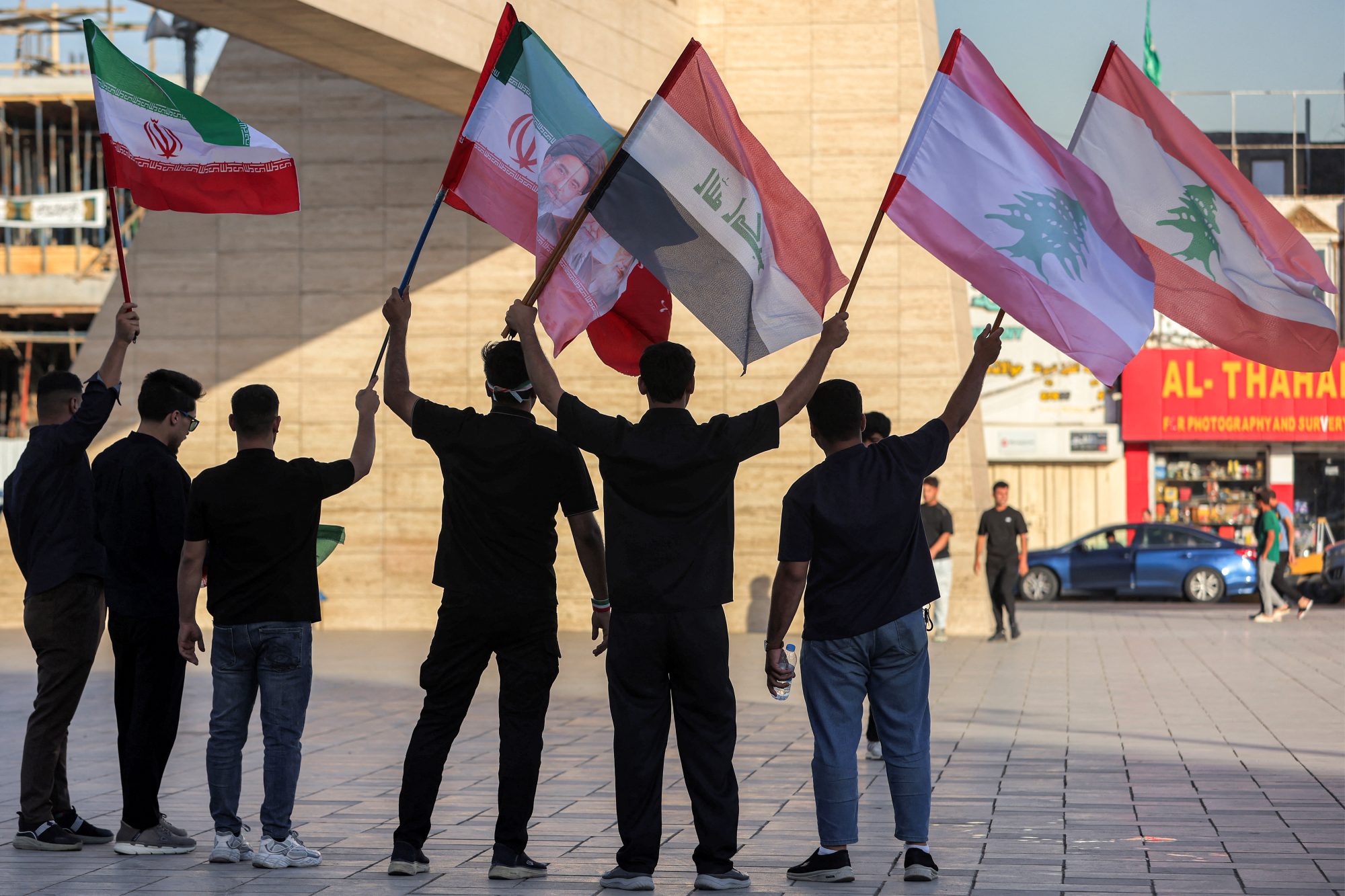
Tehran hasn't actually agreed to give up its nuclear program or its support of terror groups like Hezbollah and Hamas -- but only to talk about it all some more. AFP via Getty Images See more of our coverage in your search results.
Add The New York Post on Google Aside from the vast damage the war did to Iran’s military assets and the deaths of so many of the ruling cabal, this Memorandum of Understanding seems to leave things right back where they were before the bombs started dropping.
That is: Tehran hasn’t actually agreed to give up its nuclear program or its support of terror groups like Hezbollah and Hamas — but only to talk about it all some more.
Maybe the full MOU text makes things look better . . . or worse: The fact that it’s still a mystery isn’t encouraging.
If the Strait of Hormuz really opens, it’ll do one good thing — but the planned 60 days of talks could still yield a serious win for Tehran.
The White House says those negotiations will settle the details of Iran destroying its enriched uranium, ending its nuclear program forever and its terror funding too, but what if they don’t?
And what might US diplomats give away along the way?
The last few months have proved that Iran’s rulers are more willing to take far more pain (or to have their citizenry suffer, at least) than America’s leaders (ahead of the midterms, at least).
That’s a huge edge for Tehran in the negotiations.
Plus, the Iranians are masters at drawing out talks, steering them into ridiculous side issues, reversing concessions they’d supposedly committed to, adding new demands at the last minute and so on.
Per some reports, they pulled that last trick Sunday, as the Americans wanted to announce a deal on President Donald Trump’s birthday.
Iran says it won US recognition of Iranian-Omani sovereignty over the Strait of Hormuz, an enormous coup as it means accepting the tolls that Trump has rightly called unacceptable.
Maybe that’s pure propaganda — but we have nothing more to go on without the full MOU text.
At the least, Iran remains positioned to close the Strait again whenever it likes, and certainly to threaten the move regularly all through the talks.
Trump wasn’t willing to force a Hormuz opening these last two months — why would he ever be?
Some advisers seem to have told him it would require US troops on the ground, and he said last week, “I don’t know that America has the stomach for it.”
Even if Washington is ready to restore the blockade of Iran at that point, this is still another edge for Tehran.
And Trump’s January “help is on the way” promise to the Iranian people is plainly a dead letter.
Also concerning: It seems the deal will net Tehran a $300 billion “reconstruction fund,” paid by the Gulf Arab states (the ones they’ve been hurling sporadic missiles at!).
If any of that cash transfers before Iran makes a hard delivery on giving up its nuke program — including handing over the “nuclear dust” — that’s an outright win for the regime.
One more worry: Iran claims it’s a ceasefire violation if Israel responds to the missiles Hezbollah keeps shooting at it, and Trump’s gripes about Jerusalem’s actions suggest he won’t just tell Tehran to stuff it.
No nation can sit by when enemy attacks force 50,000 of its citizens to evacuate; if Israeli self-defense will really blow up the deal, it won’t last 60 days.
All signs point to this agreement being cooked up by administration figures Steve Witkoff, Jared Kushner and Vice President J.D. Vance, who care more about the stock market and online optics than Iran’s threat to the world. Reports suggest that reasonable voices like Secretary of State Marco Rubio and CIA Director John Ratcliffe weren’t consulted or had their concerns ignored.
More than two months ago, Trump told a world the two sides were within two weeks of a deal on all the issues.
He’s since insisted dozens of times that an agreement is nearly there.
Yet now all he has is Iran’s promise to talk for two more months, albeit with the Strait open in exchange for (at least) an end to the US blockade.
If any cynic suggests this has the potential in the long term to wind up as bad as President Barack Obama’s accord with Iran, we don’t see how at this point we could prove him wrong.