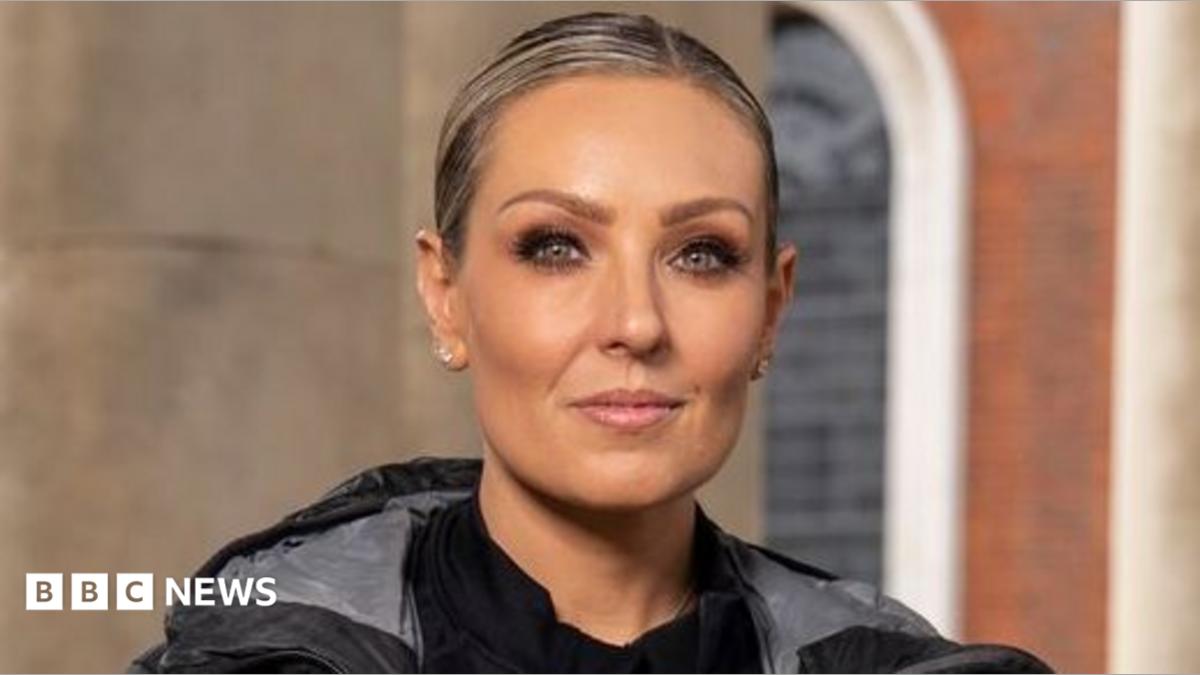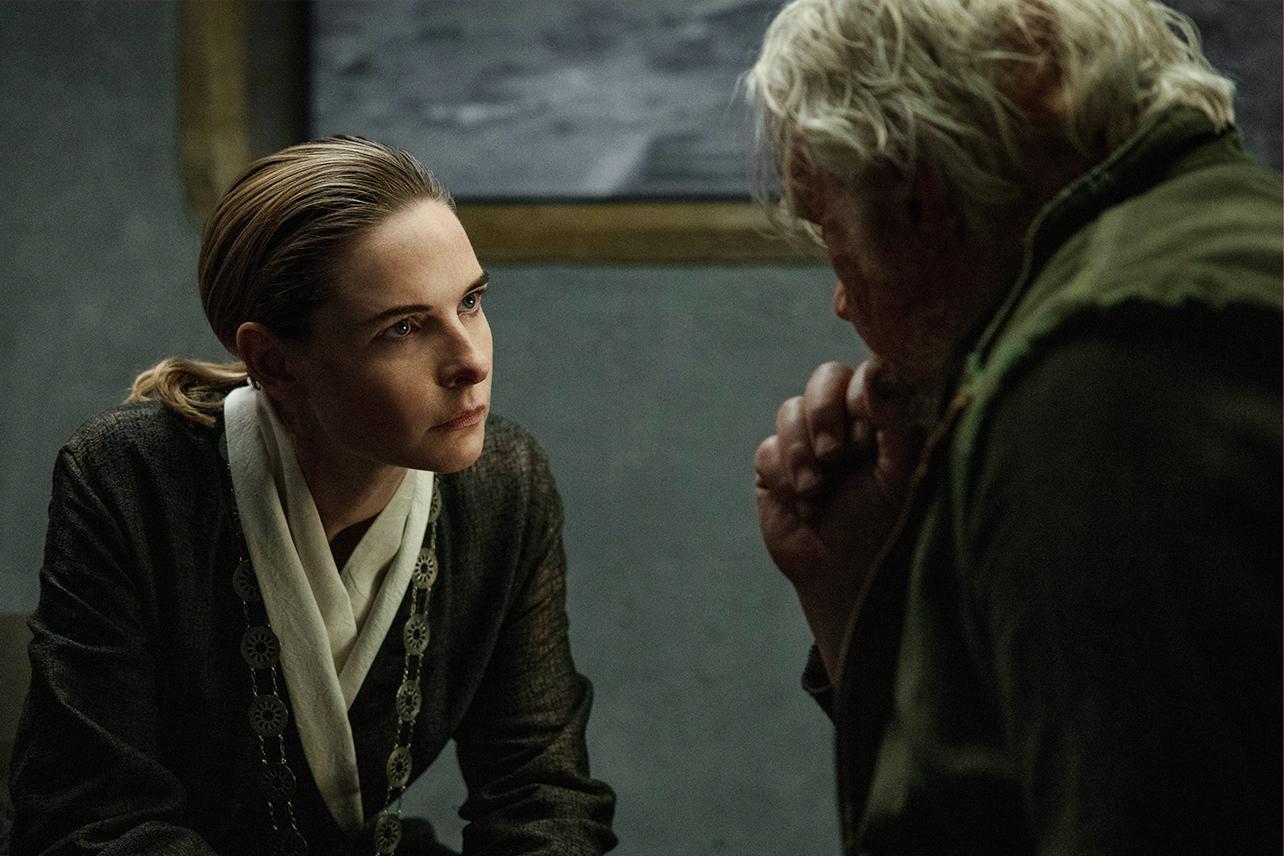
Ashkan Koosha (left) and a still from "Dreams of Violets." When “Dreams of Violets” premieres tomorrow night at the Tribeca Film Festival, Hollywood will face its boogeyman. That’s because “Dreams of Violets” will be the first movie completely generated by AI to be part of a major festival’s lineup.
The 75-minute feature by first-time filmmaker Ash Koosha is a fictional take on the real-life protests by Iranian civilians in Tehran in January, which resulted in the massacre of tens of thousands by Iranian regime forces. The story centers on five strangers who are confronted by a violent soldier while they are hiding in a dead-end alley as a wheelchair-bound child watches from a window and decides to act.
Koosha, who is Iranian, said he wanted to make the film with a crew, but had no access to one nor any locations in Iran. So instead, he made the film in just three months with a budget of $2,000 using Kling AI, Claude, Gemini and AI tools he developed at his company, Claigrid AI. He voiced half of the movie’s characters and pulled the rest from real-life voice recordings of the protests.
“I would easily say I covered the job of like eight to 10 people,” Koosha tells Page Six Hollywood about the project. “It was a very painful and hard process.”
The decision by Tribeca to accept the film into its lineup was met with criticism. “I am so disappointed that Tribeca chose to screen this and considers it ‘human storytelling,’” read one of the many negative comments on a YouTube page where the trailer was posted. Even still, Tribeca co-founder Jane Rosenthal defended the decision, calling the film “a powerful example of how emerging technologies like AI can be used not simply as tools of innovation, but as vehicles for deeply human storytelling.”
Tom Rogers, a producer on the film and executive chairman of Fountain 0, the AI film company behind the movie, noted that Rosenthal was one of the driving forces behind the “The Wizard of Oz at Sphere” which required extensive use of AI to remaster the original 1939 version to fit the massive wrap-around LED screen. “She’s not foreign to AI technology,” Rogers said.
Before launching Fountain 0 with Koosha and his brother, Rogers was a pioneer in the legacy TV business. He launched both CNBC and MSNBC during a long tenure at NBC and later became CEO of TiVo from 2005-2016, the company’s longest serving chief executive. So he’s no stranger to technologies that were once seen as controversial. When TiVo, which pioneered the ability to record live TV, launched, it made advertisers and television networks jittery over the ability to fast-forward through commercials.
Rosenthal’s decision to give an AI generated film such a prominent platform seems to align with a broader attitudinal shift within Hollywood with regard to this new technology. Remember Bryan Cranston’s rousing speech during the SAG-AFTRA strike when he name checked then Disney CEO Bob Iger saying: “We will not have our jobs taken away by robots.” Cut to the most recent negotiations earlier this year in which the guilds mostly backed down on their biggest AI demands. It seems like every other week, some A-list creative is either launching their own AI firm or joining an established one.
AI themed conferences are also becoming de rigeur. Last month, Amazon MGM welcomed a 2,000-person AI conference onto its lot — the same one that once played home to “The Andy Griffith Show” and “The Wizard of Oz.”
Filmmakers like Gareth Edwards and Stephen Soderbergh are now openly talking about — in Soderbergh’s case, actively deploying — AI in their filmmaking process. “Taxi Driver” scribe Paul Schrader is openly campaigning for AI to be used to recreate classic sitcoms like “I Love Lucy,” while predicting we’ll one day see a completely AI-generated lead actor.
Some see a growing class divide over who benefits from AI’s encroachment and who is at risk of finding themselves redundant. On one side, you have A-list creatives like Ben Affleck, Gwyneth Paltrow and Martin Scorsese with the money and power to control their fate in the AI era. On the other side, are the rank-and-file below-the-line workers who work in post production and special effects, and are forced to reckon with a Hollywood future that may not include them.
“If I could snap my fingers and make generative AI disappear forever, I probably would,” “Backrooms” director Kane Parsons said during a recent interview with The Australian. “Creatively, I get no enjoyment from using those tools. It defeats the purpose entirely for me.”
One top AI exec told us that almost all of the studios they’re in business with don’t want their relationship to be publicly revealed. Mike Gioia, the co-founder of the AI on the Lot organization that put on the conference at Amazon MGM said that many interested studio executives were forced to drop out over the optics of being seen at the conference.
“Usually we’d get messages like ‘PR did not approve this.’ Even if the individual executive sees the opportunity with AI and wants to speak, PR departments only see downside,” Gioia said. Jorge Guiterriez, who was on stage to promote his AI-created animated series “Punky Duck” for Amazon, dropped out of the project two days later after intense backlash from the animation community, which is more wary than most about the impact of AI on their careers.
Even with the pushback, Gioia is bullish on Hollywood’s AI embrace. “Old school Hollywood is much more receptive than they were in the past. In 2024, sticking your head in the sand and ignoring AI was a legitimate attitude in Hollywood. Today AI is not something that Hollywood can ignore.”
“I do believe that AI specialty roles will develop, so there will be some real job creation,” Rogers said. “There are obviously a lot of people in many of the trades, which are going to be very much disrupted here, and we have a debate going internally. What do those people do?”