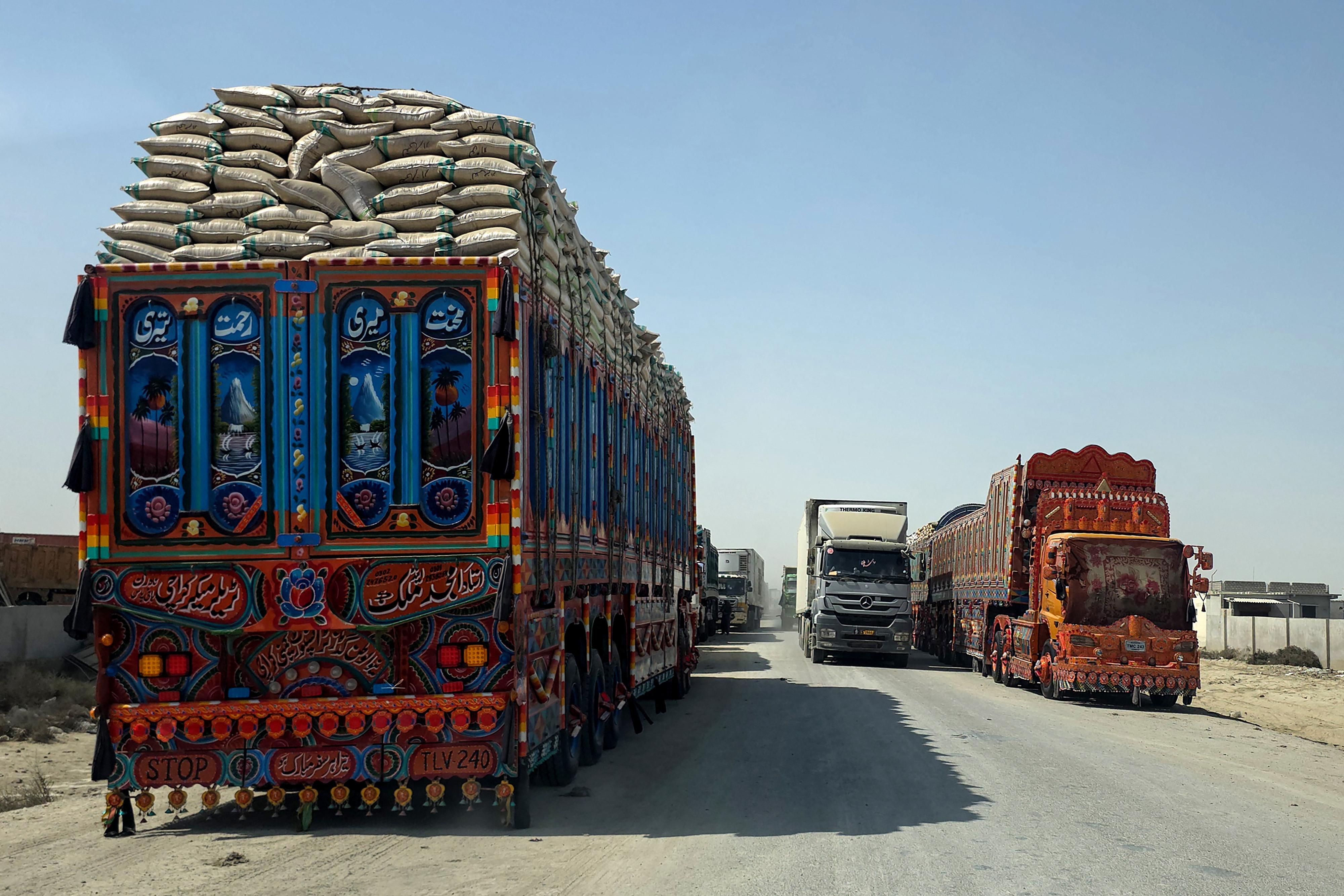
Make New York Post a Preferred Source Cargo trucks halted at the Gabd-Rimdan crossing at the border between Pakistan and Iran during a temporary suspension of trade on Oct. 21, 2026. Photo by Behram Baloch / AFP via Getty Images America no longer needs a deal with Iran, President Donald Trump proclaimed last week.
“We’ve got their money . . . and we’ve got their Strait!” he wrote Thursday.
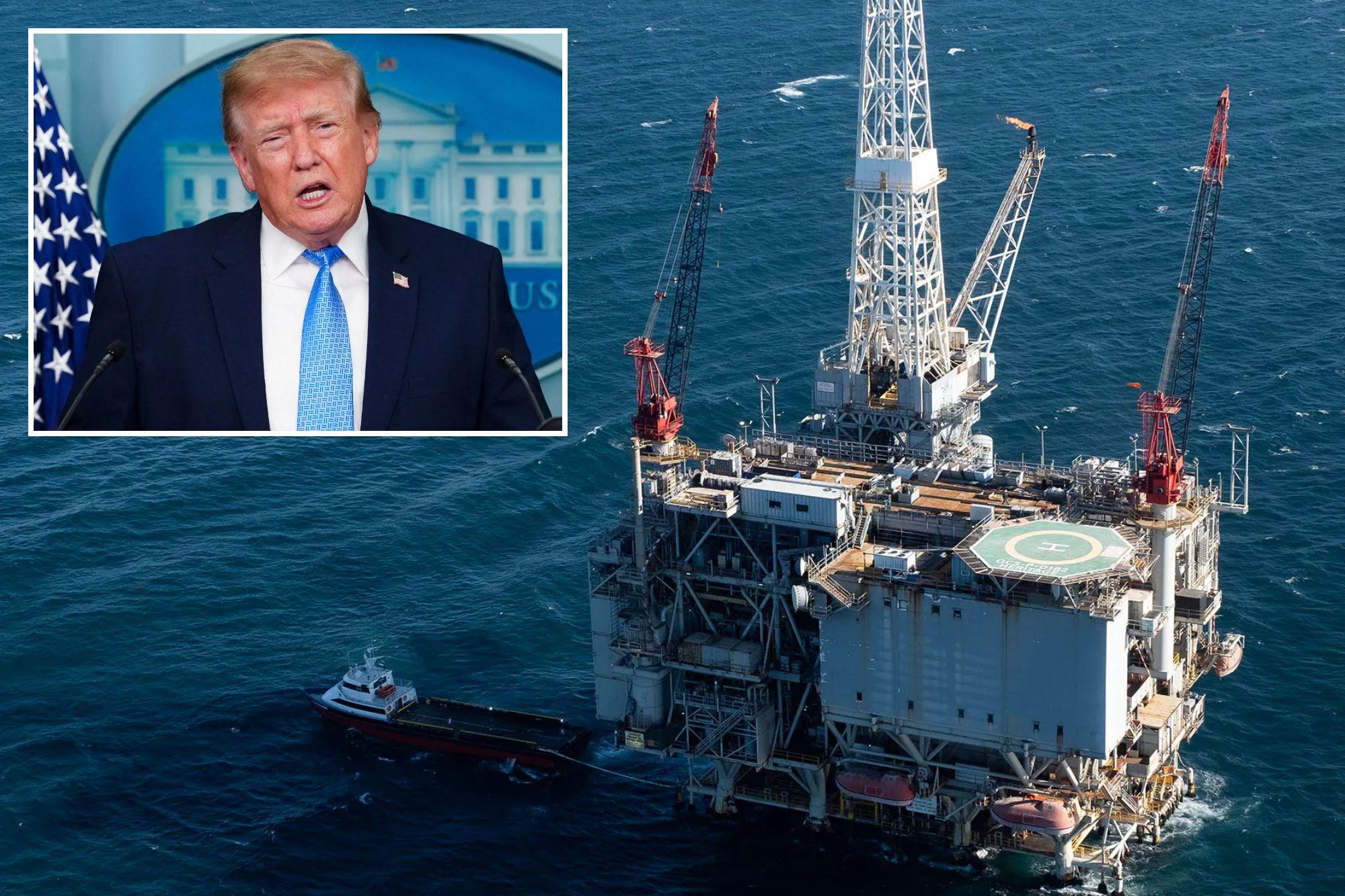
He’s right about the Strait of Hormuz: Gulf oil is flowing through the passage again under US Navy escort, despite Iranian attacks on shipping — but Iran hasn’t loaded a barrel of oil onto a ship since Aug. 25.
Before the US blockade, Iran’s southern sea routes carried as much as 80% of its trade.
What still reaches Tehran comes mostly by land, across seven international borders.
Those roads have become the regime’s lifeline. It’s now time to close them.
American blockades at sea and in the air demonstrate what effective enforcement can do.
In March, the first month of the war, almost no crude oil from the Arab countries passed through Hormuz; in October, 10.3 million barrels a day did, about three-quarters of the prewar flow.
But the US Navy has bottled up Iran’s tanker fleet, and that’s inflicted real damage: In mid-October Iran sold the last of the 89 million barrels it had on tankers beyond the blockade line.
Its Chinese buyers pay a month or two after delivery, so the final payments could arrive around mid-December.
Now, a senior budget official is saying Tehran “must prepare for circumstances in which oil revenue reaches zero.”
The sky is closing too: Since Treasury sanctioned the last of Iran’s airlines in September, the United Arab Emirates, Oman, Georgia and Azerbaijan have barred them all.
China’s and Russia’s are the last major runways still open.
The roads, however, are allowing the regime to rearm and to buy time.
At least $2 billion in military supplies has reached Iran since January 2025, some of it by truck from Central Asia.
A land blockade doesn’t mean sealing 3,700 miles of frontier.
Heavy freight must pass through a limited number of official crossings, and trucks cannot carry the loads that ships do: An official at Iran’s own Chamber of Commerce has estimated that one cargo vessel equals about 2,500 trucks.
Close most crossings, inspect every truck at the rest, and Iran’s lifeline becomes a queue.
To that end, this month US Central Command established Task Force Iron Gate, charged with stopping weapons, sanctioned goods and illicit cash from crossing Iran’s land borders and the Caspian Sea.
The goal is to make the overland route slow, expensive and payable only in the hard currency the regime no longer earns.
And the plan is to have Iran’s neighbors, not American troops, enforce the blockade with their own border guards.
Three countries, Iraq, Pakistan and Turkmenistan, guard more than 60% of Iran’s land border.
But persuading them to take part in the effort has been tricky: Iraq has so far refused Washington’s request to close all but two of its crossings, and Pakistan has shuttered them intermittently.
CENTCOM needs to take action to strengthen the case for cooperation.
It must offer intelligence: The US must pledge to share data from American satellites, drones and financial investigators, so border commanders can know which trucks to open.
It must offer partnership: CENTCOM’s naval arm leads a coalition of more than 40 nations, including Iraq and Pakistan, that hunts smugglers at sea. Iron Gate should be that coalition on land.
And it must use its existing leverage: It’s hard to say no to the military force that has trained you for decades.
The US-led coalition trained and equipped Iraq’s border guards, Washington approved a $686 million upgrade of Pakistan’s F-16s last year, and CENTCOM paid for a border checkpoint on Turkmenistan’s frontier with Iran.
CENTCOM should make clear that future training, equipment and funding depend on cooperation at the Iranian border.
Treasury has sanctioned Iran’s rail and auto sectors, truck makers included.
It should back the task force by putting every freight forwarder, trucking company and inland port on notice that hauling the regime’s cargo means losing access to the dollar.
Parliament Speaker Mohammad Bagher Ghalibaf predicted on Nov. 11 that the incoming Congress will pile political pressure on the White House.
Trump must prove him wrong. No deal has to mean no letup.
There’s no need for another major military campaign while economic pressure does the same work.
Save military force for the minelayers and missile crews that threaten ships and Americans.
Anything wider hands the regime the war it would use to hide a broken economy.
The sea is closed to the regime, and the sky is closing.
Close the roads, and it will be left alone with the 90 million Iranians it has robbed for 47 years.
Then it will have two choices: accept America’s terms, or answer to its own people.
Mark Dubowitz is chief executive of the Foundation for Defense of Democracies, where Miad Maleki is a senior fellow.