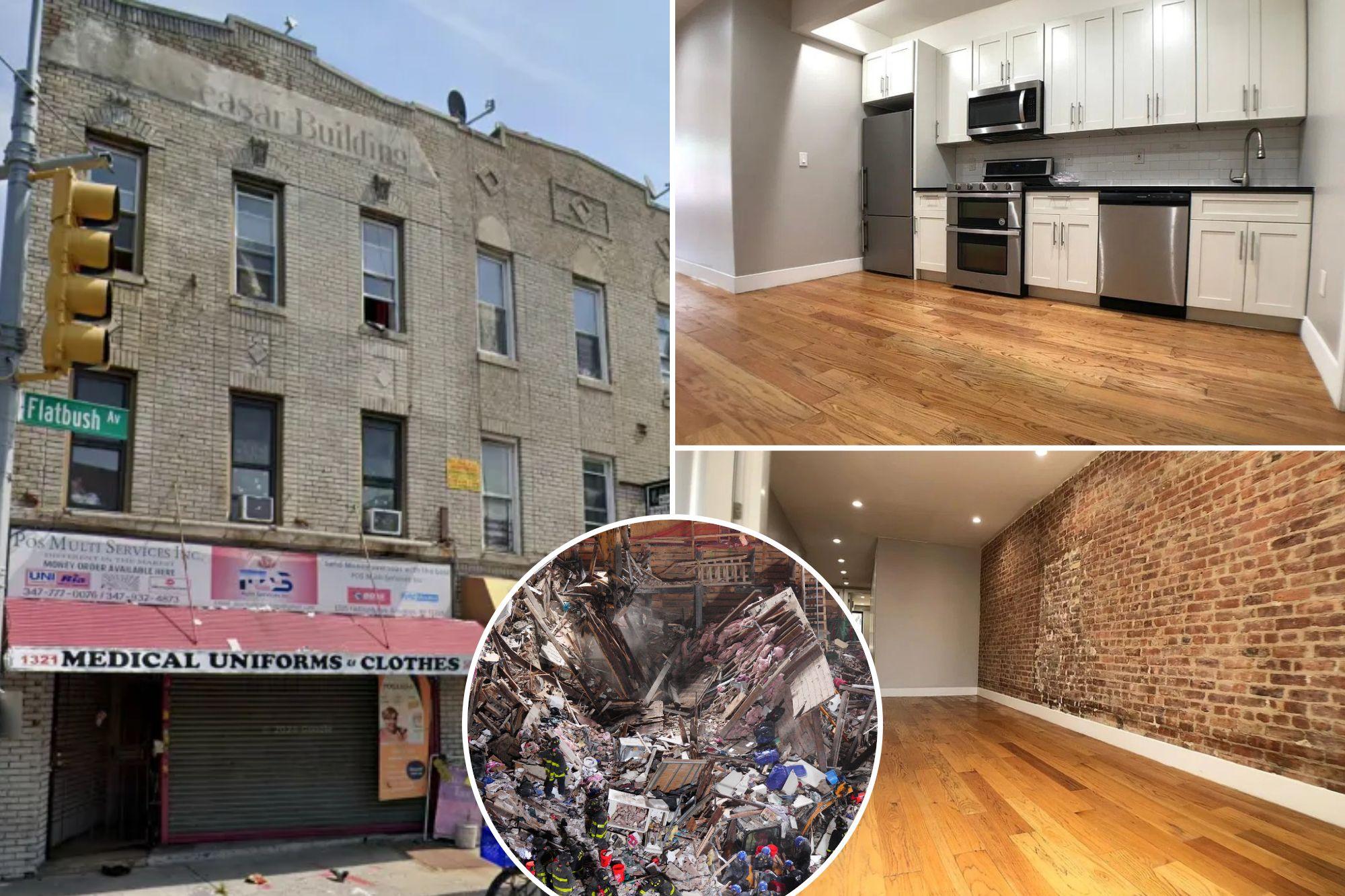
Make New York Post a Preferred Source For years, the Brooklyn walk-up that crumbled Wednesday gave city inspectors no reason to worry about its bones. Then the wrecking crews showed up next door.
The three-story building at 1321 Flatbush Ave. had no structural complaints on file with the Department of Buildings until demolition began on the neighboring lot at 2625 Bedford Ave. in September 2025, records show. Within months, the first documented signs of trouble appeared.
Excavation followed, and on Wednesday afternoon the building came down into the pit.
As of Thursday afternoon, nearly 24 hours after the collapse, at least eight people were killed and 19 hurt, three of them firefighters, according to the FDNY.
An inspection report commissioned by the developers’ contractors and filed with DOB in March flagged cracks in the building’s north facade and described it as being in bad shape. That same month, the city ordered demolition next door stopped.
Mayor Zohran Mamdani said he was “incredibly troubled” that work kept going at the site despite the report.
It did keep going. Inspectors photographed a one-story structure still standing on the Bedford Avenue lot on March 20. When they came back April 23, it had been leveled. General contractor N Tech Design of America was hit with a Class 1 violation, the city’s most serious tier, for defying the order. The Brooklyn firm admitted it and paid a $10,000 fine. DOB lifted the stop-work order in May after deciding the problems had been fixed.
The developers had an active permit for excavation and foundation work, the agency said. The license of the third-party inspector assigned to oversee the digging expired in July, and it’s unclear whether that inspector was still on the job.
In a vacate order issued Thursday, the DOB blamed the collapse on unsafe construction work at the Bedford Avenue site, saying the building fell all the way to the ground with sections landing in the lot.
Before the bulldozers arrived, the building’s record with the DOB was close to spotless. The agency logged just two complaints there before Wednesday, both in 2019, and both about an outdoor advertisement hung without a permit. That same billboard flap produced all 13 of the property’s violations with the city’s administrative court. Every one was a sign and advertising ticket, and none touched the building’s walls, floors or foundation.
Calls to 311 were just as mundane. A 3 a.m. noise complaint in March 2021 turned up nothing when cops arrived. A broken sidewalk cellar door was reported to the Department of Transportation that January. A hydrant left running out front in July 2024 was shut off by the Department of Environmental Protection. None mentioned cracks, shaking or shifting walls.
The building carries 98 open HPD violations — but mostly small issues with most dating to early 2000s and 1990s involving lead paint peeling, mice, and smoke detector replacements.
Architect William Gati told NY1 that century-old buildings like this one often sit on rubble foundations, which can crumble when crews dig beneath them without reinforcing them first.
“When a building collapses, I’m upset,” Tom Winant, a structural engineer and president of Straam Group, a civil engineering and construction technology firm specializing in structural risk assessment and management, told The Post. Straam’s clients have included the MTA and a luxury condo building that was getting a subway tunnel built below it.
“You start with visual assessments but the structure itself, the structural integrity, can be assessed. Preconstruction surveys can go further than visual assessment. You can measure it — it’s not cheap but it’s the best way to protect the public.”
For now, he adds, the building codes are still minimal, everyone wants to save money and the level of enforcement is weak. “Codes need to be enforced better,” he said.
The building was 96 years old and held four apartments. One, a three-bed, two-bath unit with exposed brick, rented for $3,550 a month in 2022 and was off the market in a day.
The lot next door is owned by an LLC led by Robert Fischman and two partners, who had filed plans for a nine-story mixed-use building with a supermarket on the ground floor and apartments above. The collapsed building is owned by Isolag Realty Corp., a company tied to Olufemi Falade.
Reps for Isolag Realty, N Tech Design of America and the developers did not immediately respond to requests for comment.