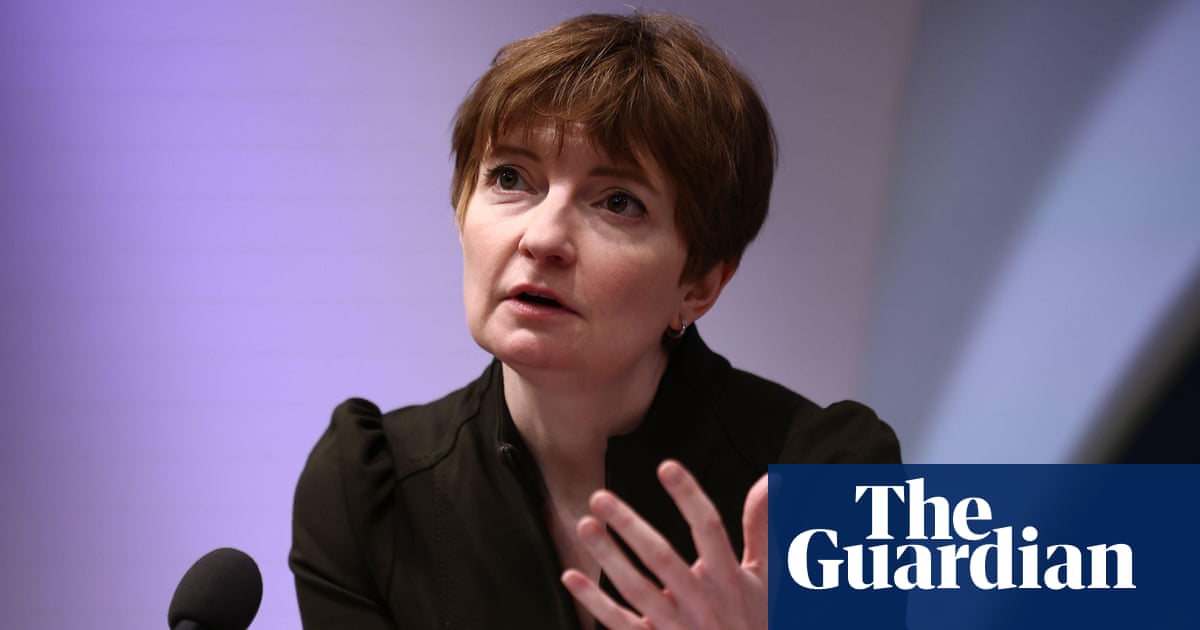
Bank of England deputy governor Clare Lombardelli said the UK’s employers were holding on to staff and freezing new recruitment. Photograph: PA Images/AlamyView image in fullscreenBank of England deputy governor Clare Lombardelli said the UK’s employers were holding on to staff and freezing new recruitment. Photograph: PA Images/AlamyYoung people in UK hit by ‘low-gear economy’, warns Bank of England deputyExclusive: Iran war has fuelled energy price rise and clouded outlook, driving up unemployment, says Clare Lombardelli
Young people in Britain are bearing the brunt of a “low-gear economy” as employers hold back from hiring amid the fallout from the war in the Middle East, a deputy governor of the Bank of England has warned.
Clare Lombardelli, the Bank’s deputy governor for monetary policy, said the unfolding conflict, which has triggered a surge in energy prices and clouded the outlook for the economy, was contributing to an increase in youth unemployment.
“What you see is the cost falling on young people, so you can see this rapid rise in the number of young people who are struggling to find jobs,” she said.
Read moreAgainst a highly volatile backdrop, she also warned Threadneedle Street was preparing for a “live” decision on interest rates next month after it increased the cost of borrowing last week for the first time in three years.
In an interview with the Guardian, Lombardelli said the UK’s employers were attempting to navigate the complex geopolitical backdrop by holding on to staff and freezing new recruitment.
“It’s what I call a low-gear economy. So a labour market where you’re seeing a real fall-off in hiring. But actually, we’re not seeing much in the way of redundancies. What’s going on is this kind of low hire, low fire dynamic,” she said.
“They [employers] are delaying hiring. They want to see if this uncertainty is going to resolve – like all of us. None of us thought we’d be nine months into this conflict.
“If firms are not hiring, obviously, by definition, that means people that are new to the labour market are hurt by that.”
Her comments come as Andy Burnham’s government awaits the findings of a report into young people and work by the former Labour cabinet minister, Alan Milburn, which is expected to be published next week.
With employers facing rising costs triggered by the Iran war, higher taxes and weaker levels of demand from consumers squeezed by the cost of living crisis, unemployment in the UK has risen this year to 4.7%. Youth unemployment has risen at a sharper rate to the highest levels outside the Covid pandemic since 2015.
Tackling the UK’s youth jobs crisis is also a growing priority for the government after an increase in the number of young people who are not in education, employment or training (Neet) to almost a million.
View image in fullscreenLombardelli is a former Treasury and OECD economist. Photograph: Graeme Robertson/The GuardianLombardelli is expected to outline her concerns over a slowdown in labour market dynamism at a speech in London on Tuesday.
Lombardelli joined the majority of the Bank’s monetary policy committee (MPC) in voting to lift the base rate from 3.75% to 4%. She said a further quarter-point rise could be warranted from as early as its next policy meeting in December.
“Every meeting is live for us. December is, you know, it’s certainly plausible. What’s the market pricing at the moment? It’s about 50/50 for December,” she said.
“I think it depends what we see on the conflict and the energy prices and it depends what we see in the wider data and how all that fits together. But I wouldn’t rule it out. Equally, I don’t have enough information just yet.”
Lombardelli was among members of the MPC who joined the Bank’s governor, Andrew Bailey, in raising the prospect of another rate rise in the near future – with a resolution to the Iran conflict the key factor that will influence the decision.
Oil prices have fallen sharply, to below $100 a barrel, after the Democrats’ victories in the US Congress, which some investors have interpreted as potentially constraining Donald Trump’s capacity to prolong the conflict in Iran. Trump said at the weekend that he was highly unlikely to order fresh attacks on Iran as long as talks to end the conflict progressed.
Lombardelli, a former Treasury and OECD economist, said the impact of an increasingly stagnant jobs market was being seen particularly in sectors that offer young people their first job. “So that might be hospitality, it might be retail, in particular,” she said. “If you look at the distribution of where variances are, they’ve really fallen off in those sectors where young people can get their first start in the labour market.”
She added that employers surveyed by the Bank suggested there is “a sense that hiring a young person is a higher risk than it used to be”.
Threadneedle Street is focusing heavily on the jobs market amid concerns that current high levels of inflation could become entrenched in the economy if workers have enough bargaining power to push for higher wage settlements – which could lead companies to put up their prices to cover higher wage bills, stoking inflation. Signs of a weaker labour market could diminish this risk.
However, Lombardelli said that higher levels of unemployment would not necessarily bear down on inflationary pressures. This is because employers – holding on to the staff they needed – were only hiring for positions they found harder to fill.
“You can have higher unemployment without it exerting a downward pressure on inflation,” she said. “So that’s obviously a problem.”