play Live Sign upShow navigation menuplay Live Click here to searchsearchSign upOPINIONOPINION, Opinion|Donald TrumpCan the Republican Party survive Trump?Republicans must choose between rebuilding Trump’s coalition and moving beyond him, but their chances of winning in 2028 may actually depend on what the Democrats do next.
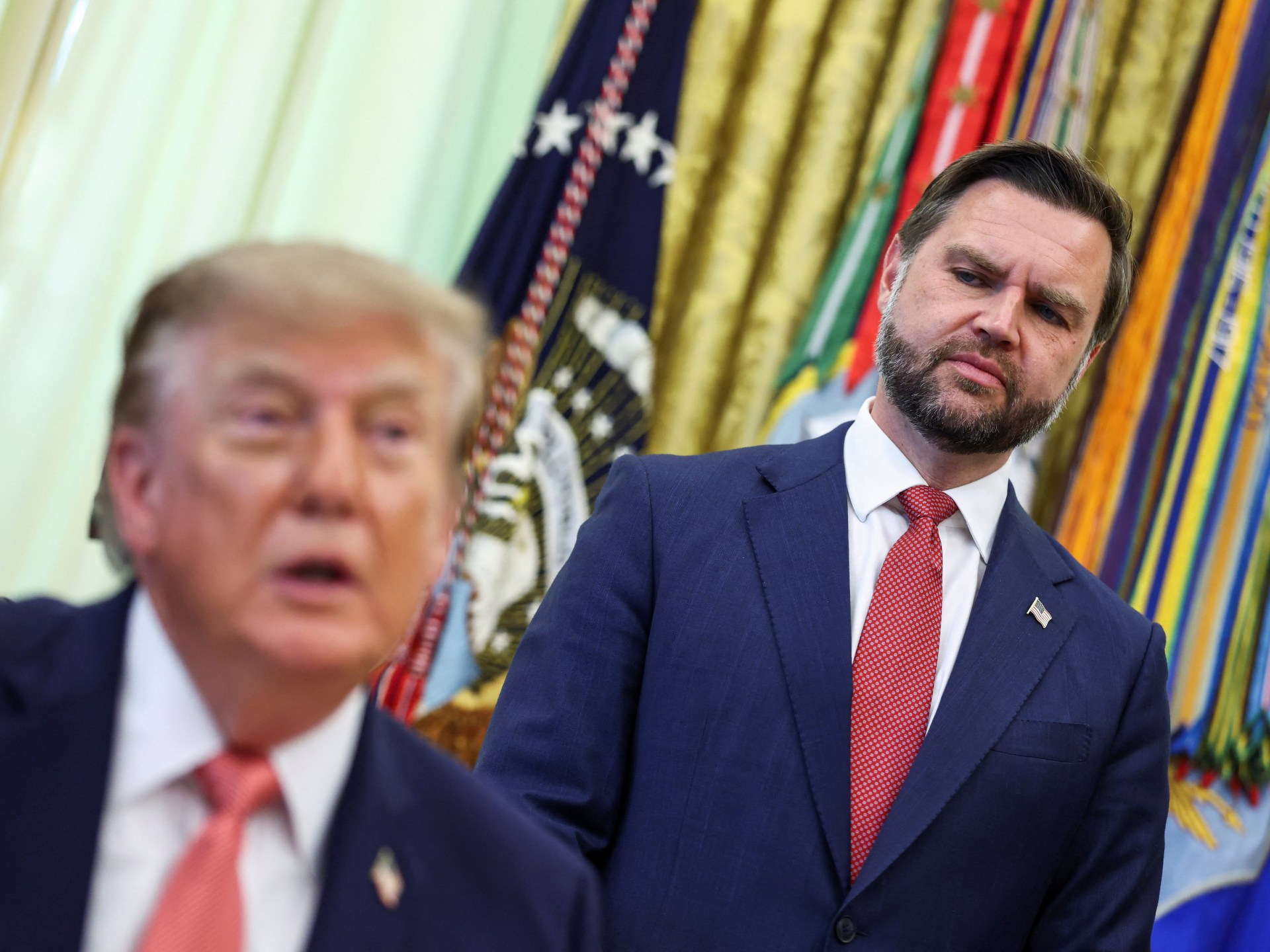
xwhatsapp-strokecopylinkgoogleAdd Al Jazeera on GoogleinfoUS Vice President JD Vance listens to President Donald Trump speak, as they make a joint appearance in the Oval Office, at the White House in Washington, DC, US, October 20, 2026. [Kevin Lamarque/Reuters]There is a saying in politics: “Every election is fundamentally about the next one.” On November 3, the Republican Party suffered what some have labelled a near “extinction-level” loss in the 2026 midterms. With the results likely to offer an indication of what lies ahead in the next presidential election, what options do Republicans have for 2028? First, we need to understand why this latest “blue tsunami” occurred. The midterms were a rejection of Trump, not an endorsement of the Democrats.
Last Tuesday’s outcome reflected voters holding Trump responsible for economic disaster, huge increases in the cost of living, his failing war on Iran, and his catering to Israel. It is also a condemnation of the Trump family using the Oval Office to enrich themselves and their friends to an unprecedented degree.
Coming into the midterms, voters saw the Trump administration as corrupt and as having abandoned the populist grassroots that had helped him get elected in the first place. A bad economy, failed tariffs, and an unwanted war widened the gap between the MAGA loyalists – who remain loyal to Trump as a political figure – and the America First factions of the Republican Party, which remain loyal to the values that Trump had campaigned on but failed to deliver. It was the separation of these two groups, once seen as interchangeable, that ultimately destroyed the Trump coalition, which had brought Trump and the Republicans to power in Washington.
During the latest midterms, we witnessed many prominent voices in the conservative movement openly oppose Republican leaders. Popular conservatives such as Tucker Carlson and Marjorie Taylor Greene spoke out publicly against several Republican candidates, including Mike Rogers in Michigan and Ken Paxton in Texas. Former Trump supporter Nick Fuentes advocated for months for his followers to vote for Democrats. Their argument was that Trump had betrayed America First principles and could no longer be trusted. Many former grassroots Trump voters who had supported him because of his economic agenda and because he had said that he wanted “no more wars” had suffered greatly due to the increasing cost of living and job losses. In the end, Trump lost support among young voters, Hispanic and Latino voters, Black men, and suburban and independent voters.
These results put the Republican Party at a critical juncture, leaving many to wonder what vision the party will have in 2028. Should they focus more on the post-Trump era, leaving Trump behind, or double down on his original agenda and rebuild his coalition to stay relevant? There are two major forces at play here: Trump himself, as a powerful figure, and the Republican establishment that wants to regain control of the party and stay relevant. Many observers conflate these two forces, while others believe that Trump reinvented the party and became the establishment in the process. Both are wrong. While Trump is still the most powerful person in the Republican Party, and his broader political operation has many hundreds of millions of dollars to support his agenda, he was never the establishment.
The traditional Republican establishment includes institutional donor networks, former party leaders, Reaganite think tanks, and corporate lobbying groups that accepted Trump’s reign while he was delivering on judges and tax cuts, but never truly accepted his populist takeover. The midterm results have given a boost to the more traditional power structures to attempt, again, to “take their party back”. Both are powerful forces with influential bases. The establishment is counting particularly on the fact that the Trump coalition has weakened considerably and will be hard to regenerate. They think Trump is likely to focus his fundraising efforts on himself – in the form of building his presidential library – rather than helping new candidates. On the grassroots side, Republican voters feel betrayed after Trump’s poor handling of the Epstein scandal, unprecedented political profiteering and corruption allegations, and the war on Iran.
Since these midterms were a referendum on how unpopular Trump has become, this leaves the Republican Party with two primary options: rebuild the Trump coalition or prepare themselves for a post-Trump conservative party. The key question now is how Republican candidates can distance themselves from Trump while at the same time attempting to rebuild his winning voter base. Walking this tightrope will mean finding a way to bring MAGA and America First back together again. This may seem like an impossible task in the current political climate, but it is hard to imagine any other winning scenario.
There are many names already in play, with more likely to enter the field within the coming months. Vice President JD Vance seemed to be the heir apparent with the strongest prospects prior to the recent midterms. Vance is powerful in terms of his proximity to Trump and the support he can garner from MAGA and wealthy donors in the tech industry. He also has ties to the America First crowd. Turning Point USA endorsed him publicly a year ago. Tucker Carlson, with his large following, still supports Vance. On the other hand, Vance will have a hard time distancing himself from the Trump administration’s failures on the economy, immigration, and the war on Iran. Vance will have to walk a fine line, criticising Trump enough to distance himself from bad policies while not losing support from the hardcore MAGA base, which is likely to retaliate if it feels left behind. If Vance refuses to criticise Trump altogether, we will likely see a repeat of the Kamala Harris-Joe Biden scenario. One of Vance’s major weaknesses when it comes to electability is that he is not an establishment figure himself. He faced a difficult race for the US Senate in Ohio in 2022. Trump chose him in 2024 as his running mate due to his ties to the tech billionaires and to challenge the Republican establishment. These factors will complicate Vance’s journey within the 2028 field should the establishment start to regain its footing within Republican leadership circles.
The 2028 establishment favourite within the Trump administration is Marco Rubio. It will be easier for Rubio to distance himself from Trump’s economy, but he will have a harder time distancing himself from Trump’s foreign policy and the war. Rubio is well-liked within the establishment, neoconservative and traditional donor groups. However, he is not a MAGA favourite, nor is he seen as an America First choice. Rubio’s main problem is that he is many people’s second choice. Also, his relationship with controversial donors such as Miriam Adelson will be a significant obstacle for him, as will his views on Israeli influence in US politics.
When thinking about 2028, Ron DeSantis, the outgoing governor of Florida, is another strong player. He is positioning himself to lead the Republican Party after leaving office in January. DeSantis is widely credited with the only success that Republicans had in this brutal midterm. He also has close ties to pro-Israel donors in Florida and nationwide. However, his weak performance and failure in running a national campaign against Trump in 2024 have not been forgotten.
Besides these names, the field will likely have many other candidates, some of whom will represent the establishment, and more who will challenge both forces alike. While the midterms were a referendum on Trump’s lack of popularity, they were also a vote against the establishment. Many Republicans and conservatives will pick up on this momentum and attempt to act on it. In this camp, we could see people like Congressman Thomas Massie, a possible run by former Congresswoman Marjorie Taylor Greene, as well as complete outsiders who we don’t yet know. The determining factor, in my opinion, will be the Democrats. The Democrats’ strategy in managing the next two years will play a major role in the success or failure of the Republicans in 2028. In other words, 2028 is now the Democrats’ to lose.
Whether Democrats focus on anti-Trump retaliation or on rebuilding the economy and regaining voter trust will shape the Republicans’ ability to make a comeback. Retaliation will give Trump another chance at survival, but Democrats will have little incentive to shift their focus to anything other than anti-Trump rhetoric if they insist on keeping their current leadership as it is, without any radical shift against their donor class and wealthy elites.
Last Tuesday was a historic event the likes of which I have not seen in more than a decade on the campaign trail. This victory complicates the Democrats’ path to achieving real success for the American people, especially given Trump’s veto power. More than anything else, the future of the Republican Party will be determined by the ability of the Democrats to come up with their own strategy that is not dependent on being anti-Trump. In some ways, the Democrats need Trump – and need him to keep failing – in order for them to continue this winning streak. It will be up to Republicans to decide on their own whether they need him or not, and whether their party’s future will centre on the personality of one man.
The views expressed in this article are the author’s own and do not necessarily reflect Al Jazeera’s editorial stance.