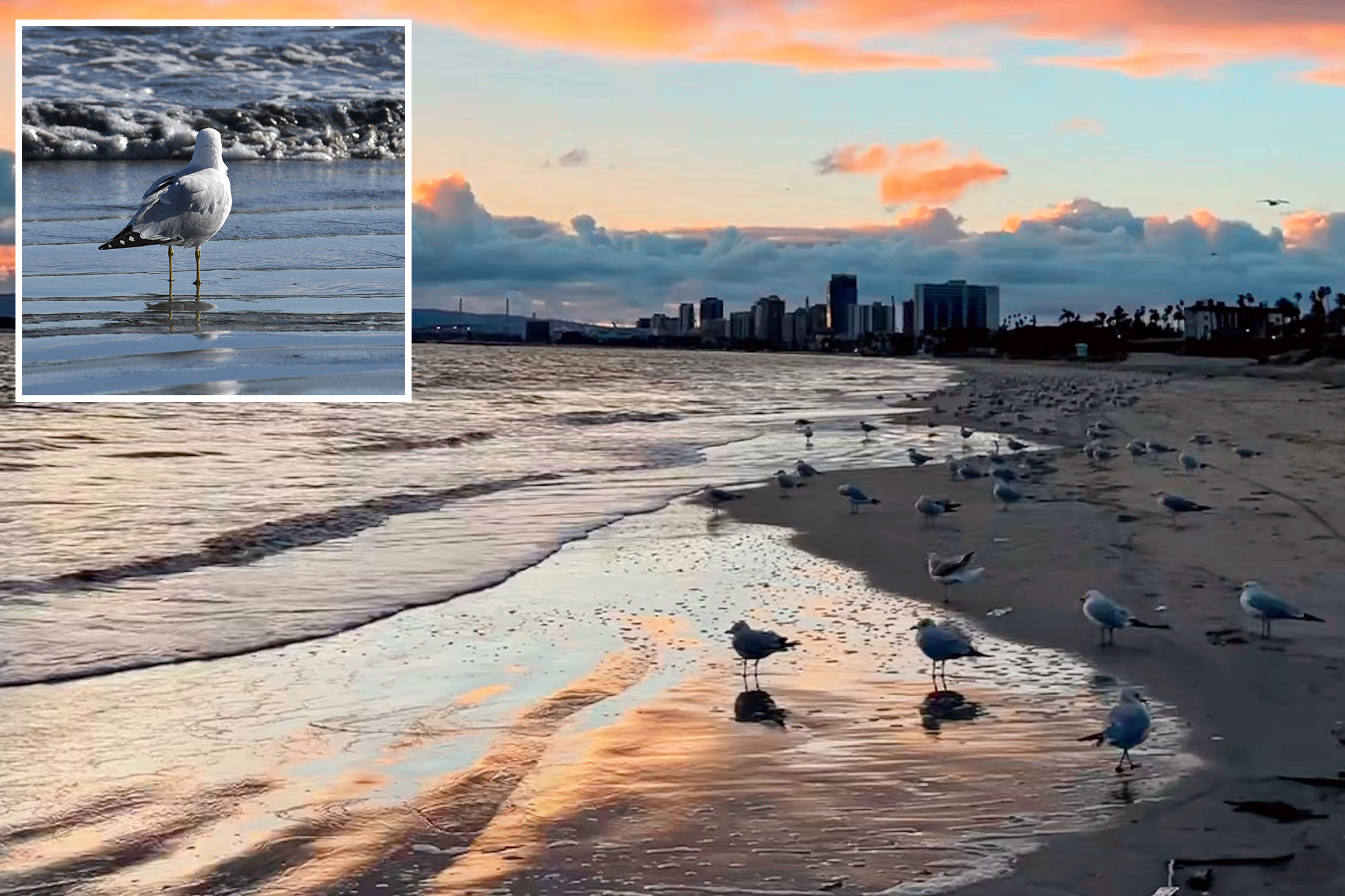
Something strange is washing up on Southern California beaches, and it’s not just trash.
Dead seabirds have been turning up in alarming numbers along stretches of coastline from Ventura County to Long Beach, and San Diego and Ventura County, according to a report from The LA Local.
The outlet reported spotting at least eight dead birds along a 1.5-mile walk on the beach in Long Beach, while social media users across California described seeing even more carcasses littering the sand.
One Reddit user cited by the outlet claimed they counted 14 dead birds during a visit to Ellwood Beach in Santa Barbara.
Officials and wildlife experts said the sightings are far from normal.
A staff member at Long Beach Lifeguards Headquarters reportedly said dead birds occasionally appear on beaches, but the volume seen in recent months has been unusually high. The employee told The LA Local that officials once found roughly 30 dead birds on the beach in a single day.
International Bird Rescue — a nonprofit seabird rescue organization with a wildlife center in San Pedro — also confirmed a spike in reports.
CEO JD Bergeron told the outlet the organization began receiving roughly four times its normal number of calls about dead birds starting around March 1, jumping from about 10 calls a day to roughly 40.
“At first, we get nervous,” Bergeron told The LA Local, explaining that bird flu was among the first concerns investigated.
Experts also explored whether harmful algal blooms — commonly referred to as red tide — could be responsible, but investigators were unable to directly connect the phenomenon to the dead birds, according to the report.
Some beachgoers speculated offshore oil operations near Long Beach may be involved. One local interviewed by The LA Local pointed toward the THUMS Islands — the manmade oil islands visible off Long Beach’s coast — and theorized birds were becoming contaminated while diving for food.
Bergeron, however, said the birds showed no signs of oil exposure.
The strongest theory so far appears to be tied to warming ocean temperatures.
Bergeron told the outlet that an ongoing Pacific Ocean marine heat wave known as “The Blob” may be disrupting fish migration patterns, forcing prey species into colder, deeper waters and leaving seabirds struggling to find food.
“From my perspective, it’s hard to see any version of this in which the temperature of the water is not a factor,” Bergeron told The LA Local.
The NOAA Integrated Ecosystem Assessment Program has tracked “The Blob” for years.
And with summer crowds expected to flood California beaches in the coming weeks, one question remains unanswered: who exactly is supposed to clean up the dead birds?
According to The LA Local, Long Beach Animal Care Services told residents that dead animal pickups are considered “non-emergency” calls and take between 24 and 72 hours for response crews to address.
California Post News: Facebook, Instagram, TikTok, X, YouTube, WhatsApp, LinkedInCalifornia Post Sports Facebook, Instagram, TikTok, YouTube, XCalifornia Post Opinion California Post Newsletters: Sign up here!California Post App: Download here!Home delivery: Sign up here!Page Six Hollywood: Sign up here!