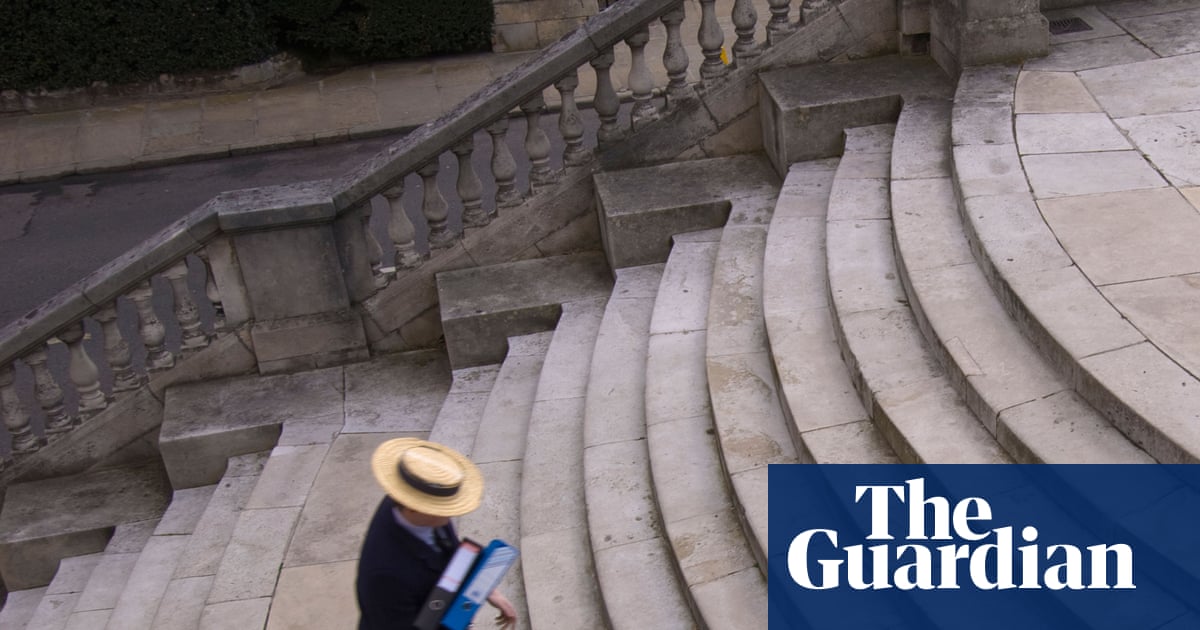
Researchers found the impact of the perceived lower risk of privately educated CEOs weakened over time as more information became available about a leader’s performance. Photograph: wronaphoto.com/AlamyView image in fullscreenResearchers found the impact of the perceived lower risk of privately educated CEOs weakened over time as more information became available about a leader’s performance. Photograph: wronaphoto.com/AlamyPrivately educated CEOs seen as ‘safer bet’ by investors, study findsPrivilege being mistaken for competence as study reveals no evidence to suggest companies run by state-educated peers underperform
Chief executives who attended private school are perceived as a “safer bet” by investors, according to a study, despite there being no evidence they perform or behave differently to their state-educated counterparts.
Companies run by privately educated bosses tend to experience lower stock market volatility, even though there are no meaningful differences in their performance, decision-making or crisis management, the research from the University of Surrey found.
The stock volatility at firms led by this group was on average 5% lower, although the study found these executives did not take fewer risks, deliver better results or handle crises more effectively.
Instead, the effect was driven by investors’ perception that those with elite backgrounds were more competent or stable.
Investors may be mistaking privilege for competence when dealing with uncertainty, according to the study, published in the journal European Financial Management, highlighting a disparity between how financial markets judge bosses and how those leaders actually behave.
Read moreDr Christos Mavrovitis, the co-author of the study and a senior lecturer in finance and accounting at the University of Surrey, said: “People like to think markets are purely rational, but our findings show that perception still plays a powerful role. A chief executive’s background can shape how investors feel about a company, even when it has no real impact on how that company is run.”
Researchers analysed decades of data on US firms, using private school attendance as an indicator of the socioeconomic background of the chief executive. They compared stock market volatility, company performance and corporate decisions at companies led by executives educated at private and state schools.
They found the impact of the perceived lower risk for the privately educated weakened over time as more information became available about a leader’s performance. It also fades in firms that face greater scrutiny by analysts or have higher levels of institutional investment, suggesting that better-informed investor rely less on social signals.
Separate research has previously shown that private school alumni tightened their grip on some of the most powerful and influential roles in British society between 2019 and last year, including in business and the media. This is despite just 7% of the UK population attending paying schools.
The 2025 report by the social mobility charity the Sutton Trust found that of the FTSE 100 chief executives educated in the UK, only a third (34%) attended a state comprehensive school, while almost two-fifths (37%) attended private school. FTSE 100 chairs were even more likely to be privately educated.