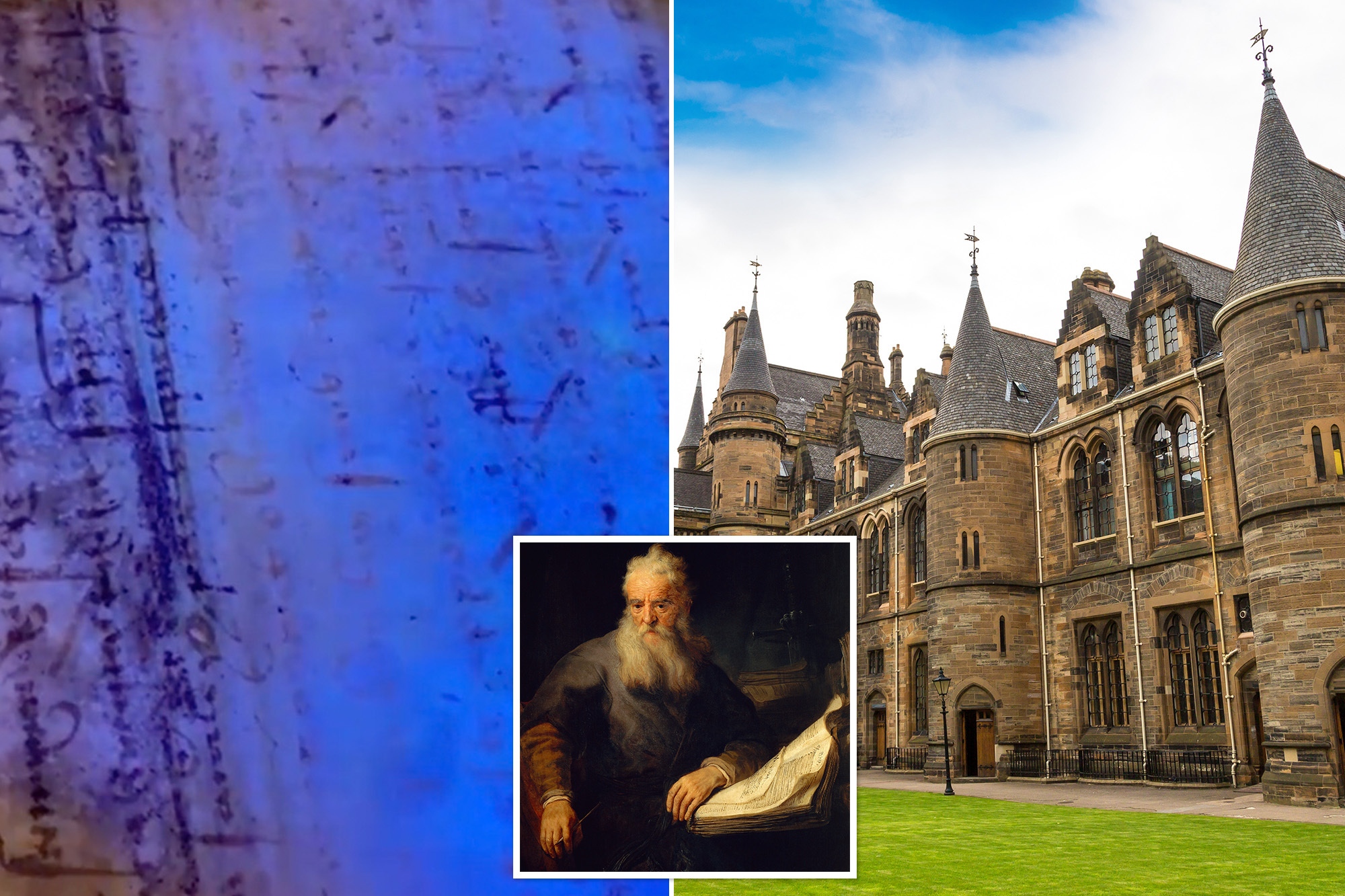
In a stunning discovery made by biblical scholars, researchers at the University of Glasgow have uncovered 42 pages previously thought to be lost from Codex H — a rare sixth-century Greek manuscript.
It contains the Letters of St. Paul written on parchment — using advanced multispectral imaging that revealed ancient text invisible to the naked eye for over 1,000 years.
A team led by Professor Garrick Allen at the University of Glasgow used advanced multispectral imaging to reveal faint “ghost” text left behind when the ancient manuscript was re-inked centuries ago.
“The breakthrough came from an important starting point: we knew that at one point, the manuscript was re-inked,” said Professor Allen, according to a news release about the discovery from the university.
“The chemicals in the new ink caused ‘offset’ damage to facing pages, essentially creating a mirror image of the text on the opposite leaf – sometimes leaving traces several pages deep, barely visible to the naked eye but very clear with latest imaging techniques,” he added.
In other words, the chemicals in the new ink created mirror-image offsets on facing pages — invisible to the naked eye but recoverable with modern technology.
The manuscript, originally written in the 6th century, was later disassembled in the 13th century at the Great Lavra Monastery on Mount Athos, Greece.
Its pages were reused as binding material and scattered across libraries in Europe including in Italy, Greece, Russia, Ukraine and France.
The newly recovered content includes ancient chapter lists (which differ from modern divisions), corrections by scribes, and over a millennium of annotations, prayers, poems and notes from readers.
While the recovered text apparently does not contain any new or unknown scripture, it does offer fresh insight into how early Christians reused, repurposed and recycled sacred texts.
Professor Allen called Codex H “an important witness to our understanding of Christian scripture” from a period with few surviving manuscripts, showcasing the fragility and resilience of ancient texts.
California Post News: Facebook, Instagram, TikTok, X, YouTube, WhatsApp, LinkedInCalifornia Post Sports Facebook, Instagram, TikTok, YouTube, XCalifornia Post Opinion California Post Newsletters: Sign up here!California Post App: Download here!Home delivery: Sign up here!Page Six Hollywood: Sign up here!