Video Therapist uses Minecraft and Roblox to connect with kids A new generation of therapists are embracing video games as a way to form social connections with their youngest clients.
Many parents worry about screen time and video games keeping their children from learning and developing crucial skills. However, a new study suggests that these same tools can be used to enhance learning experiences.
K12, a U.S.-based online education provider, recently released a new national survey of parents and working professionals aimed at exploring the long-term impact of childhood gaming. The survey showed that 52% of working professionals believed that their childhood gaming helped them build skills that benefited their career, including problem-solving and strategic thinking. K12's survey also found that 86% of childhood gamers reported that they easily adapt to new tools and technologies, such as AI.
Niyoka McCoy, K12's chief learning officer, told Fox News Digital that not all educational gaming experiences are the same, pointing to the difference between gamification and game-based learning. Gamification involves adding game-like elements, such as points, streaks or coins, to traditional learning. Game-based learning, by contrast, places the lessons inside the game itself and has students learn skills by playing.
AI IS RUNNING THE CLASSROOM AT THIS TEXAS SCHOOL, AND STUDENTS SAY 'IT’S AWESOME'
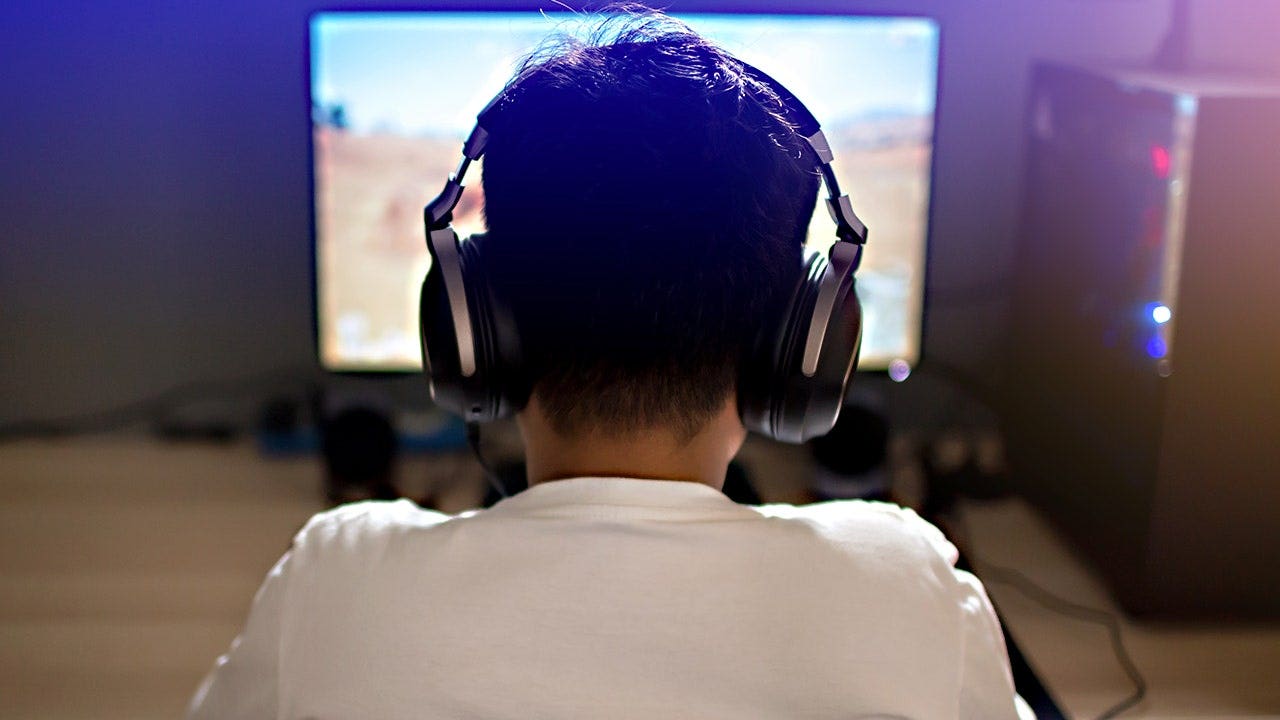
A new survey found that childhood gamers said playing video games helped them learn skills that they use in their professional lives. (Koonsiri Boonnak/iStock/Getty Images Plus)
"Gamification means that, in some cases, it's getting coins or you're getting points to be able to go to a store. Game-based learning is where you're immersed in the actual game, and you're learning through that environment and everything that's actually happening to you in that particular game," McCoy said.
The game-based learning that K12 is using is much different from the types of educational toys or games that have been employed in the past.
"One of the things that we try to do is really hide learning in the game so that we're connecting the two. So, students are learning, but they don't even know it because they're so embedded and so invested in winning the game or getting to the challenge that they're not even realizing that they are learning fractions," McCoy told Fox News Digital.
One of the games that K12 has employed for educational purposes is Minecraft, a popular online building game. The company has created several "worlds" that align with its curriculum, including the Roman Empire, Jamestown, Ancient Egypt and oceanic environments.
"Instead of a student reading a textbook and answering questions about Jamestown, they can actually be immersed in a Jamestown world, learn the same skills, and they can still go and take that unit test," McCoy said.
"We looked at the difference between the students who just read the text, answered the questions, and the students that actually went through the Minecraft world and found that those students did do better on their assessment," she later added.
Professionals who played video games in childhood say they developed valuable life skills, a new survey finds. (iStock)
ROBLOX ADDS AGE-BASED ACCOUNTS FOR KIDS AND TEENS
McCoy told Fox News Digital that K12 has seen that students who use the Minecraft spaces have retained the information while going through the gaming aspect because "they're actually having to build, figure out problems that they're solving or try to beat the challenge." She noted that another important element was that students playing the game had to collaborate with friends, making it a more interactive experience in the real world as well.
As gaming begins to play a bigger role in education, it also presents career opportunities. In 2025, the Princeton Review released its ranking of the top schools for game design. Its lists of the top schools for undergraduate and graduate game design programs included New York University, the University of Southern California, Drexel University and Michigan State University, among others.
While these programs are becoming increasingly common, parents still aren't fully aware of the option and are often concerned about their kids getting too much screen time. McCoy acknowledges that there is a learning curve for parents whose concerns about screen time remain, but she said it's not about demonizing devices, but rather reorienting their use. Part of that involves differentiating between unstructured scrolling and engaging in games that contain educational content, even in a hidden way.
K12, an online education provider, is showing parents how video games can be used to enhance their children's education. (elenaleonova/iStock/Getty Images)
CLICK HERE TO DOWNLOAD THE FOX NEWS APP
McCoy said K12 is focused on showing parents the opportunities that gaming can bring, as well as the effectiveness of game-based learning. She told Fox News Digital that some parents changed their views after engaging with the games themselves.
"Now we have parents that are in Minecraft, that are playing with their students. It's like, ‘I learned so much about Jamestown, I had no clue,’" McCoy said.
Rachel Wolf is a media and culture reporter for Fox News Digital.
Get all the stories you need-to-know from the most powerful name in news delivered first thing every morning to your inbox.
By entering your email and clicking the Subscribe button, you agree to the Fox News Privacy Policy and Terms of Use, and agree to receive content and promotional communications from Fox News. You understand that you can opt-out at any time.
You've successfully subscribed to this newsletter!