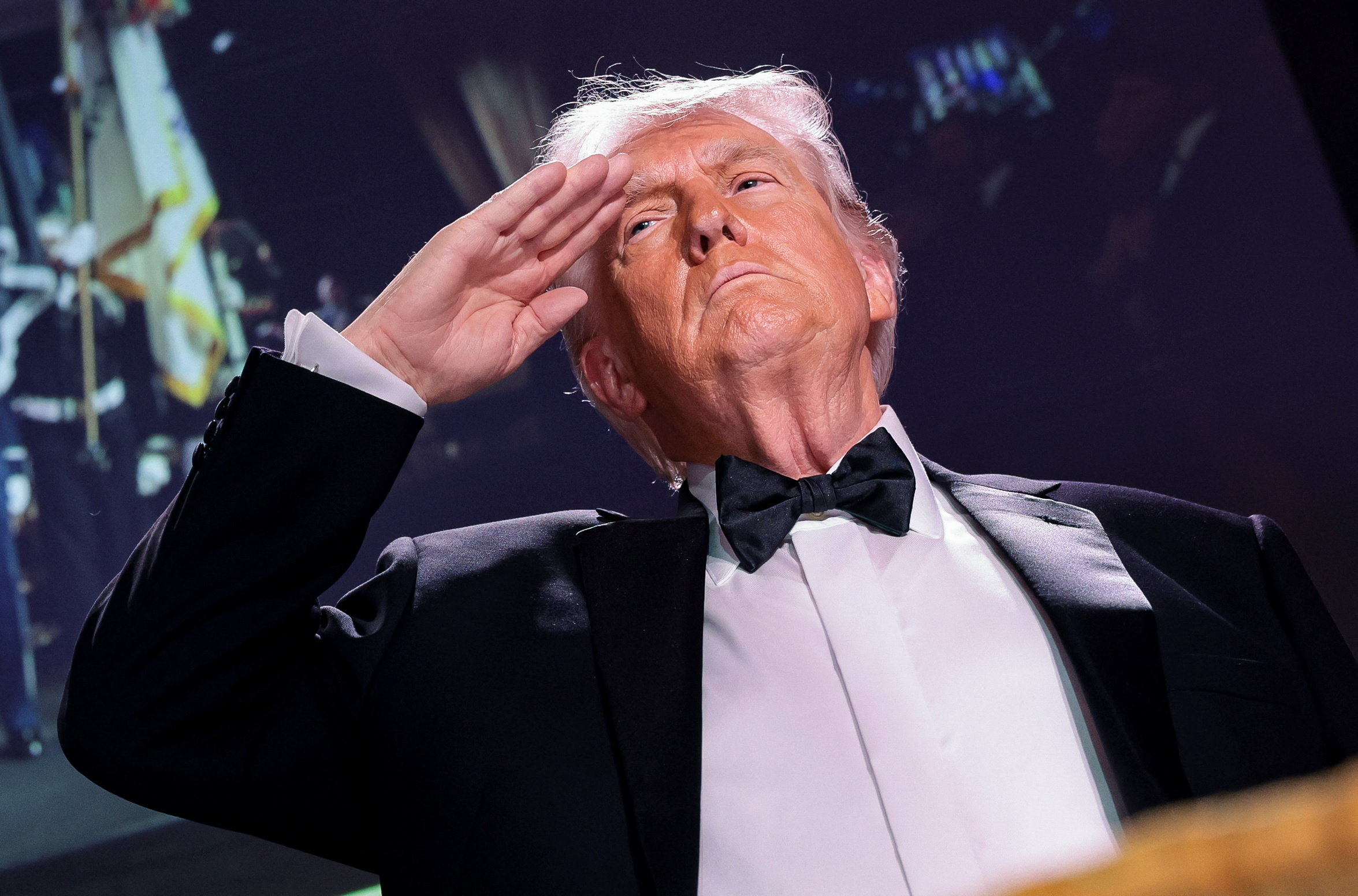
President Trump is being praised for his poised response after the White House Correspondents Dinner shooting. REUTERS White House watch: Don’s Presidential Moment “Donald Trump looked presidential on Saturday night” after the assassination attempt at the White House Correspondents Dinner, applauds The Wall Street Journal’s Faith Bottum. “He was calm and in charge,” praised Secret Service members and called for the event to be quickly rescheduled. His “bravery,” and that of “those who protected him” are admirable. “Courage is one of the virtues” we want in our leaders. Trump noted being president is dangerous: 8.5% of US presidents were assassinated. But Trump’s response Saturday echoed “what happened in Butler, Pa., after a bullet grazed his ear and he “stood up with a bloodied face, raised his fist and shouted, ‘Fight, Fight, Fight!’ ” On Saturday, he again exhibited “presidential stature.” “We should all be relieved he survived the attack.”
The “hostilities in the Persian Gulf” may be fueling fears that “the global economy will become more constrained and oil prices will continue to rise,” observes Milton Ezrati at Quillette. But though it’s tempting to reflect on the 1973 oil crisis and the resulting “inflation, recessions, and economic stagnation,” the “present situation is very different,” even if “some parallels” exist. If anything, technological advances have “created a sense of oil and gas abundance,” and it’s unlikely that “monetary authorities will make the same mistakes” they made in the ’70s. “A great many questions remain,” and “the Iranian regime has turned out to be more resilient than the US or Israel expected,” but conditions do not point to a rerun of ’70-style stagflation.
Yale’s new report on the “collapse of public confidence in our colleges and universities” admits “higher education is too expensive, too arbitrary, and too politically biased,” snarks Paul Du Quenoy at Chronicles. Yet many of the report’s “recommendations are platitudinous,” and though they “may sound courageous,” they resemble the effort of “any neighborhood car wash asking for customer feedback.” The most pragmatic demands “barely rise above milquetoast palliatives,” and “do not even try to answer” the most “obvious questions” on matters like “how and why college became so unaffordable.” The faculty report also self-servingly hijacks “the reform recommendation process” to insist that faculty “have a major role in recommending reforms.” Alas, the report isn’t likely to change or improve the baleful state of higher education.
During the mayoral campaign, Zohran Mamdani touted his “‘$30 by ‘30’ plan, which called for increasing the city’s minimum wage to $30 by 2030.” Now, some City Council members threaten to turn “a catchy campaign slogan into an economic reality,” warns C. Jarret Dieterle at Reason. The bill also eliminates “the tipped-wage credit,” leaving small restaurants “on the hook for paying workers $30 an hour.” Restaurant owners warn “the bill could pose a dire threat to NYC’s famed dining scene.” When other cities scrapped the tip-credit system, the results were “disastrous”: DC restaurant-worker earnings fell as eateries “cut jobs and reduced hours for staff.” NYC restaurateurs warn that “a $21 hamburger would become $33.” If Mamdani and the Council succeed, “$33 hamburgers might become the norm.”
Studies show that “states that have legalized recreational pot have a lower total fertility rate than those that haven’t,” report Jennifer Galardi & Scott Yenor at The Federalist. And also that “cannabis use may be associated with a 41 percent decline in the ability to conceive compared to non-users.” More: “States with legalized recreational pot experience spikes in psychotic and bipolar disorders among young adults.” The media, including the New York Times, acknowledge “the “public health challenges” posed by legalized pot.” But “the damage has already been done.” Meanwhile, the “revenue boons from pot legalization” have not been realized, thanks to black-market sales. Upshot: “Some states are rethinking legalization and even reversing course.”