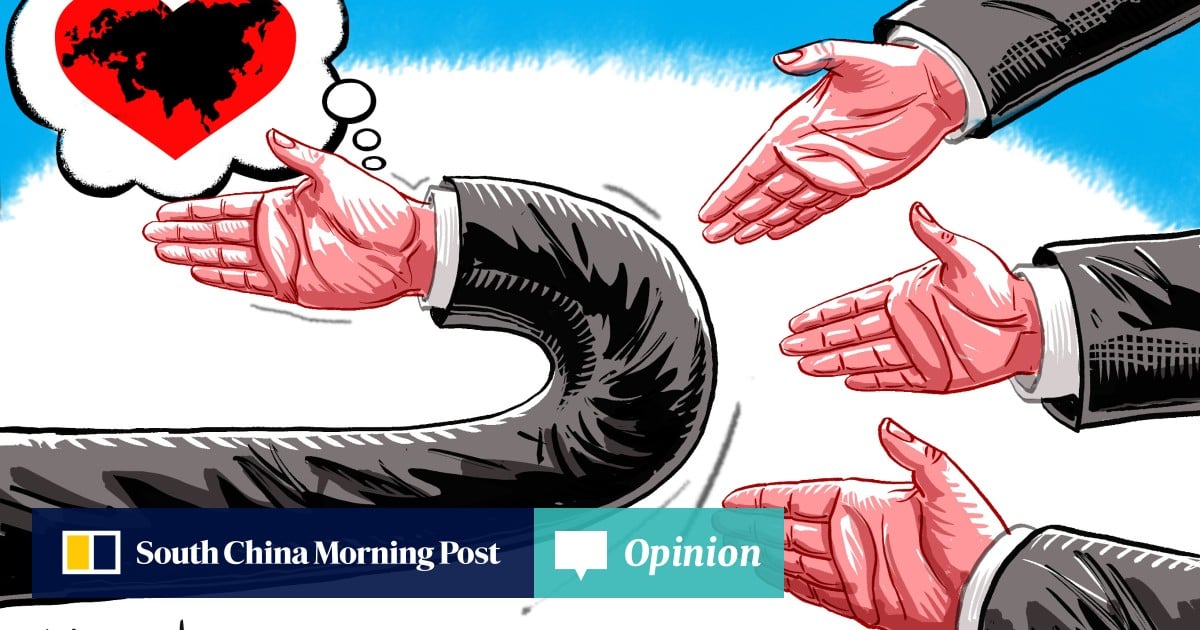
Conflicts in Ukraine and Iran have returned strategic focus to the idea of Eurasia as central to the global power contest, challenging the viability of the Indo-Pacific pivot
3-MIN READ3-MIN ListenLi XingLi Xing is a Yunshan leading scholar and a distinguished professor at Guangdong University of Foreign Studies, and an adjunct professor of international relations at Aalborg University, Denmark. Published: 5:30am, 27 Apr 2026Geopolitics, at its core, examines how geography shapes international politics, power distribution and security dynamics. One enduring idea is geographer Halford Mackinder’s “heartland” theory, which situates Eurasia as the central arena of global power competition.
In 1904, Mackinder argued that the vast land mass of Europe and Asia – what he called the “world island” – contained a pivotal core, the “heartland”, rich in resources, population and strategic depth. His dictum – “Who rules Eastern Europe commands the Heartland/Who rules the Heartland commands the World Island/Who rules the World Island commands the world” – captures the essence of this geographical determinism.
But this strategic focus has been disrupted by the intensification of geopolitical density in Eurasia and US President Donald Trump’s global tariff war.