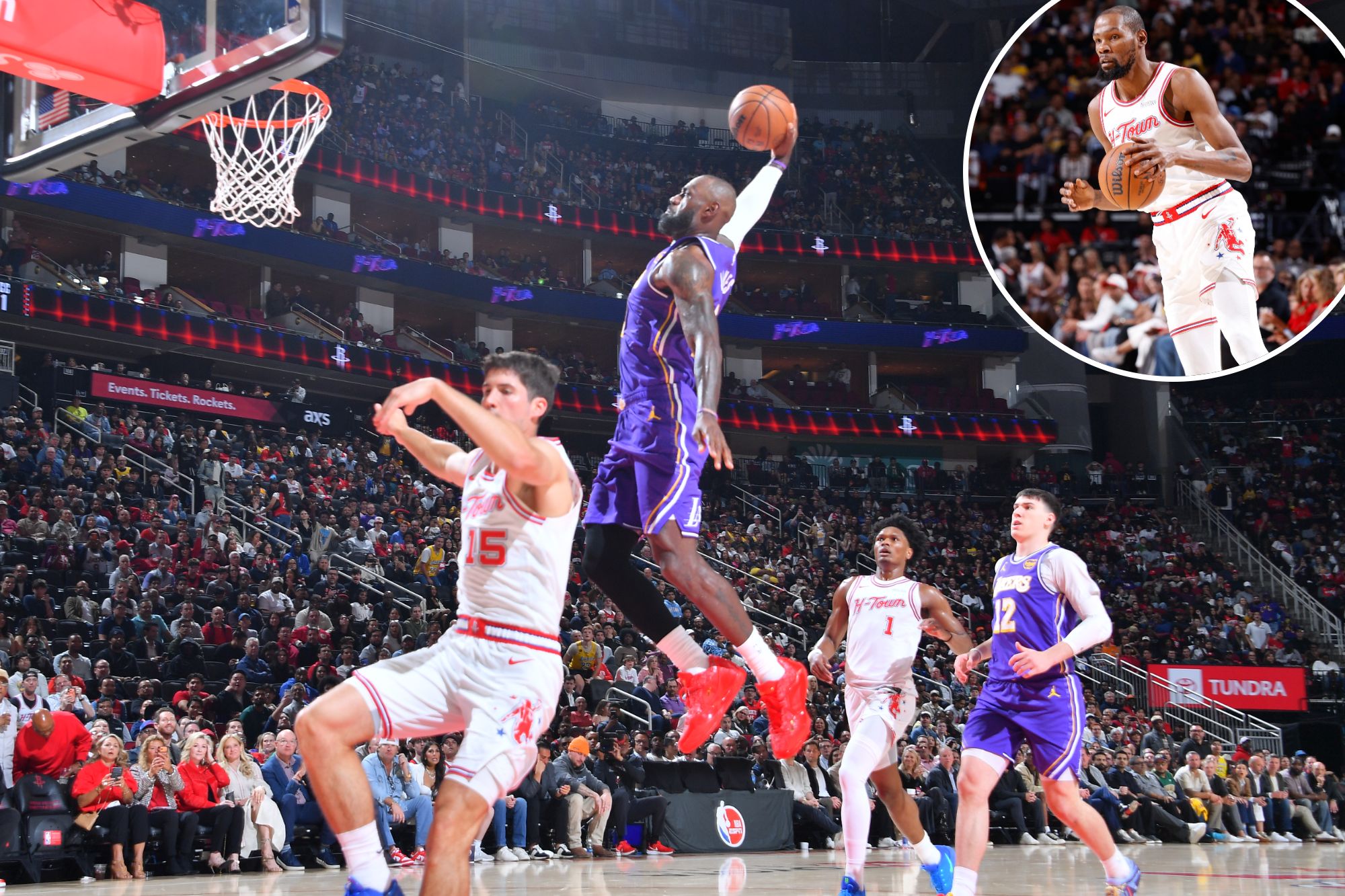
Lakers coach JJ Redick publicly acknowledged feeling like his team wasn’t physically ready for the start of last year’s first round playoff series against the Timberwolves, which ended in a five-game defeat for the Lakers. And the role his preparations from the week leading into Game 1 of the matchup played into that.
Redick made it clear that won’t be the case again this year, with the Lakers playing against another physically imposing opponent in the Rockets to start the playoffs.
Physical preparedness incorporates trackable elements, including workloads, accelerations and jumps.
“We mapped this out 10-12 days ago,” Redick said. “We wanted to reach certain thresholds, and we did. We were tracking it in real time. We met those thresholds, and thought the guys had a very business-like, focused approach to practice.”
But there are also intangible components — the types that’ll show up against a team like the Rockets.
How do you handle the defensive pressure as a ball handler?
Will you have the focus and desire to box out later in the game — or series — when fatigue becomes an even greater factor?
It’s why when asked about the keys for the matchup against the Rockets, which tips off with Game 1 on Saturday at Crypto.com Arena, Redick quickly responded, “take care of the ball and box out.”
That’s easier said than done against a Rockets team that easily led the league in offensive rebounding percentage at 38.8%, the highest mark for an NBA team during a regular season since the 1996-97 season, which is as far back as the league’s official website statistical database goes.
Stathead has this season’s Rockets as the best offensive rebounding team since the 2002-03 Warriors.
The Rockets also led the league in offensive rebounding percentage last year at 36.3%, which highlights how ingrained controlling the offensive boards is into their identity.
“That’s the series,” Redick said. “Scheme, personnel, obviously important, but if we don’t take care of the ball and we don’t box out, we’re not gonna win the series. They were No. 4 in scoring opportunities, we were No. 23. We don’t have the luxury with Luka [Doncic] and [Austin Reaves] out of getting drilled in scoring opportunities every single game. We gotta box out.”
Boxing out is such a big emphasis for the Lakers that Redick said it was the “only thing” they focused on regarding the Rockets.
“We’re going to place an emphasis on every drill in practice,” Redick added. “We started practice with boxing out. You gotta put it in their minds. That’s literally the only thing we said about Houston [on Tuesday]. [Tuesday] was about us. [Wednesday], we’ll introduce (Rockets) personnel. Thursday we’ll do our scout, as we would. Friday will be a reinforcement of that scout. Saturday we’ll be good to go.”
Lakers players welcomed the focus on defensive rebounding.
“I feel like it’s always good to get those drills in,” Jake LaRavia said. “We don’t do them enough during the season and sometimes you kind of forget or can get lethargic about it during the games. So it’s good to kind of just come back to when you were in middle school and high school and stuff, doing those drills.”
Jaxson Hayes added: “Obviously, we weren’t trying to murder each other out on the boards. But definitely practicing that stuff. Houston is one of the best offensive rebounding teams in the past 20 years. So just making sure we’re ready for that.”
The Lakers won the regular season series against the Rockets, 2-1, albeit with significantly different personnel.
They remain without Luka Doncic (left hamstring) and Austin Reaves (left oblique), with Redick reaffirming the star guards are sidelined “indefinitely” leading into the playoffs after suffering their regular season-ending injuries less than two weeks ago.
In the one game the Rockets won on Christmas in Los Angeles, Houston had a 56.5% offensive rebounding percentage, which was their highest mark of the regular season. But that came with Steven Adams in the lineup for the Rockets. Adams had season-ending ankle surgery in January.
In the two games the Lakers won in Houston in March, Houston finished with offensive rebounding rates of 47.6% and 36.2%, respectively, which were still high but more manageable.
“They’re going to try to come in and punk us,” Marcus Smart said. “And if you allow that, you will be punked. And I don’t think we have any guys that are going to be punked on this team. So, we might not be the most athletic and strongest, but we got to have the most heart.”