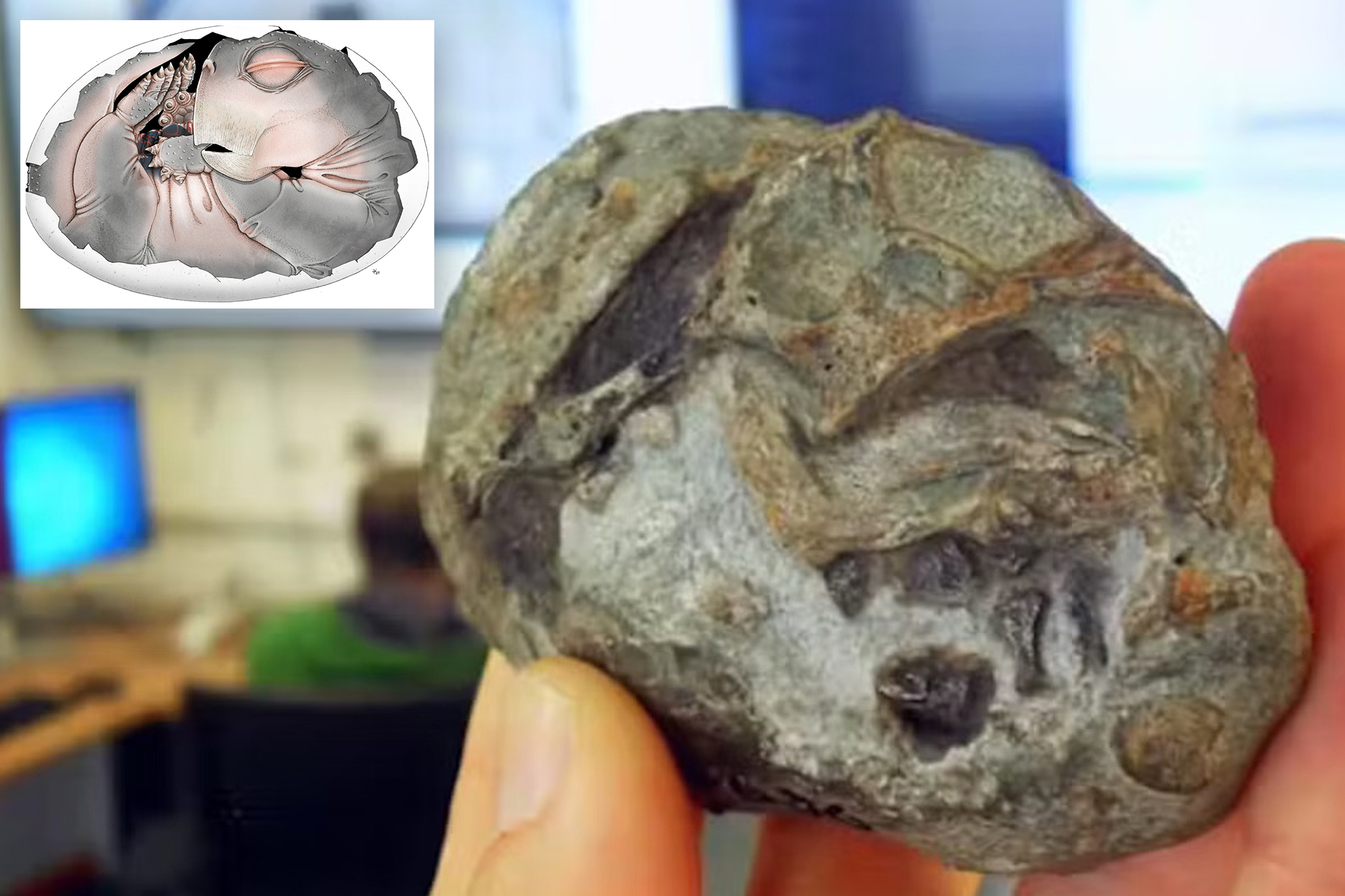
A fossil in South Africa is evidence that therapsids, one of our ancestors, were laying eggs 252 million years ago. Julien BenoitVincent FernandezJennifer Botha You can’t make a mammal-ette without laying some eggs.
The duck-billed platypus wasn’t the only mammal to lay eggs. Analysis of a fossil in South Africa proves that our mammalian ancestors were cranking out hard-shelled embryos as early as 250 million years ago, as detailed in a groundbreaking study in the journal Plos One.
“It is thrilling because this discovery breaks entirely new ground,” declared study author Jennifer Botha of the University of the Witwatersrand in South Africa, The Times reported.
The species in question was a therapsid, a group of animals that was the forefather to modern-day mammals, including humans, according to The Conversation.
They were first described over 150 years ago based on fossils found in South Africa. However, while it was known that some of our prehistoric predecessors laid eggs, researchers hadn’t found any evidence of therapsids ovipositing — until researchers analyzed the aforementioned fossil.
Found in Oviston, South Africa, in 2008 by paleontologist John Nyaphuli, the fossilized egg and embryo belonged to a species called Lystrosaurus, a pig-like herbivore a turtle-like beak, naked skin two tusks.
As the remnant entailed a curled-up embryo and no shell, the hard-boiled fossil detectives only discovered it had hatched from an egg recently via a novel technique.
They used an X-ray to pinpoint its stage of development, finding that the baby Lystrosaurus’ beak had not fused together, meaning it was rearing up to break out of its shell.
“This developmental trait is only found in modern turtles and birds in which jaw bones fuse long before they are born so that their beak is strong enough for the hatchling to catch and crush its food,” the researchers wrote. “This meant that our curled up Lystrosaurus embryo had died in ovo (in an egg), tightly nestled in its soft, leathery eggshell.”
They added, “This was the evidence paleontologists had been looking for.”
Botha said that this marked the first time they could say “with confidence that mammal ancestors like Lystrosaurus laid eggs, making it a true milestone in the field.” Today, there are only two species of egg-laying mammals: the duck-billed platypus and the echidna or spiny anteater.
The Lystrosaurus’ unique reproductive habits are more than just Triassic trivia — it might’ve helped them survive a mass extinction event.
Around 252 million years ago, 90% of life on Earth died due to volcanic eruptions that acidified the ocean and pumped tons of carbon dioxide into the atmosphere.
However, these vegetarian critters likely survived this cataclysm — known as the “Great Dying” — in part due to their unusually large eggs for their body size, which indicated that their babies were weaned on yolk instead of milk.
“Firstly, it means that the egg was less prone to desiccation (drying out)” because it lost less water through the leathery egg, making the egg the perfect vessel for surviving the arid environment at the time.
Also, the large egg suggests that the Lystrosaurs hatched at an advanced stage of development, meaning they could feed themselves, flee predators, and reproduce faster than other species.
In other words, growing up fast was the ticket to surviving the apocalypse.
In conclusion, this discovery helped shed light on both the reproductive origins of modern mammals and how modern species could survive other extinction-level events.