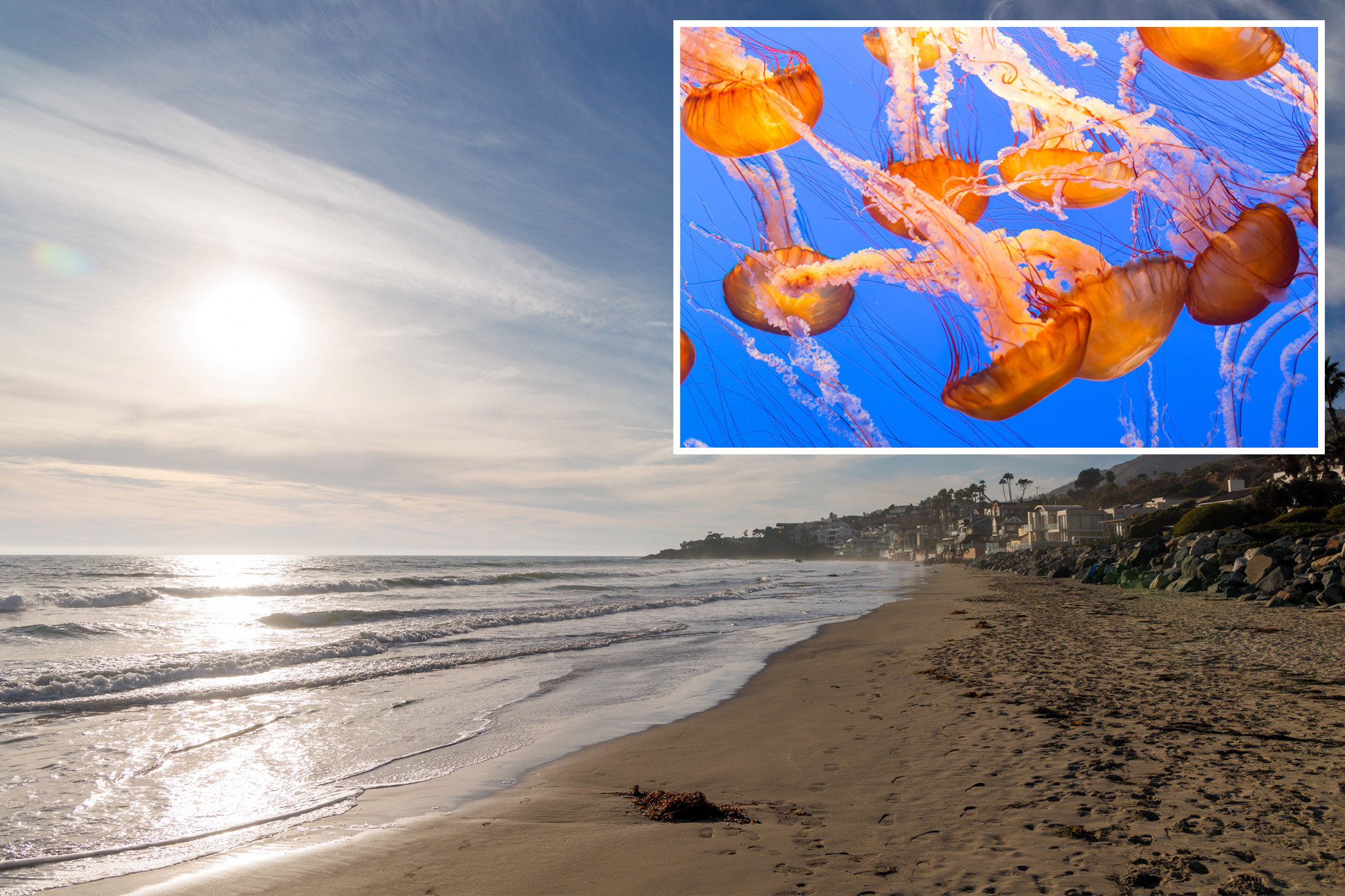
Beachgoers in Southern California are being warned to watch out for non-lethal stinging jellyfish before they hit the water or sand this weekend.
In recent days, surfers at Los Angeles County beaches and the Malibu Surfrider Beach reported being stung by jellyfish, according to a post on Facebook from the city of Malibu.
“LA County Lifeguard Division advises beachgoers to stay alert in the water and on the sand, as jellyfish and even detached tentacles can still sting,” the post read.
Beachgoers in Southern California being warned to watch out for stinging jellyfish. Shutterstock / evgeeenius “Jellyfish in Southern California are usually smaller in scale and have a more mild sting than other species found around the world.”
The warning noted that stings from jellyfish tend to cause things like pain, skin rashes, fever and muscle cramps.
“The degree of pain and reaction to a jellyfish sting depends on the species.”
Officials warned that if a person does get stung there are a few things you want to make sure you do and don’t do.
Officials warn that the non-lethal jellyfish can sting whether beachgoers find them in the water or on the beach. Shutterstock / Ken Wolter “If stung, rinse the area with ocean water (not fresh water), carefully remove any tentacles, and avoid rubbing the skin,” the post read.
Anyone who gets stung should check with Lifeguards for proper first aid.
California Post News: Facebook, Instagram, TikTok, X, YouTube, WhatsApp, LinkedInCalifornia Post Sports Facebook, Instagram, TikTok, YouTube, XCalifornia Post Opinion California Post Newsletters: Sign up here!California Post App: Download here!Home delivery: Sign up here!Page Six Hollywood: Sign up here!
Officials said that if you happen to be at a beach without a lifeguard present and you get stung, you will want to remove tentacles from skin.
“DO NOT wash with fresh water. Instead, go straight to the nearest Lifeguard where they will treat the sting with a solution of saline and vinegar to kill the stinging cells and relieve the pain.”
Authorities warned that even if you find a jellyfish on the beach, its tentacles can still sting you.
Officials with the LA County Fire Department said if you do get stung and are experiencing more severe symptoms or severe allergic reactions like difficulty breathing, wheezing and hives you should seek immediate medical attention.