While civilians in the region pay the highest price, the Iran war has reshaped power balances far beyond the Gulf. Some states have gained leverage. Others have lost influence.
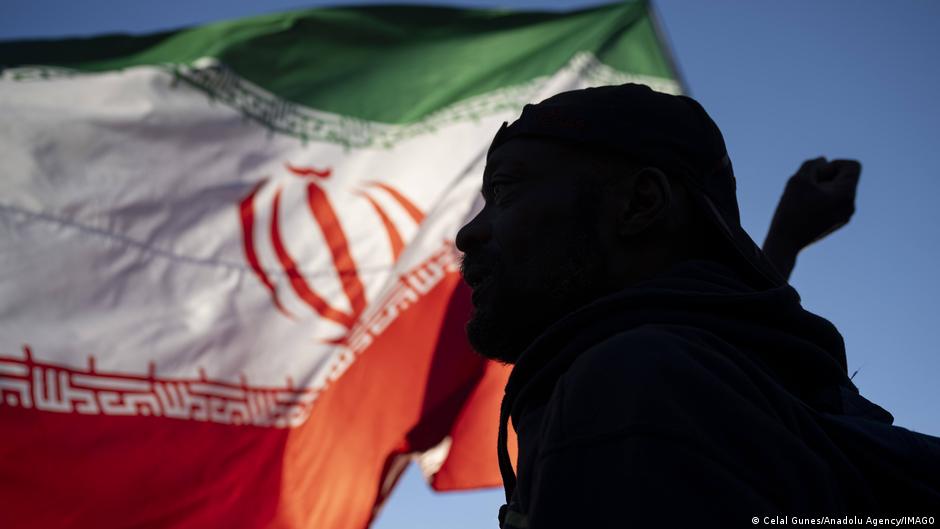
https://p.dw.com/p/5BsKUThe Iran war is on hold, but its global impact is still unfoldingImage: Celal Gunes/Anadolu Agency/IMAGOAdvertisementThe announcement of a two‑week ceasefire between Iran, Israel and the United States has put the war on hold, after 40 days of intense attack and retaliation. As always, civilians have borne the brunt of the war. Thousands have been killed or injured, and many more displaced. Homes, infrastructure and livelihoods have been destroyed — in Iran, in Israel and across the region.
Despite the ceasefire with Iran, Israel has continued its military campaign against Iranian-backed Hezbollah in Lebanon. Just hours after the ceasefire was announced, Israel carried out its heaviest strikes on its neighbor since the conflict with Hezbollah intensified last month.
War has no winners. But conflict reshapes global politics. It affects alliances, energy markets and global influence. Looking at the Iran war through this lens shows how power is shifting well beyond the Middle East.
Iran has been at the center of the conflict. Since February 28, the US and Israel have carried out heavy airstrikes against military targets and energy infrastructure. More than 3,600 people have been killed in Iran, according to the US‑based rights group HRANA. That number includes the supreme leader Ayatollah Ali Khamenei and many other senior political and military figures, but also 165 people at a girls' school, most of them children. Despite the loss of its leadership, the core of Iran's political system remains intact.
"There is no movement towards regime change", US political analyst and President of the Eurasia Group Ian Bremmer told DW. "No movement towards rescuing the Iranian people, which at least in the early days of the conflict, President Trump was saying was a goal."
In response, Iran's regime took a high‑risk step. It effectively blocked the Strait of Hormuz to shipping traffic, only allowing a few countries to use it. That's the narrow strip of water through which about a fifth of global oil supplies pass. The move drove up global oil prices and increased pressure on the US and its allies.
The strategy paid off. Tehran secured a ceasefire without conceding defeat. The government can present the truce as proof that it withstood the United States and all its military might. US President Donald Trump has accepted Iran's 10‑point plan as a basis for talks. Iran's regime has survived and bought time to try to shape the next phase on more favorable terms.
President Trump has called the outcome a "total and complete victory."
"They've achieved some goals," Ian Bremmer told DW. "If you look at the damage done to Iran's military capabilities, their conventional ballistic capabilities and their naval capabilities, much of that has been severely degraded."
Parts of its nuclear program have been badly damaged, too. That matters to Washington, which says stopping Iran from acquiring nuclear weapons was a key aim.
Analyst: Trump 'undermined America's standing in the world' To view this video please enable JavaScript, and consider upgrading to a web browser that supports HTML5 video
But the US has also suffered losses. Iranian strikes damaged or destroyed radar systems and aircraft worth billions of dollars. Its reputation as protector of Gulf allies has been seriously damaged, after Iran hit out at its neighbors — not just American bases but also key infrastructure. Relations with Europe and NATO were strained by Washington launching the war without consulting its allies. The ceasefire has stopped attacks on US forces and for now reduced the risk of a wider regional war, a top US priority. The Strait of Hormuz is expected to reopen, easing pressure on oil markets.
Washington will meet Iran back at the negotiating table, where they were at the start of the war. And it has not reshaped Iran's behavior in the way it has sought, while the cost to its international reputation is yet to be seen.
Israel has weakened Iran's military capabilities. It has shown it can strike far beyond its borders, and continues to enjoy strong US backing.
At the same time, the war exposed vulnerabilities. Iranian missiles put Israel's air defenses under constant strain, and some got through, killing more than 30 people. The threat from Iran and its regional allies remains.
Fawaz Gerges of the London School of Economics told DW that Israel could emerge "much weaker" from the war. He argues that the diplomatic damage is likely to be considerable particularly in its neighborhood - Gulf states are now less likely to deepen ties with Israel.
Israel's air defense strains under Iranian cluster assaultsTo view this video please enable JavaScript, and consider upgrading to a web browser that supports HTML5 video
China stands to gain in the longer term. The US has moved many military assets to the Middle East to protect shipping near the Strait of Hormuz. That leaves fewer resources for the Indo‑Pacific, where Washington and Beijing compete for influence.
"China benefits not only because America is focused less on the Asian military environment, but also because the United States is seen as much less reliable by its own allies," Bremmer said. "And that means that China by comparison is seen as a relatively stable player."
Why China is winning the Iran warTo play this audio please enable JavaScript, and consider upgrading to a web browser that supports HTML5 audio
Beijing had called for restraint throughout the fighting and welcomed the ceasefire. It presented itself as a responsible global actor, while protecting its economic interests.
China buys more than 80% of Iran's oil exports, often at discounted prices. But it recently established large energy reserves, enabling it to absorb price shocks better than many rivals.
The war has helped Russia in several ways. Energy price spikes boosted Moscow's revenues at a time when its budget was under pressure due to its war in Ukraine. Sanctions were temporarily eased as countries sought alternative oil supplies.
Although prices have dropped since the ceasefire, another benefit remains. Global attention has shifted away from Russia's war in Ukraine.
Moreover, "the United States has moved a lot of its military capability into the Gulf. That means that weapon systems that the Ukrainians need are just not going to be available", Bremmer said.
And yet Iran is a friendly nation, one of the few left in the region, so its weakening is a loss for Russia.
How the Iran war is hurting Ukraine's chances at peaceTo view this video please enable JavaScript, and consider upgrading to a web browser that supports HTML5 video
Iranian attacks hit Saudi Arabia, the United Arab Emirates and other Gulf countries. Energy facilities worth billions of dollars were damaged, and their sense of security shattered.
Yet some countries still benefited. Saudi Arabia bypassed the Strait of Hormuz and kept much of its oil flowing via its East‑West Pipeline to the Red Sea.
"Saudi Arabia's budget looks actually very promising because they're getting a lot of energy out and they're getting a very high price for it," Bremmer said.
Others were more exposed. The United Arab Emirates (UAE) relies heavily on foreign workers and investors. "90% of the UAE's 10 million plus people are expats," Bremmer said. "And they have to be comfortable that this is a place that's safe for them."
Security fears have damaged their image as safe havens — a key pillar of their economic model.
Higher energy prices hit households and industry in Europe, like in many other parts of the world. Shipping disruptions affected trade, and inflationary pressures rose at a time when many European economies were already under strain.
The situation has increased divisions within traditional alliances. European governments refused to support US military operations. Some also did not grant airspace access for offensive missions. President Trump responded by again threatening to pull the US out of NATO— a scenario many Europeans fear.
Pakistan played a central role in brokering the ceasefire and is now set to host further talks.
For Prime Minister Shehbaz Sharif, this is a major diplomatic success. Pakistan has ties to both Washington and Tehran, and quietly passed messages between them for weeks.
The outcome has strengthened Pakistan's role as a regional power broker. Its rival India stayed on the sidelines and has been hit hard by rising energy prices.
Edited by: Hannah Cleaver, Carla Bleiker