play Live Sign upShow navigation menuplay Live Click here to searchsearchSign upIn Pictures
Fishing boats sit idle at Sassoon Dock as diesel costs cripple city’s once-thriving maritime economy and livelihoods.
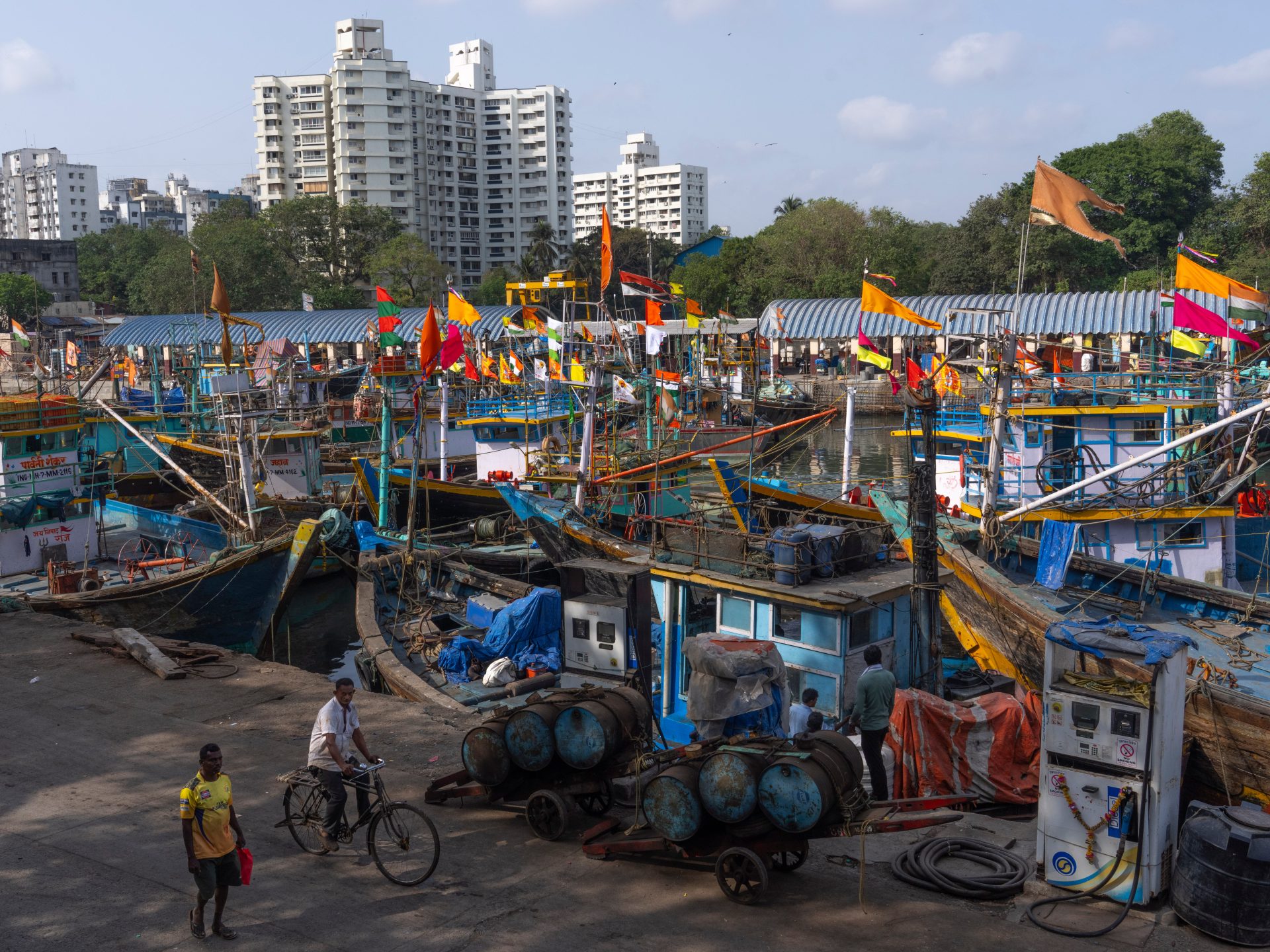
twitterwhatsappcopylinkgoogleAdd Al Jazeera on GoogleinfoFishing boats remain anchored at Sassoon Dock beside a cooperative diesel pump that is shut due to rising bulk fuel prices in Mumbai, India. [Rafiq Maqbool/AP Photo]By APPublished On 8 Apr 20268 Apr 2026Since its construction in 1875, Mumbai’s Sassoon Dock has evolved from a vital trading gateway to the Gulf to a commercial centre for textiles, spices and opium. In recent decades, it became the heart of Mumbai’s fishing trade.
Today, the harbour stands uncharacteristically quiet.
Fishing boats cluster together under the morning sun, their colourful flags waving against Mumbai’s towering skyline. The dock, typically alive with activity – the unloading of nets, rumbling diesel engines, hauling of ice and the shouts of fishmongers – now radiates an unsettling stillness.
Boat owner Shekhar Chogle, his skin deeply tanned from years at sea, has been forced to keep his vessel docked since the conflict began. With plummeting income, persistent labour costs and skyrocketing diesel prices, fishing operations have become virtually impossible.
The harbour’s diesel pump stands abandoned, adorned with a withered marigold garland. A worker returned empty-handed from a petrol station, his wooden barrow carrying six unfilled containers. Diesel prices have surged beyond $1.20 per litre ($4.54 per US gallon), overwhelming the cooperatives that typically provide fishers with affordable fuel, ice and equipment.
This crisis extends beyond Mumbai, affecting fishing communities throughout India and Asia. Fishers face a grim dilemma: remain ashore or risk financial loss at sea, threatening both individual livelihoods and entire coastal communities.
The announced two-week ceasefire agreement between Iran, the United States and Israel offers a glimmer of hope, though analysts caution that fuel supply normalisation will take time.
For Chogle, time is running short. “Our income has dropped significantly since we have not been able to take our boat out to sea,” he said.
Despite soaring fuel costs, some boats still venture out. Morning markets continue operating, albeit with diminished catches. Women in vibrant saris negotiate over the limited fish supply, while one mother, baby balanced on her hip, carefully examines each fish, calculating cost against necessity.
“If diesel prices don’t come down soon, I don’t know how we’ll survive,” Chogle said.