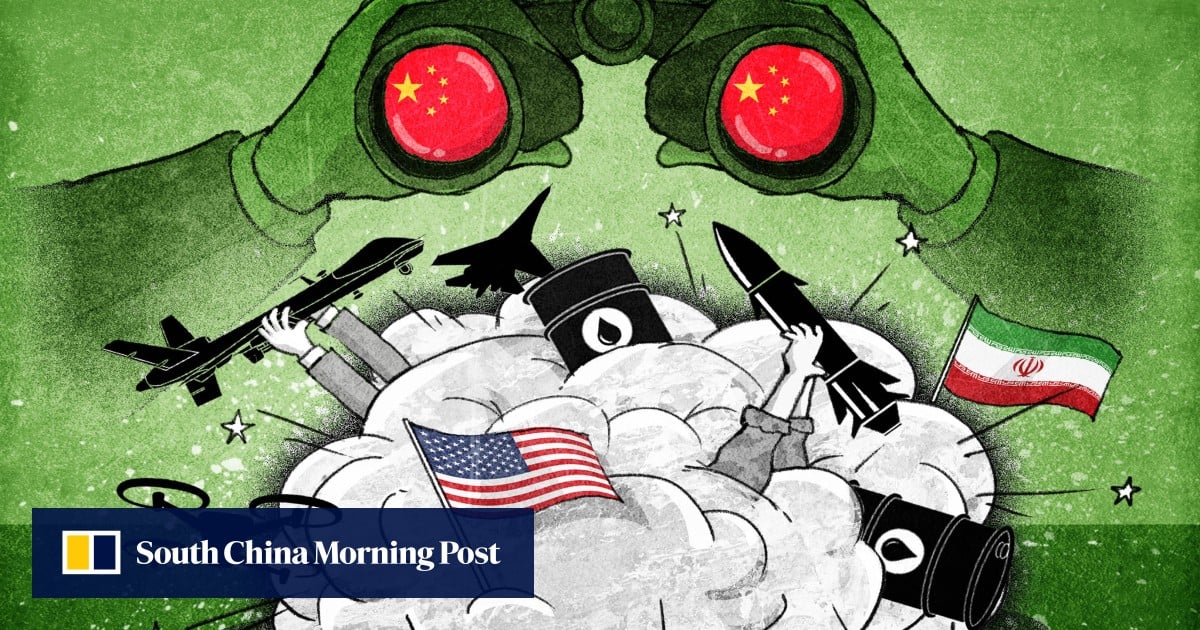
Washington is providing a real-time laboratory of modern warfare and Beijing is paying close attention to the lessons
7-MIN READ7-MIN ListenMeredith ChenPublished: 6:00am, 8 Apr 2026Updated: 6:08am, 8 Apr 2026Whether the US-Israeli war on Iran wraps up quickly or drags on, the repercussions will be felt for years, reshaping warfare, geopolitics and energy security as well as how the world sees the United States and its tactical and strategic capabilities. In the second of a three-part series, we examine some of the implications likely to unfold over months and years, affecting the future of conflict in an increasingly unstable world.
Now in its sixth week and with the risks of a prolonged war on the rise, the conflict is a rare window for China to gauge American wartime resilience and holds implications for Beijing’s strategic assessment and decision-making.
Analysts cautioned that US advantages in intelligence, technology and rapid operational adaptability on display in the conflict would not automatically translate into sustained warfighting capacity.
Constraints that were structurally undermining Washington’s capacity to remedy vulnerabilities included a shrinking defence industrial base, the high costs of asymmetric warfare and growing international and domestic disquiet, they said.
Trump’s fiery, foul-mouthed message threatening Iran draws criticism