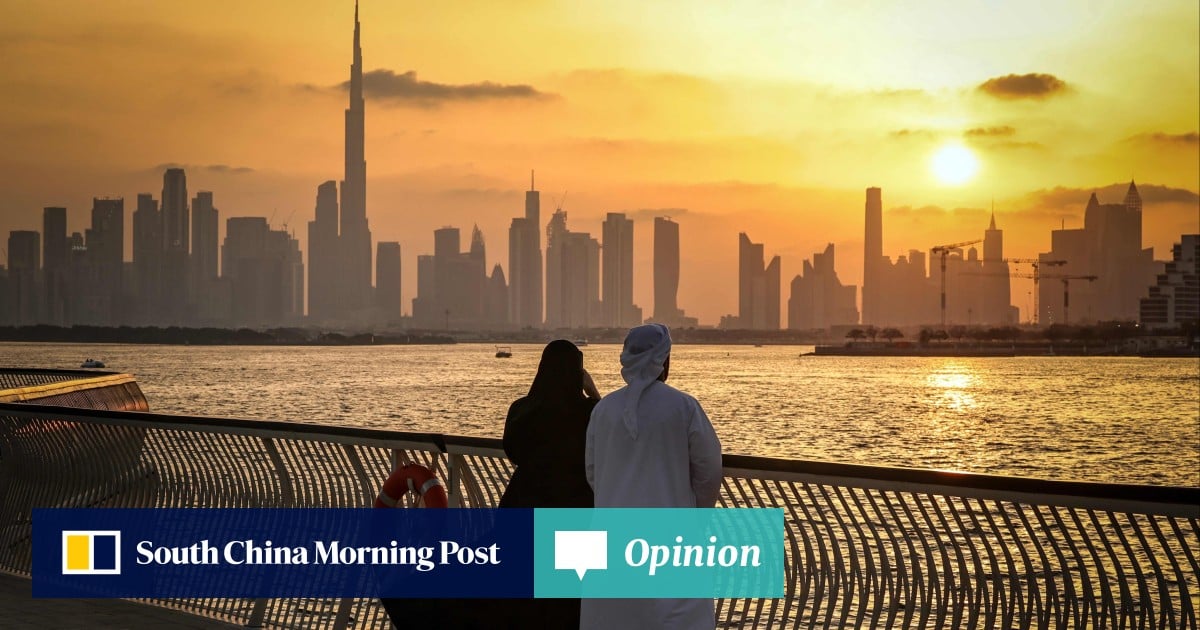
Sandwiched between Iran and Israel, oil-rich transport hubs like the UAE now face the fragility of their newly built economic prosperity
3-MIN READ3-MINWinston MokPublished: 4:30pm, 7 Apr 2026The Strait of Hormuz blockage is being felt far and wide. While the world struggles with higher pump prices, key energy exporters such as the United Arab Emirates (UAE) and Qatar face severe economic setbacks. In Gulf states serving as air hubs, expats and affluent locals are scrambling for the exit.The discovery of oil transformed Arabian deserts into rich petro-states. Knowing this wealth would not flow forever, the states leveraged their strategic locations to become air traffic hubs. Emirates and Etihad have emerged as major carriers; Doha’s airport facilities are deemed more impressive than Singapore’s; Qatar Airways is named the world’s best airline on several rankings, beating Cathay Pacific and Singapore Airlines.
Dubai is now among the world’s top 10 container ports – the only one outside East and Southeast Asia. In comparison, Hong Kong has long lost its leading port position, having evolved in its distinctive role within the integrated system of the Greater Bay Area.