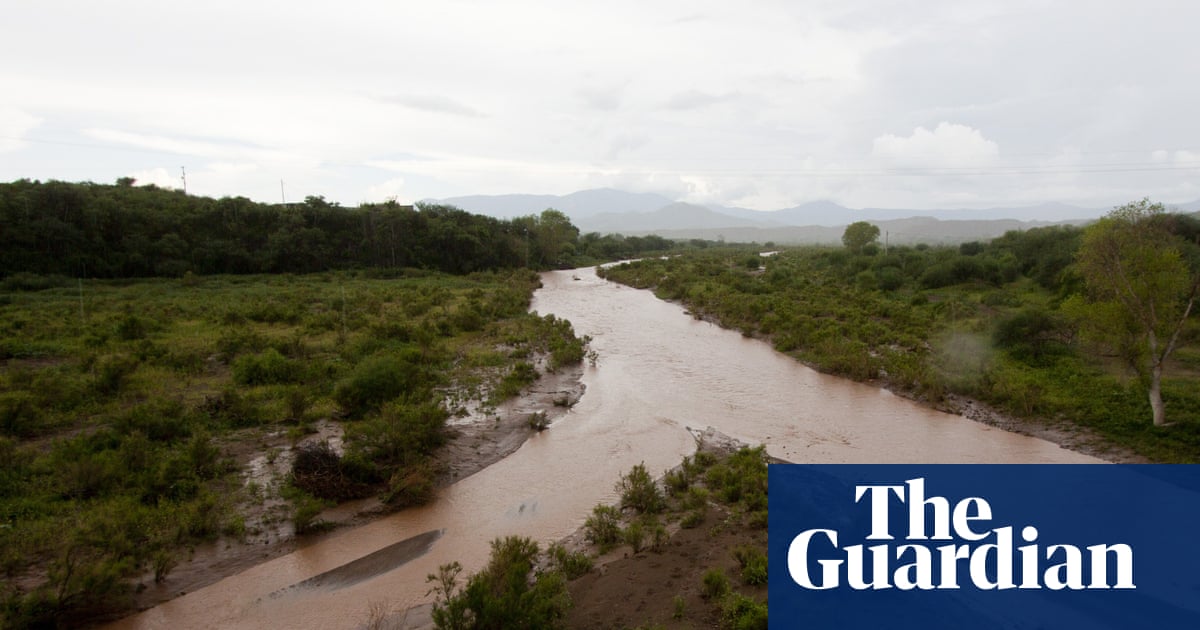
Sonora River polluted after 40,000 cubic meters of sulfuric acid leaked from a nearby copper mine in Sonora state, north-western Mexico, in 2014. Photograph: Héctor Guerrero/AFP/Getty ImagesView image in fullscreenSonora River polluted after 40,000 cubic meters of sulfuric acid leaked from a nearby copper mine in Sonora state, north-western Mexico, in 2014. Photograph: Héctor Guerrero/AFP/Getty ImagesUS is ‘using Mexico as a garbage sink’ leading to ‘toxic crisis’, UN expert saysMarcos Orellana, a special rapporteur, found lax environmental standards and lack of oversight allowed pollution to accumulate
Mexico is facing a “toxic crisis” and has become a “garbage sink” for the US, exposing Mexican communities to dangerous pollution, a UN expert has warned.
In an interview with the Guardian and Quinto Elemento Lab, an investigative outlet, Marcos Orellana, an environmental specialist, said pollutants ranging from imported waste to dangerous pesticides are affecting people’s right to live healthy lives.
Orellana, whose title is UN special rapporteur on toxics and human rights, conducted an 11-day investigative mission in Mexico last month to learn about toxic threats facing its population. He said he found lax environmental standards and a lack of oversight, which have allowed pollution to accumulate over the years.
View image in fullscreenMarcos Orellana, the UN special rapporteur on toxics and human rights, at a press conference in Mexico City, Mexico, in March 2026. Photograph: Mario Guzman/EPA“Where standards are weak, what you get is legalized pollution,” he said, adding that imports of hazardous and plastic waste from the United States are worsening the situation.
“US overconsumption and economic activity are using Mexico as a garbage sink.”
The rapporteur said there were more than 1,000 contaminated locations officially recorded in Mexico’s National Inventory of Contaminated Sites, many of which he said had become “sacrifice zones”, where diseases such as cancer, autism and miscarriages were normalized.
In a preliminary report summarizing his visit, he cited factories spewing hazardous waste into the Atoyac River in Puebla, massive industrial pig farms contaminating drinking water on the Yucatan Peninsula and a decade-old mining chemical spill that continued to affect health in communities around the Sonora River.
He said many of these situations left residents struggling with dire health effects.
View image in fullscreenA resident collects water outside their home in the Arizpe community, Sonora state, Mexico, in 2014, when a copper mine leaked 40,000 cubic meters of sulfuric acid into the Sonora River, seriously polluting the water way. Photograph: Héctor Guerrero/AFP/Getty Images“As I heard during one meeting: living in a sacrifice zone means losing the right to die of old age,” he wrote.
He cited one place he visited, the industrial corridor of Tula in the central Mexican state of Hidalgo, where steel plants, cement factories and petrochemical facilities operate near a river polluted by industrial waste and untreated sewage from Mexico City. He said proposals to bring in additional waste for recycling would only add to an already devastating environmental burden on communities there.
Meanwhile, companies are not held responsible for preventing, mitigating and repairing the damage, he said.
The result, he said, is the “legalized poisoning of people”.
The rapporteur highlighted the influx of plastic waste from the United States. He said once this waste crosses the border, there is often little clarity about its final destinations. In addition, he said he was concerned that microscopic plastic particles have been detected in rivers such as the Tecate in Baja California, the Atoyac in Puebla and the Jamapa in Veracruz.
View image in fullscreenThis view shows a section of the Pemex thermoelectric plant and refinery in Tula de Allende, Hidalgo state, Mexico, in August 2024. Photograph: Alfredo Estrella/AFP/Getty ImagesGovernment records show the US ships hundreds of thousands of tons of hazardous waste to Mexico each year, including lead-acid car batteries, as well as common scrap such as plastic, paper and metal for recycling. Environmental groups have questioned whether the country is equipped to handle all this without it leading to pollution.
Residents in Monterrey, which serves as a US manufacturing hub and suffers some of the worst air pollution in North America, welcomed the rapporteur’s calls for more attention to the health of Mexico’s people.
María Enríquez, a mother and activist in Monterrey, who co-founded the environmental group Comité Ecológico Integral, warned that poor air quality has become part of daily life in the city, and residents suffer from rhinitis, eye irritation and asthma attacks.
“We have learned to live sick, especially with respiratory illnesses,” she said.
Guadalupe Rodríguez, director of a network of childcare centers in Monterrey, agreed, saying children in her nursery program were also affected.
“Families consider it normal for children to have constant coughing,” said Rodríguez. She called on the government to do more to enforce Mexico’s constitutional guarantee of a healthy living environment, especially for the most vulnerable. “If they are not protected, the right to health is not being guaranteed.”
View image in fullscreenPeople take part in a protest demanding the closure of the Pemex refinery, blaming it for polluting the air, in Monterrey, Mexico, in January 2024. Photograph: Daniel Becerril/ReutersThe rapporteur’s visit, at the invitation of the Mexican government, comes at a time when toxic and hazardous waste are coming under increasing scrutiny in the country.
In Monterrey, residents have been demanding government action to reduce heavy metal pollution, much of it emitted in the air by factories that are manufacturing goods for the US or recycling hazardous US waste.
Already, officials in president Claudia Sheinbaum’s administration have acknowledged that regulatory standards, such as rules for how much pollution factories can emit, are out-of-date, and have announced plans to strengthen them.
In an interview, Mariana Boy Tamborrell, Mexico’s federal attorney for environmental protection, said her agency had reached a regulatory “turning point”, and would start requiring industries to remediate environmental damage they caused. Her agency is rolling out a new air monitoring system to detect emissions coming from specific facilities, starting in an industrial corridor of Monterrey.
“Then there will be no room for ‘it wasn’t me,’” she said. “We will be able to clearly identify the source.”
The rapporteur said Mexico could adopt restrictions on the import of hazardous waste as a measure to address part of the crisis. He noted that some countries have chosen to ban such imports to avoid becoming destinations for international waste, without undermining their participation in global trade.
Waldo Fernández, a Mexican senator, has already introduced legislation to more strictly regulate imports of waste into Mexico for recycling. The law would prohibit importing waste if it has greater environmental impacts in Mexico than allowed in its country of origin.
Mexico “must not become a dumping ground for toxic waste or a recipient of pollution under commercial pressures”, said Fernández.
The rapporteur also said the upcoming review of the free trade agreement between Mexico, the US and Canada represents an opportunity to strengthen environmental standards and their enforcement.
If they don’t, “economic pressure will worsen the toxic crisis”, he said.