What’s in the past doesn’t always stay buried.
A new study suggests that a hormone therapy harvested from human corpses may be linked to a rare, controversial form of Alzheimer’s disease.
Though the drug was discontinued more than 40 years ago, researchers are urging doctors to watch for signs of cognitive decline in the thousands of Baby Boomers and Gen Xers who received it as children.
Known as c-hGH, the treatment was made by extracting human growth hormone from the pituitary glands of deceased donors’ brains.
Around the world, studies show that about 27,000 children with severe growth hormone deficiency were treated with it between 1963 and 1985.
Without the hormone, these kids faced stunted growth, delayed puberty and other health problems.
Trouble started brewing in the 1980s, when several US patients who had received c-hGH developed a deadly neurological disorder called Creutzfeldt-Jakob disease (CJD).
The condition is caused by abnormal, misfolded proteins called prions that accumulate in the brain, destroying nerve cells and triggering dementia symptoms such as memory loss and confusion, according to the Mayo Clinic.
When scientists took a closer look, they discovered that the c-hGH given to those patients had been contaminated with infectious prions that cause CJD.
Following the shocking revelation, the US and other countries stopped using cadaver-derived c-hGH in 1985, eventually replacing it with a safe, synthetic version.
But now, researchers are seeing worrying signs in patients who received c-hGH but never developed CJD.
In the new study, scientists at the UK National Prion Clinic followed four men who received c-hGH as children.
All four eventually developed early-onset dementia, even though none had genetic factors that would increase their risk.
Their symptoms appeared between ages 47 and 60, with language and speech difficulties among the first signs of cognitive decline.
An autopsy of one man who died at 57 revealed that his brain was riddled with two abnormal proteins considered the hallmarks of Alzheimer’s disease: amyloid-beta plaques and tau tangles.
Amyloid-beta plaques are dense, sticky clusters that accumulate between nerve cells and disrupt communication, while tau tangles form inside brain cells, slowly killing them and causing tissue to shrink.
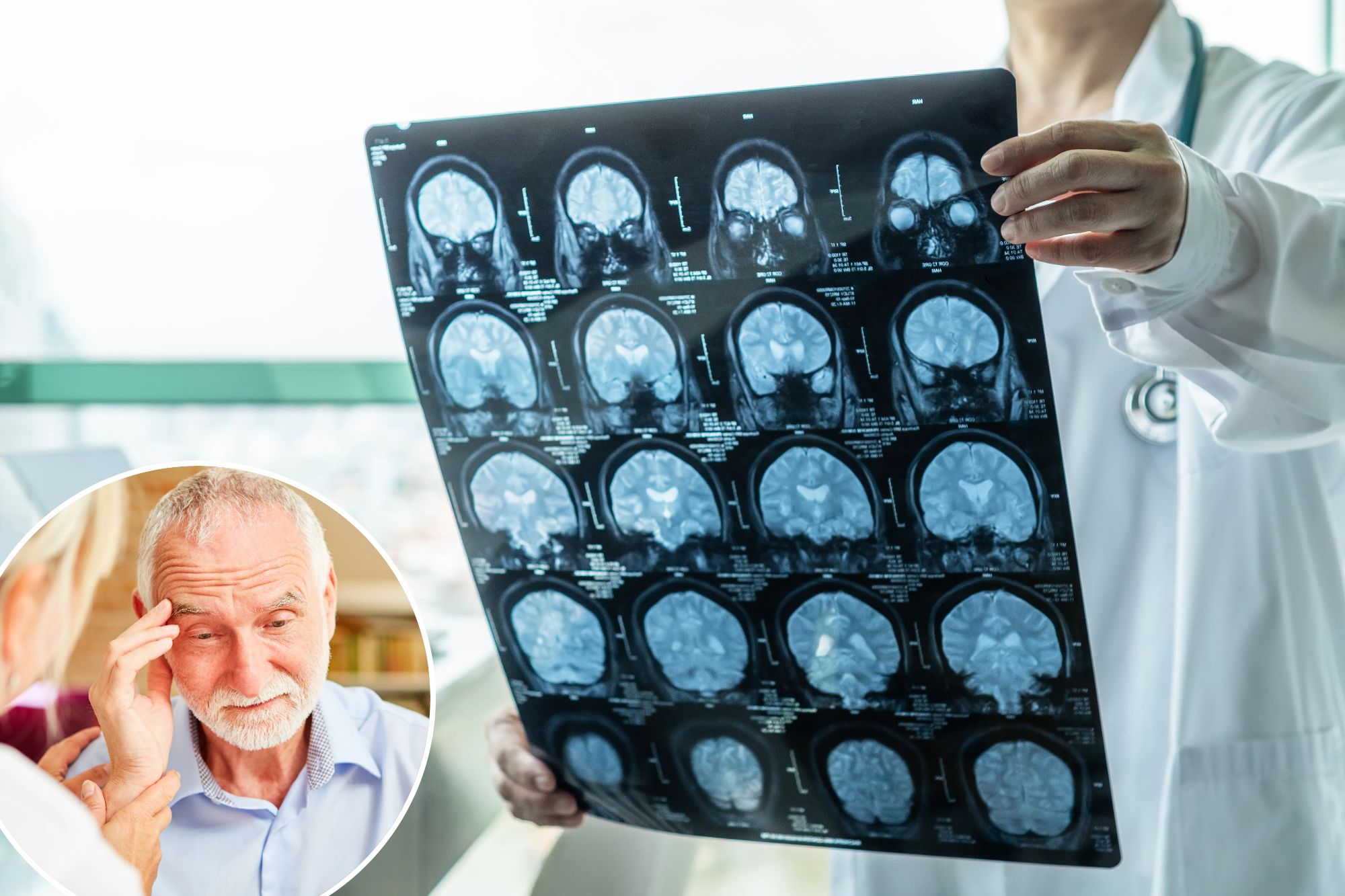
The other three men had abnormal amyloid levels in their cerebrospinal fluid, and brain scans revealed significant shrinkage in the regions responsible for memory and language.
These findings build on five earlier case studies from the UK National Prion Clinic, which suggested that the c-hGH given to patients may have been contaminated with misfolded proteins that gradually trigger a buildup of amyloid-beta in the brain.
The result, the researchers said, is iatrogenic Alzheimer’s disease (iAD), a rare form of the condition thought to stem from medical transmission rather than aging or genetics.
“As stated in our earlier report, these findings do not mean that Alzheimer’s disease is contagious in a conventional sense,” the study authors wrote. “Transmission has occurred in rare circumstances in the context of cadaveric tissues that are no longer used.”
Outside researchers note that the evidence mainly supports the transmission of amyloid-beta, not Alzheimer’s itself.
“Neither this report nor earlier reports provide substantial evidence of iatrogenic Alzheimer’s disease, and definitive causation may remain elusive,” a pair of outside scientists wrote in an accompanying editorial.
Still, the study authors stand by their findings, noting that iAD is newly recognized and its full range of physical and behavioral signs hasn’t yet been mapped out.
“We therefore advise clinicians to be vigilant for any cognitive changes in recipients of cadaveric human growth hormone,” Dr. John Collinge, one of the study authors, told MedPage Today.