The EU is waking up to an energy crisis and asking people to reduce energy consumption, as fears of a supply crunch set in. Energy analysts are calling for concrete measures and a boost in investments for renewables.
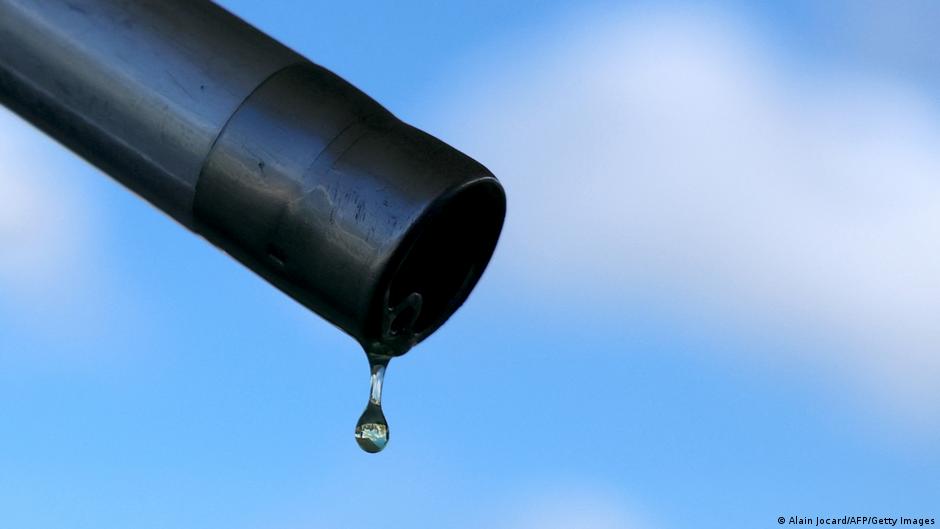
https://p.dw.com/p/5BZpbThe war in Iran has disrupted energy flows, and supplies to Europe are tightImage: Alain Jocard/AFP/Getty ImagesAdvertisementThe European Commission is calling on its 400-million plus citizens to fly and drive less, work from home and do their bit to conserve energy, with the Iran war now in its second month.
German Chancellor Friedrich Merz warned earlier this week that the economic impact could be "as heavy as we recently experienced during the COVID pandemic or at the start of the Ukraine war," when the bloc slashed its purchases of Russian energy.
"The more you can do to save oil, especially diesel, especially jet fuel, the better we are off," EU Energy Commissioner Dan Jorgensen said Tuesday, after a meeting of the EU's 27 energy ministers in Brussels where they discussed the bloc's energy security.
Jorgensen called on Europeans to heed the advice of the International Energy Agency and use more public transport, "increase car sharing and adopt efficient driving practices."
But experts said the EU must do more and plan for the coming crisis which will not merely inflate gas prices at the pump, but also hurt industry, spike inflation while reducing demand and increase food prices.
Iran war exposes global dependence on Middle East energyTo view this video please enable JavaScript, and consider upgrading to a web browser that supports HTML5 video
"We haven't yet realized the magnitude of the crisis," Ana Maria Jaller-Makarewicz, lead energy analyst for Europe at the Institute for Energy Economics and Financial Analysis in London, told DW.
"I think we are going to start feeling the difference by next month. Already some [liquefied natural gas] cargoes were being diverted to Asia," she added, alluding to competition between Europe and Asia over dwindling supplies.
Oil and gas prices have soared by as much as 70% since the US and Israel first hit Iran with airstrikes in late February. In retaliation, Iran has rained missiles and drones on energy-rich Gulf countries and blocked the Strait of Hormuz, through which 20% global oil and gas tankers pass.
The EU has also taken a hit — financially. According to European Commission President Ursula von der Leyen, just the first 10 days of the conflict cost European taxpayersan additional €3 billion ($3.4 billion) in fossil fuel imports.
According to a recent report by the Bruegel think tank, "a doubling of gas prices would add about €100 billion to European gas import costs over the next 12 months."
But rising prices aren't the only worry, with fears of a supply crunch now setting in across Europe as the war drags on.
Initially, policymakers appeared at ease since the EU was less dependent on energy imports via the Strait of Hormuz — only 8% of the EU's liquefied natural gas (LNG) was imported from Qatar before the war. Asian countries depended on the narrow waterway for nearly a third of their total consumption.
However, as the war continues and supplies run tight, there are concerns that the slightest fluctuation could cause shortages, especially if Asians outbid the Europeans for scarce energy supplies.
The EU has diversified its energy supply in recent years in a bid to reduce reliance on Russian energy, replacing it with more imports from the US and Norway. The US is now the largest exporter of gas to the EU. But as competition for limited supplies heats up, Asians are also lining to procure some of that American LNG.
In its report, Bruegel said that since the start of the Iran war, "several LNG cargoes have already been diverted from Europe to Asia."
"The EU gas supply is further constrained by the scheduled phaseout by 2027 of Russian LNG," it added.
Some in the EU are calling for a return to cheaper Russian energy.
At the EU leaders summit in March, Belgian Prime Minster Bart De Wever told the Belgian daily newspaper L'Echo that the EU must rearm but at the same time "normalize relations with Russia and regain access to cheap energy."
"It is common sense. In private European leaders tell me I am right, but no one dares say it out loud," he said.
However, the EU's energy chief Jorgensen ruled it out and said the EU will "not import one molecule" of Russian energy. Experts said instead, the Commission might look at a possible price cap on gas and subsidies for industry.
"Most energy intensive industry, such as steel, cement, fertilizer," could be hit by rising prices, Alexander Roth, one of the authors of the Bruegel report, told DW.
Strait of Hormuz, the world's most critical oil chokepointTo view this video please enable JavaScript, and consider upgrading to a web browser that supports HTML5 video
Lobby group Fertilizers Europe said in mid-March the war could have "implications for [...] fertilizer supply chains." In a statement, it called on the EU to help famers safeguard "food security" and consider "assistance to European farmers, while supporting the resilience of Europe's fertilizer industry," if the Iran crisis persists.
A ripple effect is also feared across the manufacturing supply chains of various industries including chemicals, plastics, aluminum and glass. In the aviation sector, reports suggest Lufthansa is planning to ground dozens of flights if demand drops while the cost of fuel rises.
However, some experts have cautioned the bloc against capping the price of gas and oil.
"The temptation in a price shock is to suppress prices," said the Bruegel report. "This would be a mistake," it added, saying that such a measure will "weaken price signals that drive efficiency, demand reduction and clean-energy investment."
Roth explained that a price cap would be a short-term cure to offer some reprieve to consumers, but in the mid- to long-term, they increase gas consumption "and delay moving away from fossil fuels."
Instead of price cap, energy analyst Jaller-Makarewicz argued that the EU should take "concrete steps" and call for a reduction in heating in restaurants and in government buildings. She added that governments should limit travel of public officials across the bloc while boosting "investments in local green industries such as heat pumps."
Roth said the EU should collaborate on strategy with member states and instead of gas subsidies offer a reduction in tax on electricity. "This would reduce the bill consumers face, but also encourage them to spend on electrification options such as heat pumps, and electric cars," he said.
How Iran war energy crisis strengthens case for renewablesTo view this video please enable JavaScript, and consider upgrading to a web browser that supports HTML5 video
The Bruegel report said the war in Iran has once again exposed European vulnerability in the energy sector, recommending that "policymakers should seize the opportunity to deploy renewable energies and electrification technologies even faster."
It cited the examples of Spain — which has in recent years invested heavily in wind and solar energy and has managed to stabilize energy prices — and Italy, Europe's most gas-reliant economy. Italy imported the largest chunk of Qatari gas via the Strait of Hormuz, and has seen a significant increase in energy prices this year.
Even if the war ends tomorrow, supplies of LNG from the region won't restart overnight. The Ras Laffan energy complex in Qatar, a key source of natural gas for world markets, was hit by Iranian missiles on March 18. The extensive damage could take months or years to repair before it is up and running again, state-owned QatarEnergy has said.
"Nobody knows how long the crisis will be, but I think it's very important to underline that it will not be short," the EU's Jorgensen said after the emergency meeting on Tuesday. "Energy infrastructure in the region has been and continuously is being ruined by the war."