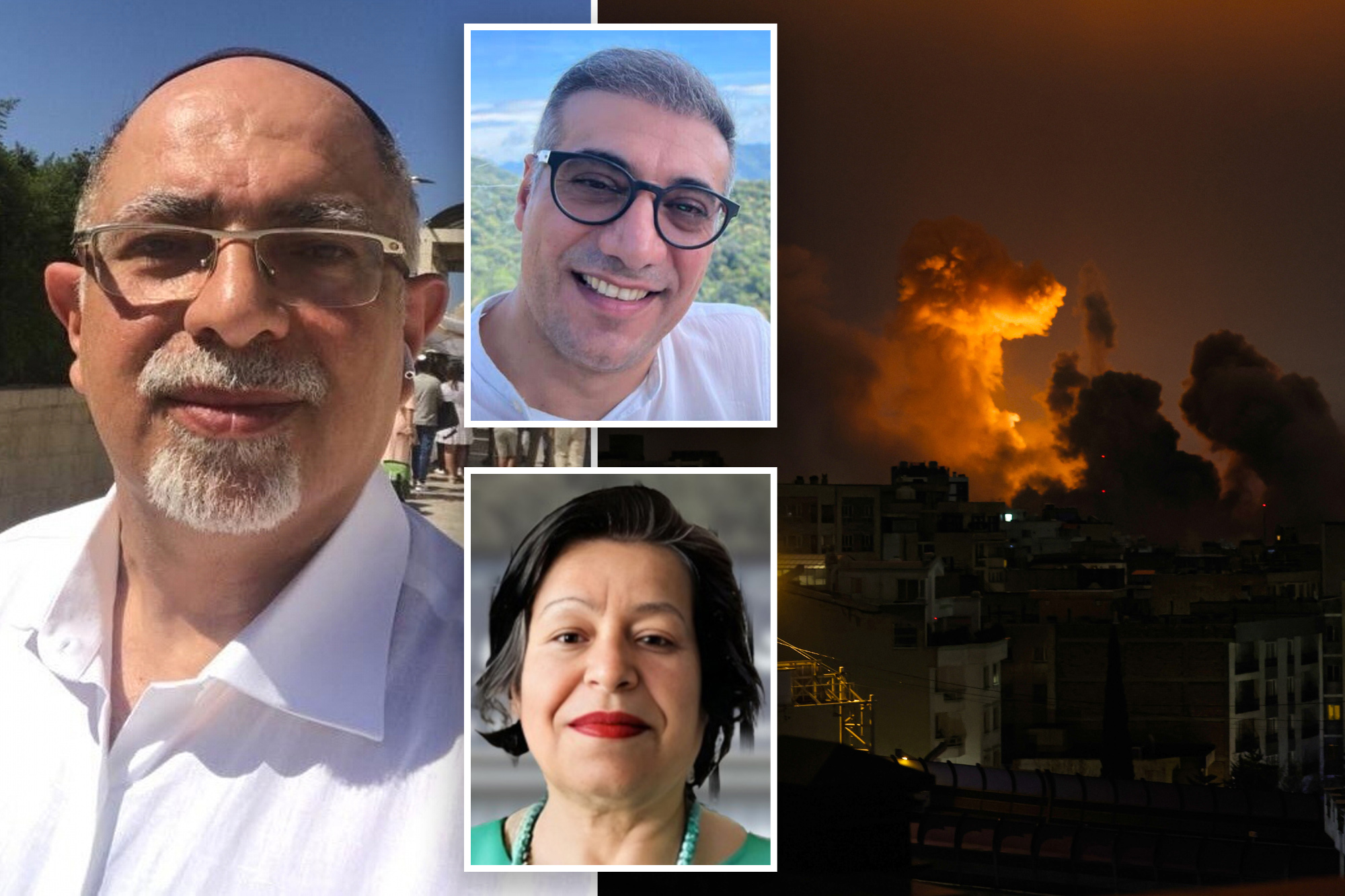
WASHINGTON – The family of a New Yorker wrongfully detained in Iran for the past year is urging the White House to put the hostage release first on its list of demands to Iran.
The plea to Trump from Kamran Hekmati’s family comes after a draft 15-point peace plan the US presented to Iran makes no mention of setting free at least six US citizens languishing under the brutal regime.
“The family is absolutely dependent on the president getting Karman and the other Americans home. We know he can do that,” Kieran Ramsey of the Global Reach advocacy group, who represents Hekmati’s family, told The Post.
He pointed out that, in Gaza, once the hostages were released, the peace deal followed.
“Put the humanitarian aspect first and everything can flow after that. Just like it did in Gaza. We saw when the administration put the hostages first, everything trickled out,” he said. “That is the off ramp he could easily use to end the hostilities.”
At least a half dozen Americans are being held hostage during the conflict, according to the James W. Foley Legacy Foundation, a hostage advocacy organization, and their return is not one of the reported 15 points the US gave Tehran in its ceasefire demand.
“We have not seen the hostages as one of the points,” Ramsey said. “We know the administration is aware of the hostages.”
Hekmati, who lives in Great Neck, Long Island, is being held at the notorious Evin Prison in Tehran, which has been a target of past Israeli bombardment. An Iranian-American who is Jewish, Hekmati was visiting family in Iran when officials prevented the elderly jewelry store owner from leaving.
His health is a concern as he needs ongoing treatment for bladder cancer.
He and Reza Valizadeh, an Iranian-American journalist, were declared wrongfully detained by the State Department, which means they are considered political hostages by the American government.
“The Iranian regime has a long and shameful history of unjustly detaining US nationals and other foreign citizens,” a State Department spokesperson told The Post.
“We are committed to securing the release of all Americans unjustly detained in Iran and around the world. The Iranian regime should immediately release all Americans detained in Iran. Out of respect for their safety and security, we have nothing further to share.”
The White House said they are monitoring the hostage situation.
“President Trump is always concerned about Americans detained abroad, which is why he has brought over 100 individuals – a record number – home from around the world,” said spokeswoman Anna Kelly.
The US sent Iran a 15-point plan to end the war in the Middle East but the details of all the provisions haven’t been released by the White House. It’s also unclear what Iran has accepted and what it has rejected.
Talks are continuing. President Trump extended a deadline, giving a moratorium on bombing energy sites to April 6th, citing the peace talks.
Talks between the US and Iran are “continuing and going well,” press secretary Karoline Leavitt said on Monday.
“If there’s to be an off-ramp for this war, releasing Mr. Hekmati and the other hostages should be part of the deal,” Rep. Tom Suozzi (D-NY), who has been advocating for the New Yorker, told The Post.
Trump has said repeatedly his priority for a ceasefire is Iran ending its nuclear program for good, destroying its missile supply, finishing off its Navy, and protecting American allies in the region.
The hostages have not been publicly discussed but that does not mean work isn’t going on behind the scenes. Many of the cases stay partially shielded from the public eye to avoid retaliation to any of the hostages’ family members still in Iran.
Secretary of State Marco Rubio, in remarks in March honoring Americans held hostage, said “there has been no worse offender in the world than the clerical regime in Tehran” when it comes to holding Americans hostage.
“We believe in homecomings, we work for homecomings, and under the president’s leadership, we will not stop until every single unjustly detained American is brought home,” he said.
Ryan Fayhee, a lawyer for Valizadeh, told The Post they are in regular communication with the White House and State Department about the hostage situation.
Still their safety and wellbeing remain an issue given the repeated military strikes on Tehran.
“The top concern we have is the safety of the hostages during this conflict. We bring that question up in conversations with US government officials, and it is an ongoing concern,” Elizabeth Richards, the director of Hostage Advocacy and Research for the James W. Foley Legacy Foundation, told The Post.
“We hear from families who have not heard from their loved ones being held for weeks and do not know how their loved one is doing. We know some of the Americans being held have health conditions, and require medical care, treatment we do not think they are currently able to receive with the ongoing military operations.”
Valizadeh, who was born in Iran, became a US citizen while working for the Persian-language arm of Radio Free Europe. He was detained in Iran in 2024 after returning to visit his elderly parents. Also in Evins prison, he was sentenced to 10 years on charges of collaborating with the US government.
And Afarin Mohajer, a California resident originally from Iran, was detained in September and charged with posting critical propaganda.