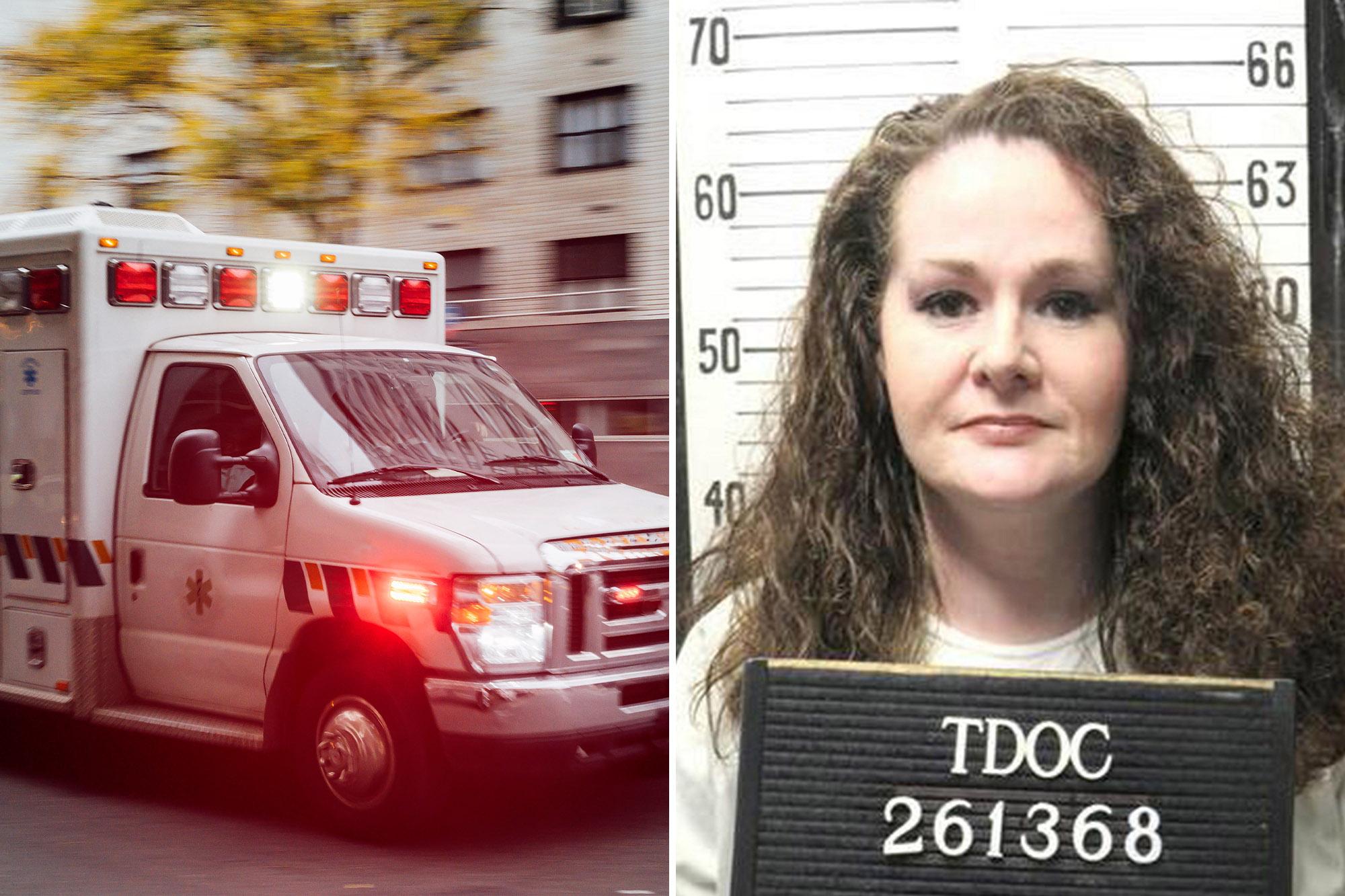
Make New York Post a Preferred Source Emergency responders were left waiting to assist Christa Pike for nearly half an hour amid confusion over whether the convicted killer needed medical attention following her botched lethal injection, according to 911 calls.
The 911 audio revealed confusion among dispatchers, first responders, and prison officials over whether the request for emergency medical assistance in the execution chamber was legitimate after Pike — sentenced to death for the 1995 torture and murder of a classmate — survived two doses of the lethal injection drug pentobarbital on Sept. 30.
A first call went to dispatchers at 8:40 p.m., but prison officials didn’t confirm the request was real until 9:11 p.m., when first responders were allowed to rush through the gates of Riverbend Prison, according to audio obtained by the Associated Press.
“Per supervisors here at the DEC [Department of Emergency Communications], we have been informed it is a false call,” one unidentified person said at 9:03 p.m. “There is no medical assistance needed at Riverbend Prison.”
But just four minutes later, a responder reported that someone at the prison gate was insisting the emergency was real.
“Somebody is outside the gate at the prison telling us that it’s real and demanding us to go in. They say they are some sort of state official. I need somebody to get out to the gate and talk to those people,” the responder said on the audio.
Prison officials didn’t confirm the call for help was legitimate until 9:11 p.m., the call logs showed.
Pike, 50, was strapped to a gurney for about an hour as medical staff jabbed her with at least seven needles, one of which bent when it came out of her arm, her attorney Randy Spivey said.
She was rushed to the hospital after the botched execution and was left unconscious and hooked up to a ventilator, with her lawyers fearing she was brain dead.
However, the death row inmate miraculously regained consciousness last week and started communicating.
The convicted murderer asked, “Where am I and who are you?” when she first woke up and even started walking the next day.
Pike suffered from a blood clot in one of her arms, pneumonia, and “extraordinary” swelling after the bungled execution, her lawyers claimed earlier this week.
They also said she was dealing with “cognitive challenges” and “profound psychological trauma,” adding that “significant questions remain about the long-term effects of what she endured.”
She was released from the hospital and sent back to prison 10 days after her shocking survival.
Pike was due to become the first woman executed in Tennessee in over 200 years, but instead became the first person in the US to have survived the lethal injection.
She was sentenced to death after brutally murdering her 19-year-old Jobs Corp classmate, Colleen Slemmer, in a jealous rage in 1995.
The then 18-year-old, her boyfriend Tadaryl Shipp, 17, and pal Shadolla Peterson, also 18, lured Slemmer to an isolated area of the University of Tennessee’s Knoxville campus to torture and kill her. Pike bashed Slemmer’s head in and kept a piece of her skull as a twisted souvenir.
The Tennessee Department of Correction has not said what went wrong in the bungled execution.