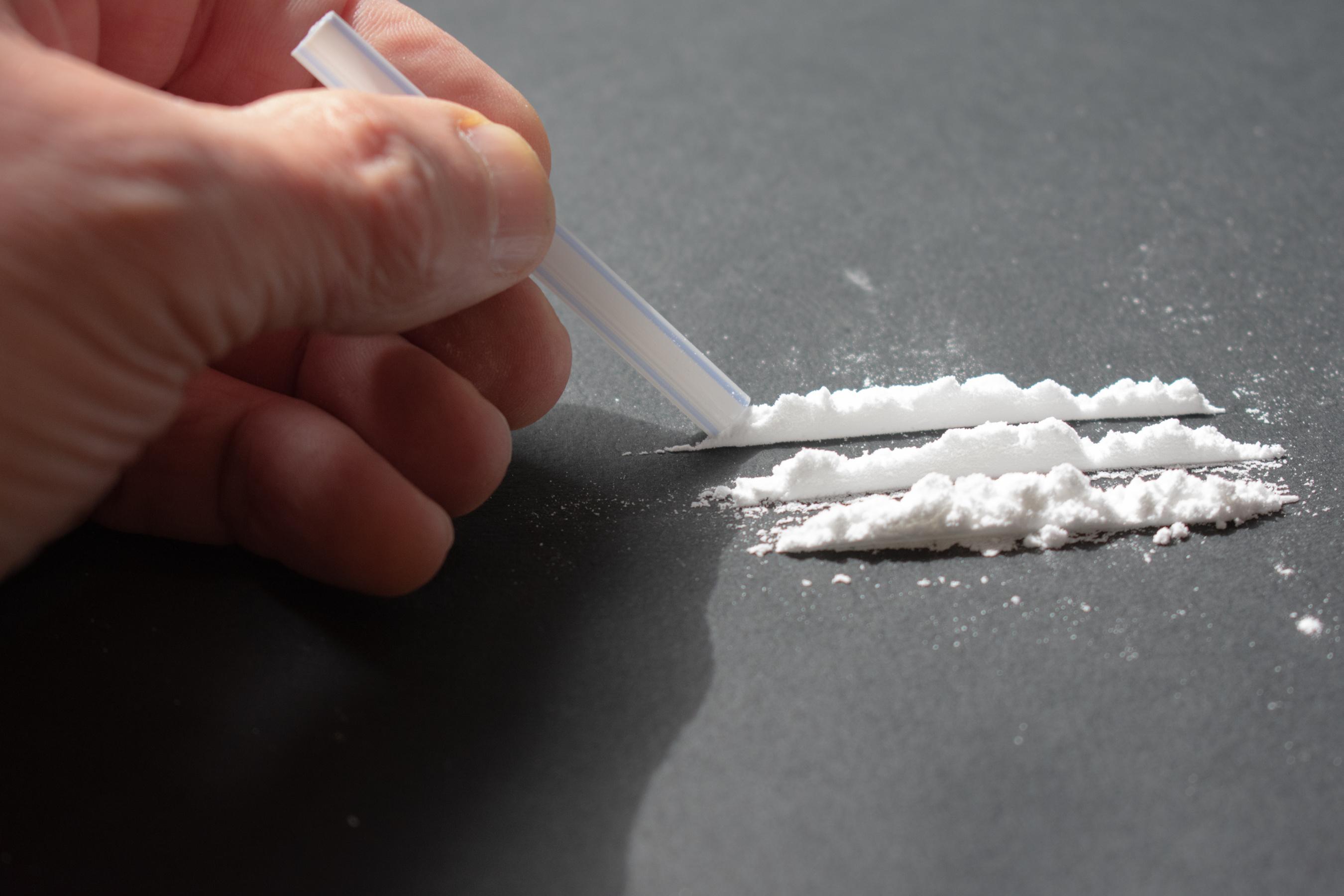
Make New York Post a Preferred Source Federal prisons in Canada will be switching to paper straws to encourage the "safer snorting" of drugs. Erich - stock.adobe.com Canada doesn’t confine its dangerous and inhumane “health” policies to the realm of euthanasia.
A look at the world of “harm reduction” — radical policies that encourage, rather than discourage, drug use — shows how deeply our neighbor to the north has sunk into a crisis of both morality and public health.
This month, the Canadian federal government will start supplying paper straws to prisoners in correctional facilities across the nation — to encourage “safer snorting.”
The straws are “intended for inhaling substances in powdered form or inhaling vapor from heated substances,” a staff memo from Corrections Canada explained.
How, one might ask, could a change of straw material make using jailhouse coke or heroin any “safer”?
Simple: They’ll “reduce harm” by preventing cuts to the inner nostril that metal or plastic straws can cause — cuts that spread hepatitis B and C and other dangerous diseases.
The same memo publicized plans to hand out foil strips specially designed for “safer smoking” of drugs like meth and crack, along with drug-testing kits meant to help prisoners confirm their cocaine isn’t contaminated with fentanyl or tranq.
Once again, the True North makes American experiments with lax drug policies — from NYC’s “safe injection” sites to Oregon’s now-recalled hard-drug-decriminalization Measure 110 — look like rank amateurism.
Making sure that addicts can access and use drugs anywhere, at any time, is a form of radical compassion that’s rooted in a drive toward some undefined standard of “equity.”
And any criticism of that is nothing but “irresponsible populist nonsense” (as Carolyn Bennett, then Canada’s Mental Health and Addictions Minister, said in 2022).
But Canada keeps pushing the boundaries farther than ever, not just in prisons but also on the streets.
Last month a federal judge in British Columbia stayed the convictions of two drug traffickers because, she said, they were acting not for profit but out of compassion.
The two dealers operated an addict-led group that claimed to provide a “safe supply” of drugs to their customers — that is, unadulterated meth, cocaine and heroin — by buying illicit substances and testing them to ensure they weren’t cut with fentanyl or other adulterants.
That was a “selfless” act, per Justice Catherine Murray, whose ruling declared that addicts have a “human right” to access their drugs of choice, never mind the laws on the books.
In June, a group of academics with close links to Canada’s public-school systems created an agitprop document for kids as young as kindergartners emphasizing “anti-stigma” drug education (in other words, that it’s not OK to say using drugs is not OK).
In February, Health Minister Marjorie Michel dodged when asked if Canadian 16-year-olds are allowed to shoot up in a government-approved “safe injection” site; another official soon confirmed that yes, they certainly are.
Canada’s MySafe program (the irony!) offers biometrically accessible vending machines where addicts can get their prescribed doses of pharma-grade hydromorphone, an actual opioid better known by its trade name Dilaudid.
All this just three years after British Columbia piloted a full drug-decriminalization program in 2023.
Compassion means ensuring that addicts get treatment, even if it’s involuntary; it means building a broader community that supports their recovery.
It doesn’t mean giving them continual green lights, no matter where they are (even in prison!), to keep destroying their physical and mental health.
And don’t non-addicts deserve compassionate treatment from their government, too?
Like safe streets, as opposed to no-go-zones haunted by zombied-out users: Surely that counts as a form of compassion.
Families reunited once addiction is overcome sure sounds compassionate to me.
It’s worth noting that in January, British Columbia let its official three-year experiment with drug decriminalization end.
The pilot program legalized the personal possession of drugs like heroin and cocaine, and for a time permitted possession in public (that element was quickly walked back, in 2024).
But the pilot “hasn’t delivered the results that we hoped for,” BC Health Minister Josie Osborne admitted, as she offered the usual mumbles of half-apology.
Here’s what it did deliver: In 2025, the program’s final full year, BC saw close to 2,000 unregulated drug deaths, a sky-high death rate of 32 per 100,000.
Every month in 2025 saw an average of four or more unregulated drug deaths every single day.
They were the province’s biggest cause of unnatural death, by orders of magnitude in many cases.
British Columbia has reluctantly learned a lesson — one that judges like Catherine Murray are trying to unwind.
Whether Canada broadly will learn it remains to be seen.
One thing is certain: Compassion has nothing to do with policies like these.
Sam Munson’s most recent novel is “The Sofa” (2025).