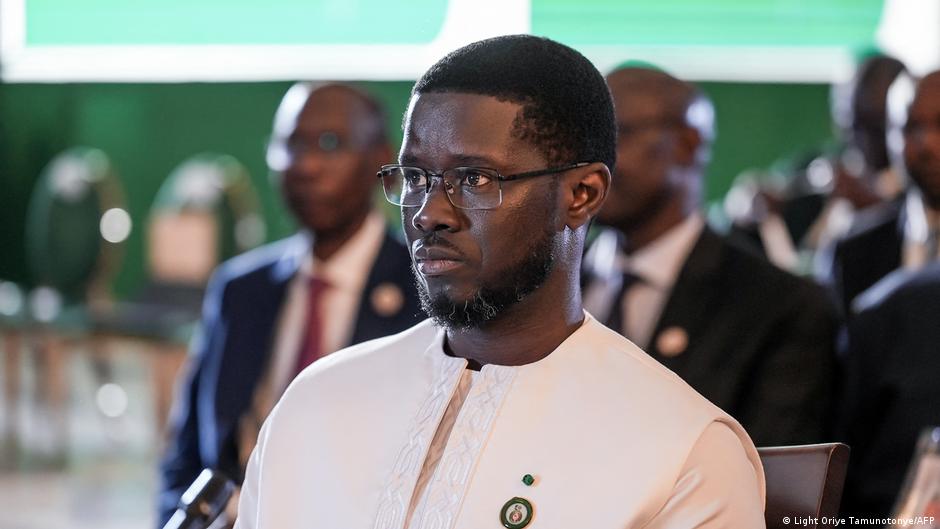
Senegal's President Bassirou Diomaye Faye enacted the new law after it resoundingly cleared parliament earlier this month. It also penalizes those "promoting" or funding same-sex relations, as well as false allegations.
https://p.dw.com/p/5BSPQAn LGBTQ rights group wrote to President Diomaye Faye asking him not to sign the bill into lawImage: Light Oriye Tamunotonye/AFPAdvertisementSenegal's official journal on Tuesday showed that President Bassirou Diomaye Faye had formally signed into law new legislation on same-sex relations that have proved contentious abroad despite broad political support within the majority Muslim country's parliament.
Several human rights groups had voiced concerns about the bill, including warning that it would dissuade people at risk from illnesses like HIV/AIDS from seeking help.
UN High Commissioner for Human Rights Volker Türk called the law "deeply worrying" and said it "flies in the face of the sacrosanct human rights."
The new bill implements a series of new laws and alterations to existing laws and penalties, including the following:
Public attention to the legislative process was heightened in February, amid a string of arrests on suspicion of breaching the laws, including the arrests of two local celebrities.
This led to frequent and often salacious domestic reporting on the various allegations and searches. Some were also accused of "voluntary transmission of HIV," which can also carry a 10-year jail term.
The law championed by Prime Minister Ousmane Sonko sailed through a parliamentary reading earlier in the month. No lawmakers voted against the proposals, three abstained.
Becuase of a first-past-the-post electoral system, Sonko's left-wing populist PATSEF party dominates the Assembly, with 130 of 165 seats.
Under pressure: LGBTQ+ crackdown in Ghana and SenegalTo play this audio please enable JavaScript, and consider upgrading to a web browser that supports HTML5 audio
Dozens of countries in Africa have laws on the books prohibiting and punishing same-sex relations. In Uganda, Mauritania and Somalia it can carry the death penalty.
LGBTQ rights group ILGA World had appealed to President Diomaye Faye not to sign off on the law, despite the parliamentary consensus. It called on him to uphold "respect for individual liberty and the human person."
UNAIDS, meanwhile, said it was "deeply concerned" by the bill, arguing that criminalization only "causes people to turn away from health services," such as those for HIV sufferers.