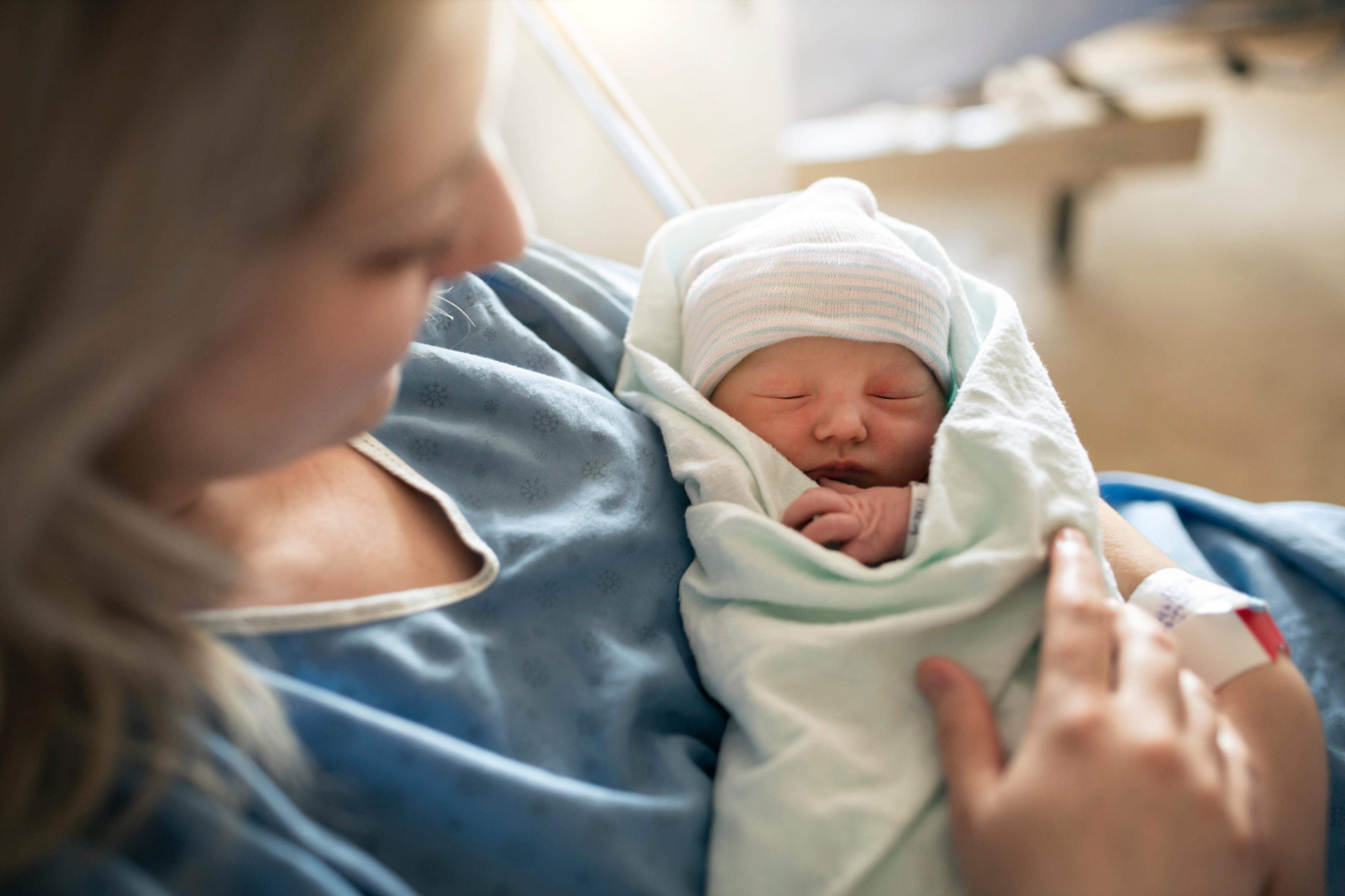
Make New York Post a Preferred Source Some activists are claiming drug tests on mothers and newborn babies are a tool of "white supremacy." Louis-Paul Photo - stock.adobe.com Why do doctors sometimes perform a drug test on a pregnant woman or a newborn?
One might think it’s because a mother under the influence might have difficulty caring for an infant, or because of potential health complications for a baby who’s been exposed to drugs or alcohol.
No, says activist attorney Miriam Mack: It’s because drug testing “is so effective in achieving what this country has always been after, which is to maintain a social hierarchy [and] white supremacy.”
Mack, senior legal counsel at the Movement for Family Power, made this assertion last month in “From the Delivery Room to the Courtroom: Evaluating and Challenging Drug Test Evidence,” a webinar for lawyers and medical professionals.
In it, she condemned our current child-welfare system (or “family separation” system, as she called it) as the modern equivalent of “chattel slavery,” Indian boarding schools and orphan trains.
“Eugenics . . . continues to drive who the United States deems worthy of reproductive autonomy, dignity, family creation and integrity,” she declared.
Mack’s radical conspiratorial ideology is bad enough.
Worse is that it’s evidence that activists are still pushing the notion that drug use during pregnancy is a minor matter that should be hidden from health and child-welfare authorities.
Those activists include the Pearlmutter Center for Legal Justice at Cardozo Law School and the George Soros-funded Drug Policy Alliance, the webinar’s sponsors.
Speakers included Mishka Terplin of the group Doing Right by Birth, who complained about widespread false drug-test positives (due to eating a poppy-seed bagel, or an epidural administered during birth) that, she said, routinely cause a newborn’s removal from a mother’s care.
Never mind the use of secondary tests to confirm a screening test’s accuracy.
Moreover, her claim that states automatically remove children to foster care after a positive drug test is fabricated.
A confirmed positive more likely results in a mother’s enrollment in addiction treatment, along with regular child-welfare check-ins.
Terplin argued that our current maternal drug-testing regimen is the result of the “crack baby” panic — a “racist myth,” she claimed.
She said concerns about maternal drug use peaked in 2003, when federal law first required health-care providers to notify authorities if a baby is born with signs of prenatal drug exposure.
But she skipped the fact that this concern grew from the opioid epidemic — which in 2003 was mostly affecting white families.
Indeed, a Reuters exposé that year highlighted 110 cases in which “babies and toddlers whose mothers used opioids during pregnancy . . . later died preventable deaths” — and all the children featured in the article were white.
Each child “recovered enough to be discharged from the hospital,” the report noted.
“What sealed their fates was being sent home to families ill-equipped to care for them.”
Today, an estimated 500,000 substance-exposed infants are born every year.
All of them have significantly elevated chances of experiencing abuse, neglect and death once they’re sent home.
But never mind that: According to the activists, only racism can be driving infant drug tests.
And their behind-the-scenes advocacy has pushed hospitals and states to weaken this crucial child-safety requirement.
Mass General Brigham Hospital in Boston has discouraged medical professionals from reporting mothers who test positive to the state’s child-welfare agency.
In 2020, New York City’s Commission on Human Rights launched an inquiry into whether private hospitals were targeting black and Hispanic pregnant mothers and newborns for drug testing; soon after, the city’s public hospitals made such screenings voluntary.
In New Mexico, a 2019 law led mothers to be regularly sent home with substance-exposed newborns without any intervention but a “voluntary plan of safe care”; in the next two years, about one baby per month died as a result of accidental poisonings, unsafe sleep deaths or other forms of abuse and neglect.
It’s astonishing how quickly legalization proponents, funded by groups like the Drug Policy Alliance, shifted from arguing that drugs are a legitimate choice for adults who are hurting no one else — to fighting for a pregnant woman’s right to abuse drugs freely, with no concern about the plight of her baby.
But in recent months the progressive New Mexico governor who signed the state’s lax policy into law has expressed regrets.
“We were releasing, after they were well enough to go home, infants in the care of highly drug-addicted parents who were not required to take any service or get treatment for their addiction,” Gov. Michelle Lujan Grisham said in February.
“Now, I don’t know if there’s any better recipe for a disaster in America than that one.”
Naomi Schaefer Riley is a senior fellow at the American Enterprise Institute.