play Live Sign upShow navigation menuplay Live Click here to searchsearchSign upNews|European UnionRomania’s political crisis intensifies as Parliament rejects pro-EU PMSiegfried Muresan’s loss of the confidence motion increases the prospect for snap elections.
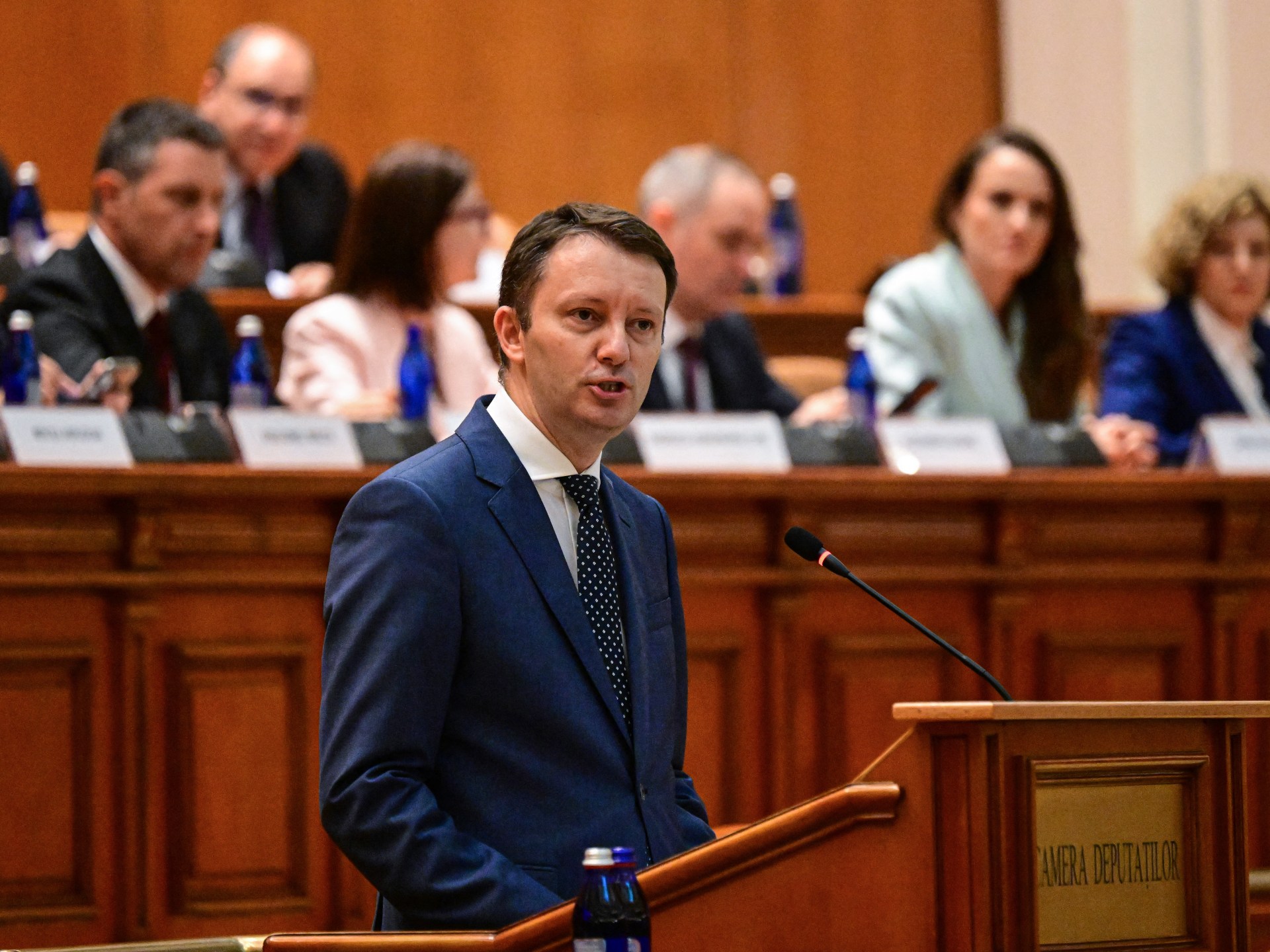
xwhatsapp-strokecopylinkgoogleAdd Al Jazeera on GoogleinfoNominee for prime minister Siegfried Muresan addresses delegates of the Romanian Parliament prior to the vote at parliament in Bucharest, Romania, on September 30, 2026 [AFP]By Al Jazeera Staff, AFP and APPublished On 30 Sep 202630 Sep 2026Romania’s pro-European Prime Minister-designate Siegfried Muresan has failed to win a parliamentary vote of confidence, prolonging a political crisis seen as a boost for the rising far right.
Muresan, a liberal European Parliament member who was the latest of three designated prime ministers, secured only 182 votes out of the 233 required to secure the confidence motion on Wednesday, according to the official count.
The far-right Alliance for the Union of Romanians (AUR) largely boycotted the vote.
The 45-year-old had proposed what he described as a “reform-oriented” governing programme under his centre-right National Liberal Party (PNL), which teamed up with the Save Romania Union party, or USR, and the small ethnic Hungarian UDMR party.
President Nicusor Dan said he would nominate a new prime minister candidate on Monday afternoon, after holding talks with the leaders of the parliamentary parties, to avoid snap elections.
Romania saw the collapse of a pro-European coalition government in May, when governing social democrats, together with the opposition far right, ousted liberal Prime Minister Ilie Bolojan in a no-confidence motion at that time.
The far right, which comprises about a third of Parliament, threatened to impeach the president if he does not call early elections once the conditions are met.
Romania, a member of the EU and NATO that borders Ukraine, has not held snap elections since the fall of communism in 1989.
Political analyst Cristian Pirvulescu told the AFP news agency that snap elections would lead to another fragmented Parliament, but with an emboldened far right.
“Early elections mean that, from the moment they are called, it would take four months before a new government could be formed,” Pirvulescu told AFP. “Due to political instability, Romania finds itself in a very complicated economic situation. Four months is already a very long time.”
The country of 19 million has been struggling for months with the highest public deficit and inflation in the European Union.