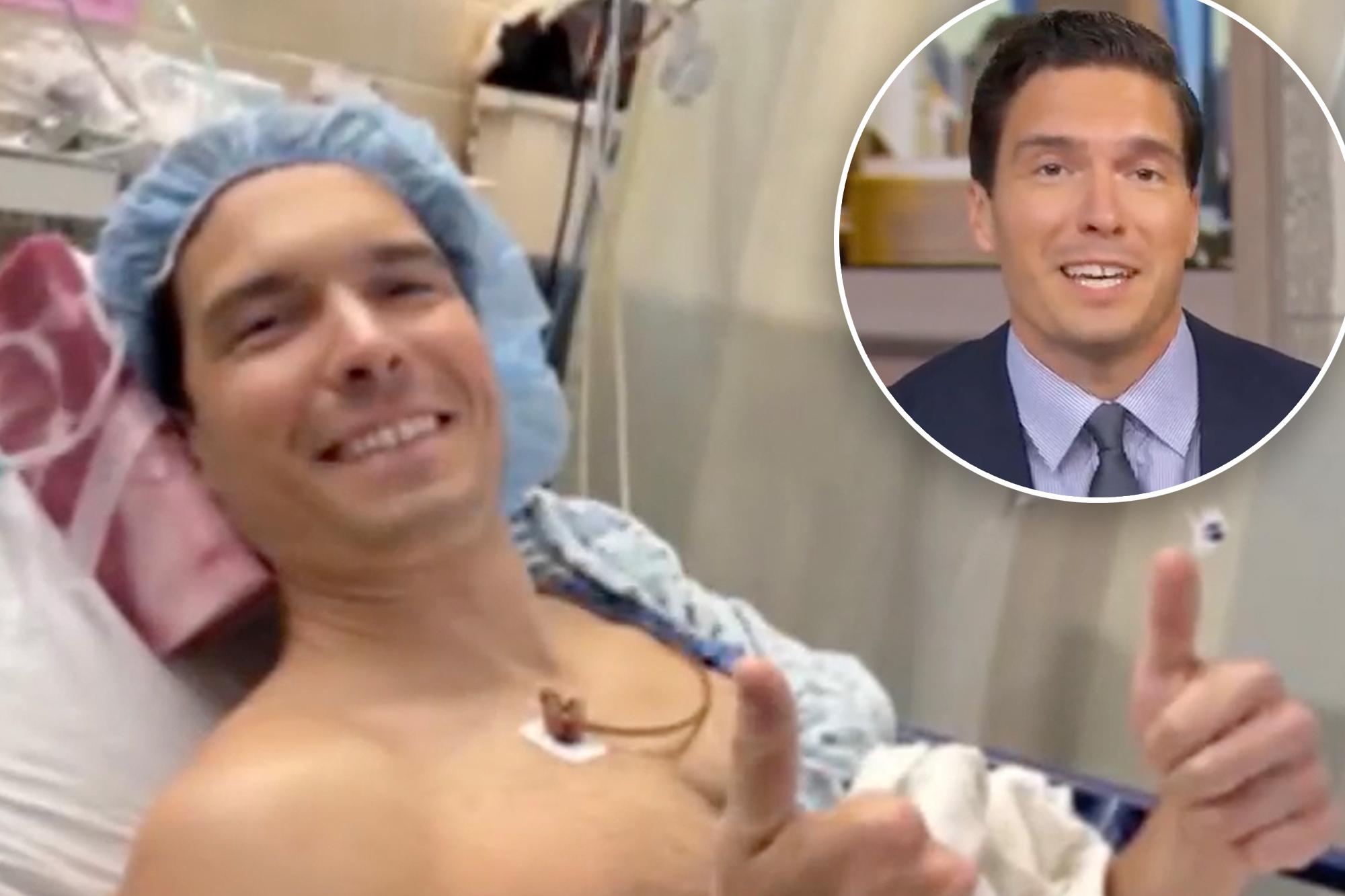
ABC News correspondent Will Reeve, the son of Superman actor Christopher Reeve, has revealed that he was diagnosed with testicular cancer.
“I was raised to share one’s struggles if, in doing so, that might help others,” Reeve, 34, told People.
After surgery and chemotherapy, he is currently cancer-free.
Will Reeve, son of Christopher Reeve, has spoken publicly for the first time about his cancer diagnosis, which came just months after his wedding. ABC Not long after getting married, Reeves discovered a lump in his left testicle, and an ultrasound confirmed it was testicular cancer.
Reeves shared that he had his affected testicle removed in a surgery called an orchiectomy, which led to a diagnosis of embryonal carcinoma — an aggressive testicular cancer common in younger to middle-aged adults.
To stop the cancer from spreading, he had a second surgery to clear out dozens of lymph nodes through a retroperitoneal lymph node dissection.
He also recounted his month of chemotherapy at Memorial Sloan Kettering Cancer Center in Manhattan, detailing rough recovery side effects like bone pain, ringing ears, night sweats, blood clots and headaches.
Reeve went to a doctor for evaluation after noticing a lump in his left testicle. ABC “I want folks to know that this is a thing that can happen,” Reeves told ABC News. “It’s shocking. It’s weird It’s slightly awkward to talk about just because of what we’re really discussing here, but that you end up okay, almost always.”
To diagnose testicular cancer, doctors perform a physical exam, imaging scans, blood tests and a biopsy. After confirming the cancer, they test the cells to identify the specific type, which guides the treatment plan.
While any male can develop testicular cancer, several risk factors can increase this likelihood.
Age plays a major role, as most cases affect teenagers and young adults aged 15 to 44, with about half of all diagnoses occurring in men in their 20s and 30s.
Having an undescended testicle — known as cryptorchidism — keeps the risk elevated even after corrective surgery. A family history of the disease, a prior history of testicular cancer in one testicle and certain medical conditions such as an HIV infection or Klinefelter Syndrome further raise the risk.
Additionally, white men face a notably higher chance of developing testicular cancer compared to Black, Asian or Hispanic men.
Testicular cancer is rarely fatal and exceptionally treatable, boasting an overall five-year survival rate of about 95%, according to Cleveland Clinic.
Because more than 95% of people are cured, it stands as one of the most manageable types of cancer to overcome.
Detecting the disease early — often by noticing a painless lump right away — makes the treatment process much simpler and significantly more successful.