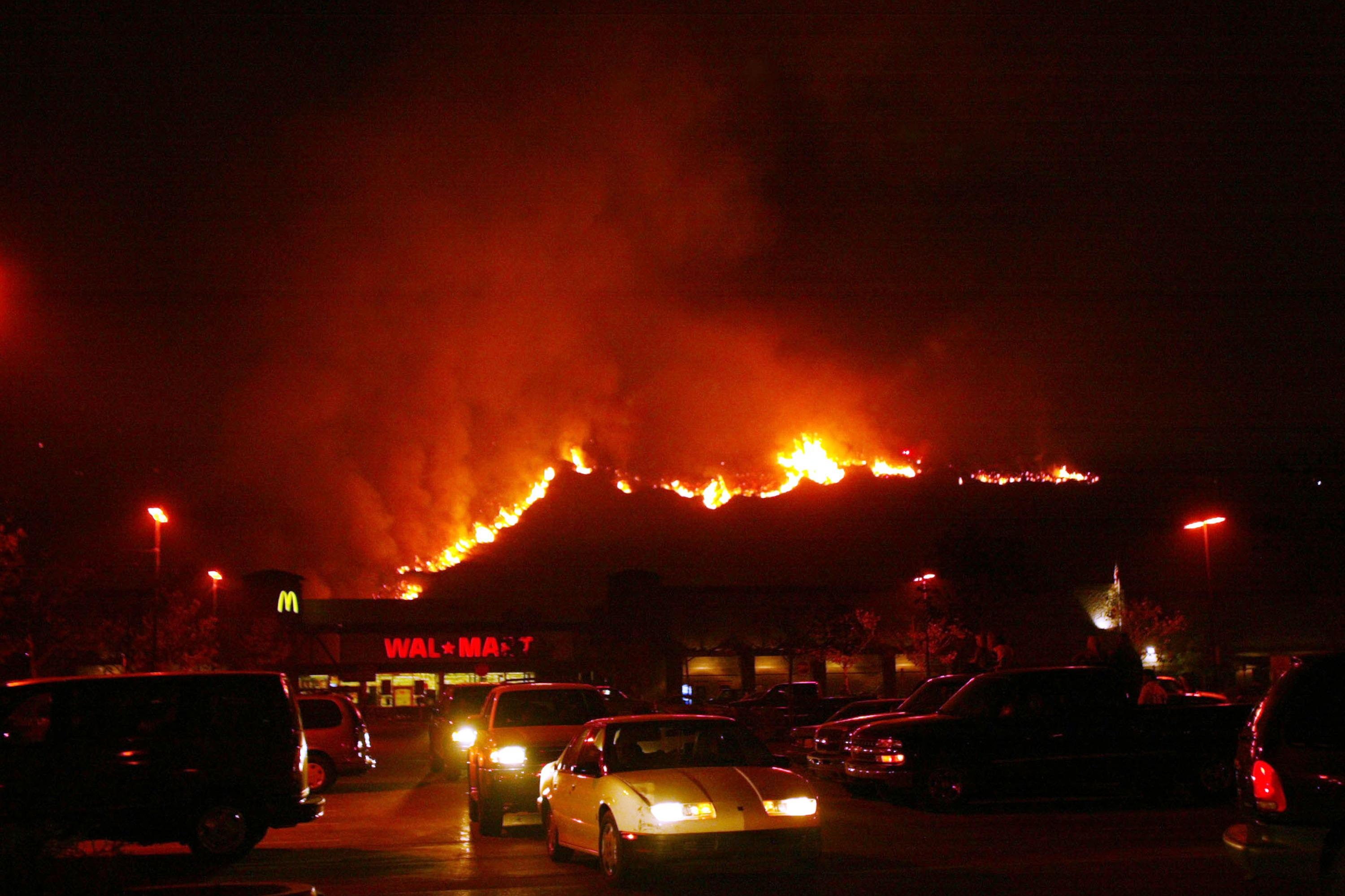
Add The California Post on Google I was standing in a burned-out canyon outside San Diego in October 2003 when I learned what disaster management was really all about.
I was the director of the Federal Emergency Management Agency (FEMA). You hadn’t heard of me yet.
But maybe you remember the Cedar Fire. It burned over 270,000 acres and over 2,800 structures. At the time, it was “the largest and most damaging wildfire in California’s history.”
A woman I had never met was crying in my arms. She had just been let back into her neighborhood to see what was left of her house, which was the foundation and chimney. More than 350 homes on that hillside were gone, burned to the ground.
Back in Washington, people were sitting in meetings. The White House was shaking up the new Department of Homeland Security. I wasn’t there for the drama. I was not in that room. I could not be.
I learned later that only one official was singled out by name for doing their job. Me.
The reason given was that I was in California working the wildfires while everyone else sat in Washington.
I was commended for being absent. For doing the actual job instead of attending the meeting about the job.
Two years, later Hurricane Katrina made landfall. You know how that turned out for me.
President Bush told the nation I was doing “a heck of a job.” The country looked at Katrina and came to a different conclusion.
You learned my name the hard way. I own every bit of it.
But Washington never says something out loud that I want you to hear.
The federal government does not put out your fire. FEMA does not knock on your door at 2 a.m. and tell you to evacuate.
Disasters are answered from the bottom up. Your city. Your county. Your state. The firefighter, the sheriff’s deputy, the water in the hydrant, the alert on your phone.
Those are the first responders. Washington writes the checks and flies in to help coordinate. The people who save your life and protect your property are local.
Which is why California should be frightened of how its own house is currently run.
Look at January 2025. In Pacific Palisades, a 117-million-gallon reservoir sat empty for nearly a year, out of service for repairs, while the fire ran downhill toward the Pacific. The hydrants went dry.
Investigators later concluded the city’s water system was never built to fight a firestorm that size. That is not an excuse. That is the indictment.
In Altadena, LA County’s own after-action review found that on the west side of town, where all the Eaton Fire’s deaths occurred, the evacuation alerts came hours late or never came at all. People died on the side of the street.
And the mayor of LA was in Ghana when her city caught fire. She later admitted the trip was a mistake. It was.
Twenty-two years separate that woman in crying in my arms from the families sifting the ash of Palisades and Altadena, but the story is the same.
In 2003, California asked Washington for money to fight the beetles killing its forests, got told no on a Friday, and watched the hills ignite that weekend. Everyone except the firefighters reached for politics before they reached for a firehose.
In 2025, the reservoir sat empty and the phones stayed silent. Fire season comes every year almost on schedule, almost always. And a generation of governors, mayors, county supervisors and city councils, of both parties, still act amazed when the fires come screaming down the hillside.
Here is what should keep every Californian up at night.
Mother Nature has more than one move. Forecasters are warning of a powerful El Niño this winter, the kind that shoves the tides up and the water in. The same state that could not keep its hydrants full in January could be bailing out coastal neighborhoods by spring.
Fire and flood, in different counties, pulling on the same overstretched, over-politicized response. The org chart will not save anyone. Neither will another task force, or a mayor’s apology from the airport.
Somebody must be in the canyon, not in the conference room. Somebody must be on the beach before the tide takes the first house. Preparedness is the dull, unglamorous work a local government does before the wind comes up.
That is the work nobody calls a press conference to announce. California keeps electing people who would rather call the press conference.
You can change that. But you don’t get many chances.
This year is one of those chances. Whom do you trust to show up in that canyon?
Michael Brown was the first under secretary of Homeland Security for emergency preparedness and response under President George W. Bush, and the director of the Federal Emergency Management Agency.