Add The New York Post on Google It could be a scene from a Nicolas Cage film.
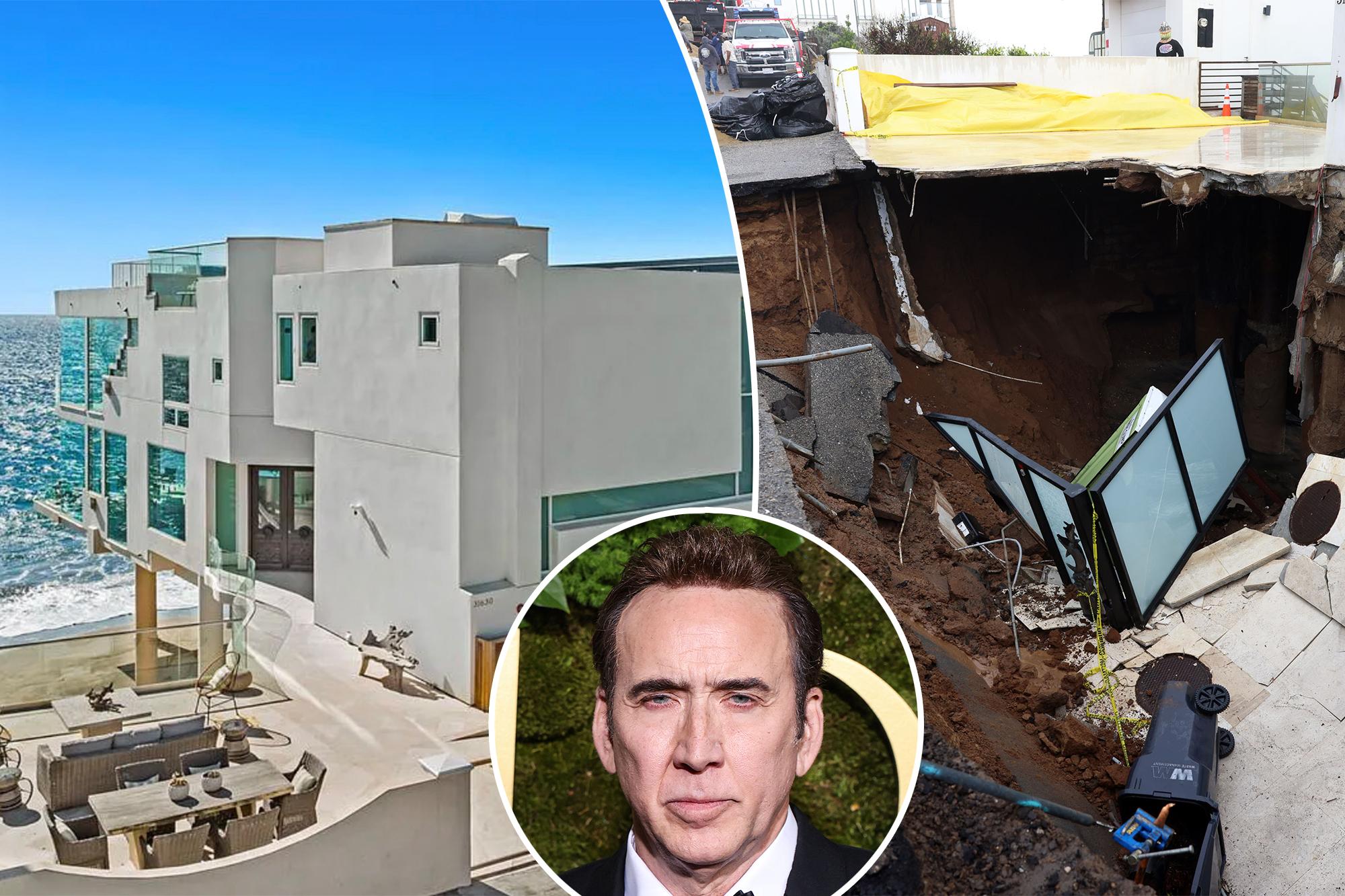
A giant, expanding sinkhole swallows up part of an Oscar-winning actor’s oceanfront Malibu escape, leading to the evacuation of 31 homes on an exclusive, gated street.
But the scene is real — and only in Malibu could residents just shrug it off.
“We had three back-to-back hurricanes in a row. That’s why this is happening. Stuff happens. It’s nature!” said broker Irene Dazzan-Palmer, of the Agency, who shared the four-story home’s listing with her son Sandro Dazzan when Cage bought it, on exclusive Sea Level Drive, for $10.5 million in 2024.
But sinkholes aren’t the only issues Malibu homeowners presently face.
More than a year after the January 2025 Palisades Fire, which scorched 600 Malibu homes, giant waves up to 10 feet high are crashing into oceanfront homes. In some cases, they’re “taking away decks and even a pool,” one resident told Gimme Shelter. Another described the crashing waves in front of her home as “violent.”
“Eight-foot-high waves may not seem huge, like a tsunami. But if you are on the sand and the wave is 8 feet high, that is considerably taller than you, and you would be engulfed by it if it came to shore,” said broker Ernie Carswell, of Sotheby’s International Realty.
But Malibu residents are a resilient, hardy lot, used to dealing with all sorts of issues — all while their homes slowly sink into the Pacific.
“There is so much that those tough Malibu people have to endure, so many geological traumas, tsunami warnings, mudslides, floods, fire, earthquakes — our whole region is susceptible to that — as well as slowly sliding into the ocean and now this,” Carswell said.
“It’s typical Malibu risk,” he added.
Once, Carswell said, when he sold the late actress Loretta Swit’s Malibu home, the deal came with a disclosure, so that the buyer was aware that the home “was moving one half an inch toward the ocean every year.”
“That’s a lot of movement,” Carswell said, “and when you drive down Malibu Road, it becomes a little undulating. It wasn’t built that way, but the soil underneath the road is moving, like it’s a serpent.”
Cage’s sinkhole, however, can be attributed to the weather.
“This happens to our coastal region because of the hurricanes. The most recent one was not far from Hawaii. It created massive waves, and there were washouts all the way down to Newport Beach,” Carswell said.
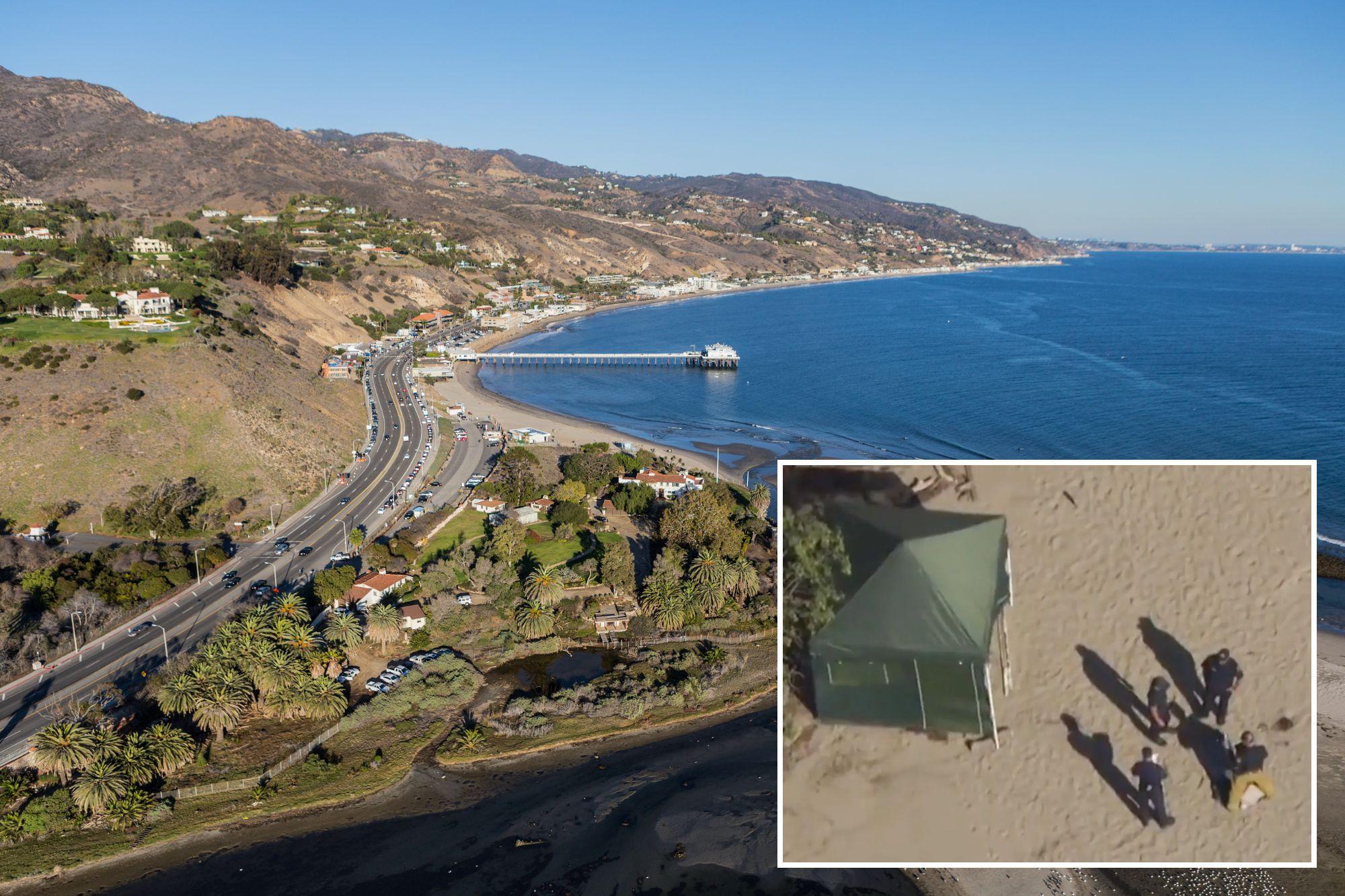
The area around Cage’s home — the Broad Beach/Point Lechuza corridor of western Malibu — is very susceptible to losing its sand barrier. “It lost all the sand around 20 years ago, and it had to be trucked back in,” Carswell said.
Malibu, Carswell added, is also notorious for its frequent fires, where hundreds of homes are lost — and yet people remain.
Still, the rebuilding — from the Palisades to Malibu — is tough to navigate, and home sale prices and the frequency of sales in Malibu are falling.
The median price of single-family homes in Malibu fell 7.3% year-over-year in June 2026, according to Realtor.com. At the same time, active listings across Malibu rose 7.1%, compared with a 5.5% decline across California as a whole.
Even so, Malibu residents and their brokers remain undaunted.
“Malibu has been there for well over 100 years. It’s always been one of the most desirable locations in California. Sometimes you just get the perfect storm, or in this case, bad things happening all at once. But by no means do I believe that Malibu won’t recover. It’s quicker and easier to rebuild here than in the Palisades after the catastrophic events. Prices have been impacted — they’ve come down — but they will recover once people see construction,” said broker and reality star Josh Flagg, of Compass.
Carswell added, “People still pay a premium to live in Malibu. It’s where the highest sales in our state are happening. Malibu is a mindset, and you pay for the risk of living there.”