Kaustubh “Vick” Singh See more of our coverage in your search results.
Add The New York Post on Google Hollywood’s portrayal of disability and chronic illness has often relied on a familiar dichotomy: characters are either tragic figures to be pitied or hyper-resilient symbols of “suffering spectacle” meant to comfort able-bodied audiences.
Since its premiere at Slamdance Film Festival, the short film Unlimited, Forever and Ever No Matter What (2026) has meaningfully challenged these tropes.
Directed by Jayme Coveliers and produced by Kaustubh “Vick” Singh and Kamal Sehrawy, the film offers an unusually authentic and affecting portrayal of chronic pain, familial role reversal, and the exhausting psychology of denial.
The film follows Maggie, a middle-aged physical education teacher who, in her younger days, lived by a bold philosophy of physical fearlessness, conquering athletic feats like free-solo rock climbing. Now living with debilitating chronic pain following a severe car accident, Maggie fiercely resists adjusting her “still physically active” mindset.
The film recently made its New York premiere at the Greenpoint Film Festival in August.
What sets Coveliers’ film apart is its refusal to rely on cheap exposition or sentimentality. Instead of a tidy narrative about “overcoming” illness, the film explores the painful friction between the life one used to have and the reality of the present. Maggie’s stubborn determination (once her greatest asset) becomes a source of isolation, placing an immense strain on her relationship with her daughter, Jessie.
Through quiet cinematography by Jesse Schroeder, the film captures Maggie’s internal battle without relying on heavy dialogue. A standout, wordless sequence where Maggie simply contemplates ascending a set of stairs transforms an everyday architectural feature into an imposing mountain, brilliantly visualizing how physical spaces alter when living with a disability.
The emotional gravity of the film stems directly from a daring creative choice: Coveliers chose not to cast an actress to play Maggie. Instead, the character is played by his own mother, Lisa Coveliers, the real-life inspiration behind the story. “I wanted to feel how spaces transform when you live with a disability,” Coveliers shares. “Films are so often emotionally subjective and less so physically. With this film, I wanted to do both. How much of her pain can we feel without alienating an audience? It was a frustrating balancing act.”
Casting his mother required a complete reimagining of traditional production structures. Because decades of pain medication had dulled her short-term memory, memorizing a script was impossible.
To protect her well-being while capturing her “achingly present” lucidity, Coveliers built an entirely improvised filmmaking process: he used guided Improvisation; a close family friend was cast as the daughter, guiding the real-life mother through the emotional beats of each scene.
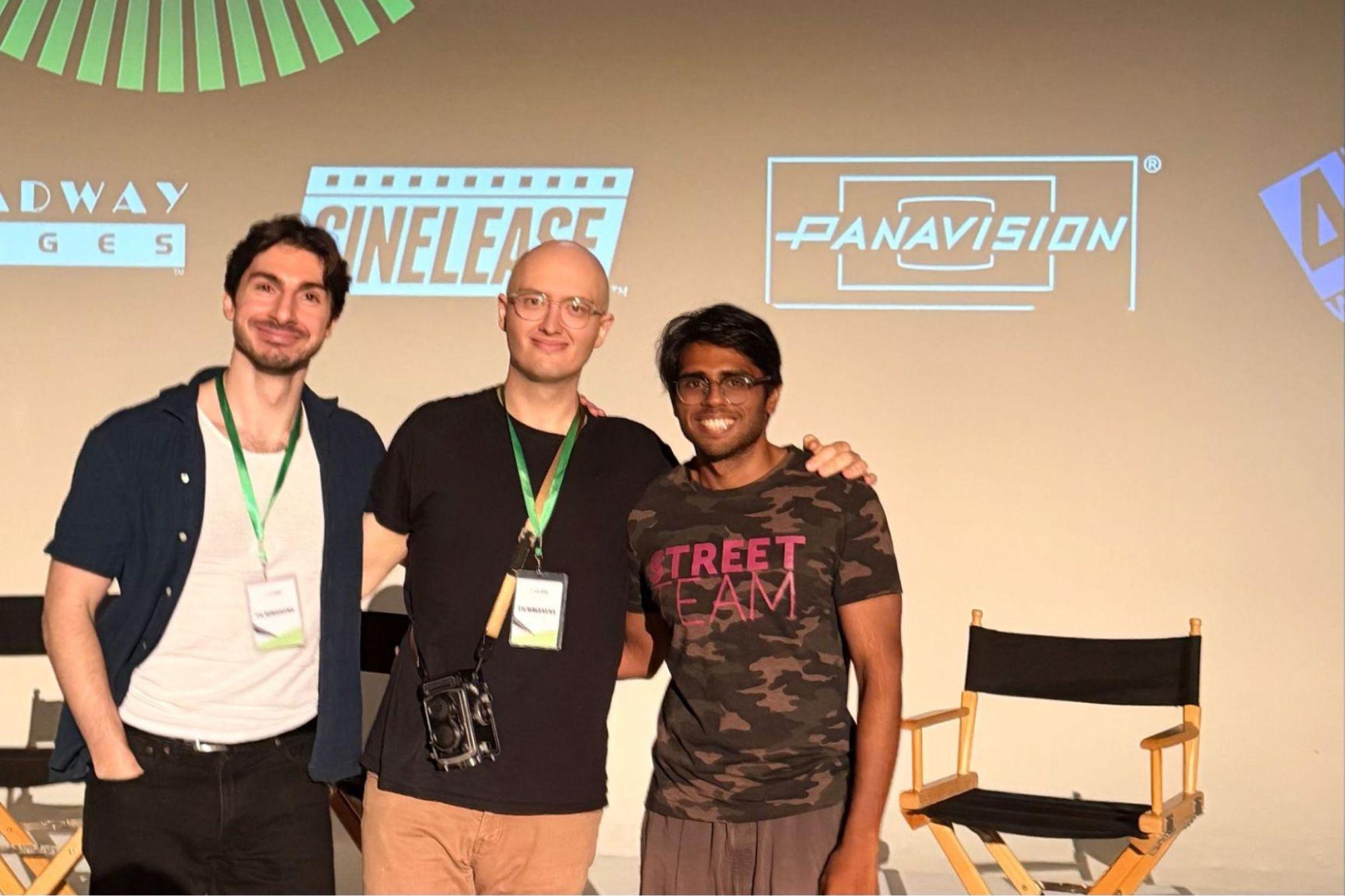
Speaking at a panel at the festival about filming non-fiction stories, Vick talked about the possibilities of the improvisational medium of documentary filmmaking. “While the film was a narrative one, Lisa (Coveliers’ mother) was playing a version of herself on screen, and thus her struggle and pain were very much real. This structural necessity unlocked the emotional core of the film and Lisa’s performance,” added Vick, the Producer.
Bringing such a delicate, non-traditional project to fruition required a production team dedicated to shifting the paradigm of independent filmmaking. Producer Kaustubh “Vick” Singh, working through Obluda Films, has built a reputation for championing narratives that illuminate underrepresented global communities. Based out of NYC, it is operated by Vick and his creative partner, Guang Ren.
By prioritizing the physical safety and cognitive accessibility of its lead performer over rigid Hollywood production standards, the creative team demonstrated that inclusive filmmaking involves not only who appears on screen, but also how the working environment behind the camera is structured.
Unlimited, Forever and Ever No Matter What offers no clean resolutions or perfect puzzles where everyone gets what they want. By embracing the messy, frustrating realities of chronic illness, Coveliers and Singh have offered something that extends beyond a conventional feel-good story: a raw, honest masterpiece of physical and emotional empathy. The film will continue its festival run throughout the country.