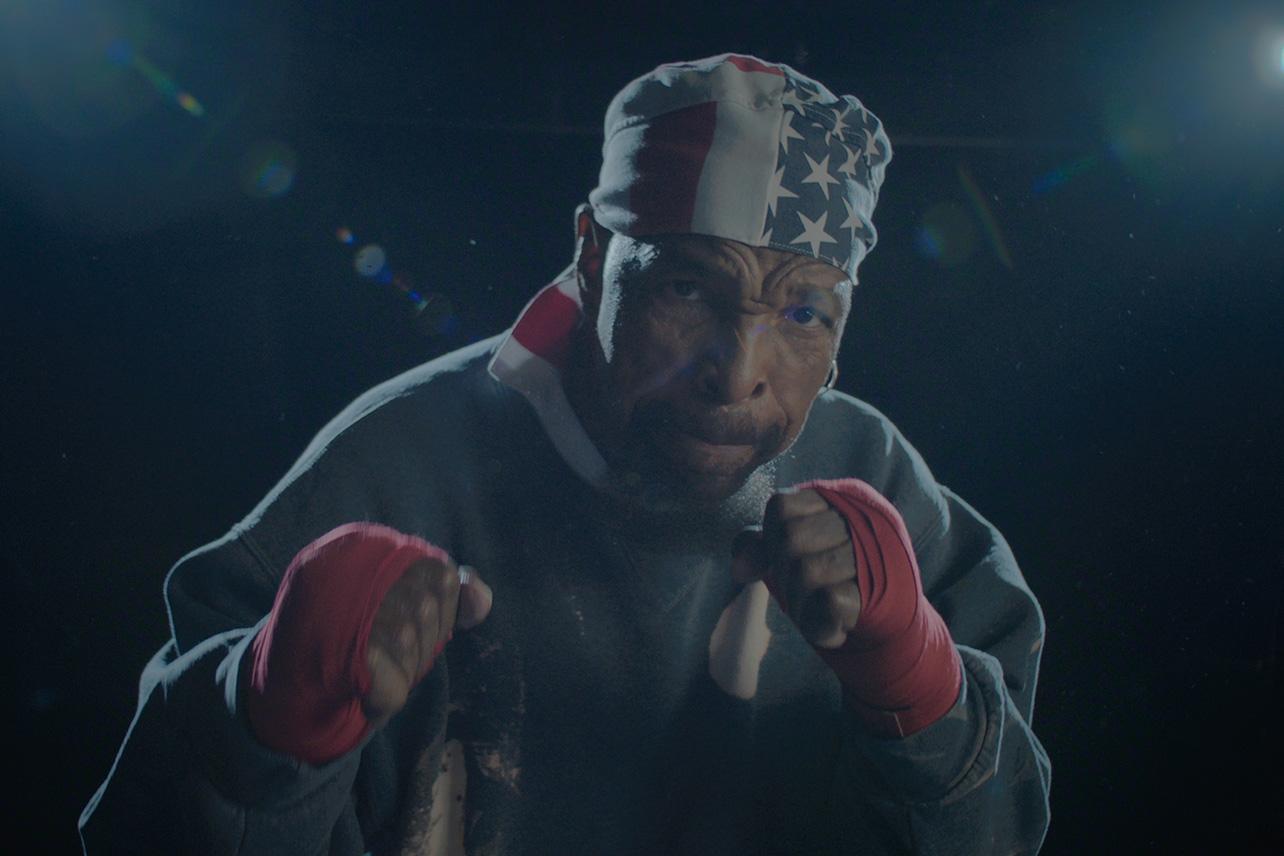
Add Decider on Google More On: documentaries The Top 10 Shows On Netflix That Are Most Popular Right Now ‘Turning Point: Generation 9/11’: 8 Heartbreaking Stories from Netflix’s New 9/11 Documentary ‘OJ Unseen: Exploitation of Evil’: Where To Watch The New Doc About O.J. Simpson’s Ill-Fated Prank Show 11 Best New Movies on Netflix: September 2026’s Freshest Films to Watch The new episode of Netflix’s Untold sports-documentary film series stretches the concept to be more sports-adjacent: Untold Mr. T: I Pity the Fool barely mentions that its subject is a former football player, instead focusing on the iconic accessorizing, sloganeering, fool-pitying, boastful posturing and flash-in-the-pan-i-ness of an iconic 1980s celebrity.
Of course, the movie drops with a bit of no-publicity-is-bad-publicity hype, as Mr. T himself recently trashed the doc during an interview with The Guardian, calling it “garbage” and asserting, “I’m more than that.” And he may have a point – at 48 minutes, Untold Mr. T feels as incomplete as his brief superstardom, which launched in 1982 when he played Sylvester Stallone’s boxing foe – warning: history’s greatest Movie Name incoming – Clubber Lang in uber-blockbuster Rocky III, the light dimming after his second appearance at a WrestleMania event in 1986.
Well, sort of fizzled. In the doc, Mr. T insists he chose to exit the spotlight because he accomplished his goal of providing his hardworking mother with a more leisurely life. That may be true, but it’s also wise to take some of the guy’s commentary with a grain of salt, because it can be as outsized as his persona. His tales tend to be larger than life. A touch self-aggrandizing, perhaps. He often seems to be gilding his narrative with a bit of, you know, BS. To hear him speak (or to read his 1985 autobiography, Mr. T: The Man with the Gold, which seems to be pretty nutty) is to (almost) believe he never lost a fight in his life. He comes off a bit less intimidating and more humble in the twilight of his life – he’s 74 now – but he’s still the deeply assured Mr. T of legend. So are we total SUCKAZ for watching this brief bio? Maybe a little. But we’re here to eat up the more crazed parts of his life, which Untold Mr. T inevitably indulges in, as follows:
Regarding the story of Mr. T confronting the two men who assaulted his mother and stole her welfare money, he straight-up admits in his book, “up until that point, I had never killed anyone before.” He doesn’t parrot those exact words in the documentary, but T — who grew up in poverty with 11 siblings on Chicago’s South Side — says he grabbed his 12-gauge shotgun and sought vengeance. “I was insane, like an out-of-body thing,” he says. Yipes? Yeah, I think so, yipes. Should we also contextualize how Mr. T succeeded at being a positive role model during his dalliance with fame? Also yes. Seems prudent. We all contain multitudes, right?
And YOU thought ridiculous reality/game shows were strictly a product of the 21st century. During the 1980-81 TV season, NBC aired Games People Play, a Sunday night series featuring dopey competitions like belly flopping and beer guzzling. Mr. T, at that point a career club bouncer and security guard, participated in the America’s Best Bouncer episode, and the appearance punched his ticket to the big time. As he showed off his impressive running-through-doors and man-tossing skills (the man was only 115 lbs., but still!), he caught the eye of Sylvester Stallone, who promptly hired him to be in Rocky III. The rest is history.
As a child of the ’80s, I can confirm that Mr. T was Mr. Ubiquity. I watched him growl and pummel bad guys on The A-Team, caught an episode or three of the Mister T Saturday-morning cartoon series, probably ate one bowl of the Mr. T breakfast cereal and let the rest go stale in the cupboard because it tasted wretched, like every other branded cereal was at the time (the one exception? My kingdom for a bowl of Pac-Man cereal here in 2026!). Although Mr. T insists he never did anything purely for the money, the doc asserts otherwise by showing us snippets of the Snickers and 1-800-COLLECT commercials he starred in, among many others. He pitied ALL the fools who didn’t brush their teeth with Aim!
At the height of his fame, Mr. T wanted Calgon to take him away. He demanded a white limo for his public appearances, and bottles upon bottles of Calgon Bouquet for his baths. “If it wasn’t the right way, it’d be disrespectful to him,” his former agent, Peter Young, testifies. T doesn’t offer much of a rebuttal in the doc, but in the Guardian interview, he says he implored Netflix not to interview Young, and director Scott Weintrob did it anyway. (Shall we interject and say a third-person POV is a necessity for celebrity biodocs? Even those from gently disheveled-looking former agents of ’80s flashes-in-the-pan?) Now, is anyone surprised that one of the world’s all-time toughest badasses enjoys some luxurious, floral-scented Calgon bubbles in his bath? Nah. We shouldn’t be. Remember what I said earlier about containing multitudes?
NBC loves it when a plan comes together: In 1983, the network capitalized on T’s fame by assembling The A-Team around his distinct persona. “I’m the only one who didn’t audition for The A-Team,” he says in the doc. And that’s apparently not a boast, evident in the friction it inspired with another cast member. Namely, George Peppard, who allegedly engaged in ego battles with Mr. T, the latter stating the cause as being jealous of T’s status as headliner. Cue an old promotional interview clip with Peppard and T seated side-by-side, the former with an expression that’s more gritted-teeth than grin, the latter engaging in some serious on-camera fool-pitying. In a later scene, we see T hanging out with fellow A-Teamer Dirk Benedict, who says he’s proud of T “after what you went through — I mean George Peppard!”
T-cell lymphoma. In 1995, T proved to be vulnerable after all, contracting a rare form of cancer that infects the blood and requires chemotherapy treatments. He survived, of course, and doesn’t seem to be too worse for wear. The God that Mr. T loves and worships so openly (more on that in a second) apparently has a grim sense of humor.
Considering his highly individualistic manner of speaking (referring to himself in the third person), dressing (Mandinka mohawk, a zillion gold chains, feather earrings, striped tube socks, etc.) and carrying himself (a glare that could laser right through souls and phone books), it’s a tad strange to see him conform to two of the world’s biggest institutions: Christianity and conservatism. T leans heavily on his faith, and we see him interacting with his pastor and reading scripture at a public event on Easter. We also see him in a Santa Claus costume with Nancy Reagan on his lap, kissing him on the cheek during a mid-’80s White House visit; he was a spokesman for the First Lady’s infamous “Just Say No” war-on-drugs campaign. One of the documentary’s stumbles is its failure to ask him what he retrospectively thinks about such potentially problematic politics.
On camera, even. During his heyday, T never would’ve displayed the humility he does now: “I don’t want to get cocky,” he says. “I don’t want to think I’m all that and a bag of chips.” We see him interacting with fans at the Dallas Fan Expo, and later getting choked up by the adoration he receives. “I’m getting emotional now – gotta stop,” he says, wiping away tears. He later adds, “I pity the man who don’t cry, and let it out… That’s a fool. That’s a fool.” Multitudes!
John Serba is a freelance film critic from Grand Rapids, Michigan. Werner Herzog hugged him once.