play Live Sign upShow navigation menuplay Live Click here to searchsearchSign upEXPLAINERNews|US-Israel war on IranIran and Ukraine wars: Why ship fuel is running short, and why it mattersThere’s less crude in the market, and refiners prefer to produce diesel. The result: Ships are running short of fuel. And that could impact global trade.
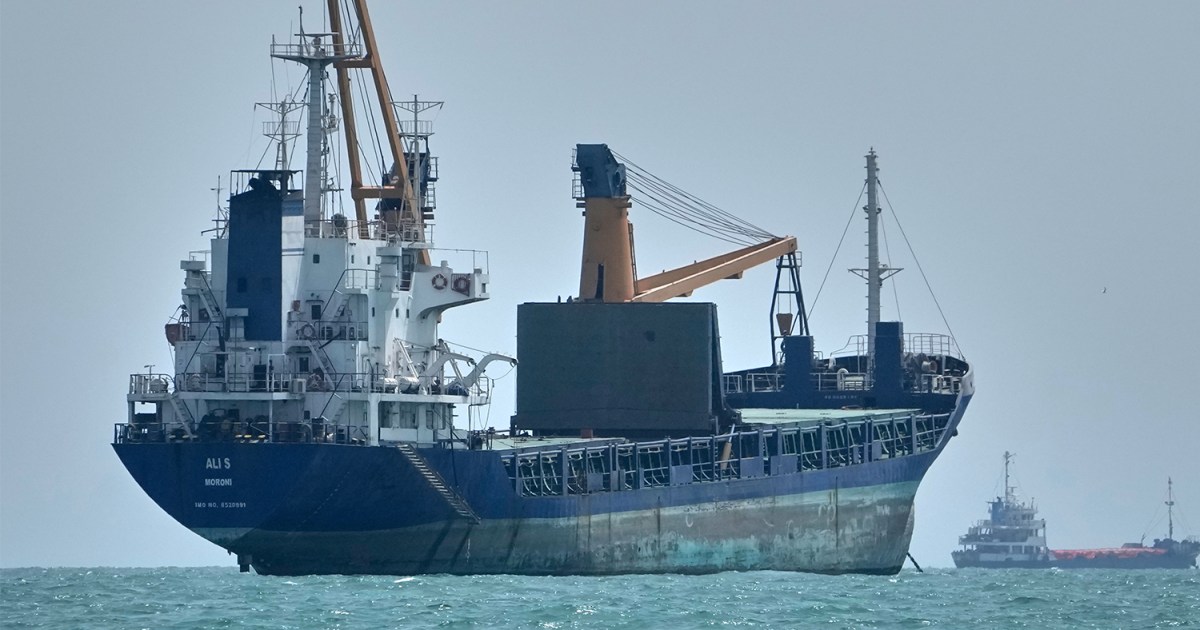
xwhatsapp-strokecopylinkgoogleAdd Al Jazeera on GoogleinfoA general cargo ship lies anchored among other commercial vessels in the Strait of Hormuz, off Bandar Abbas, Iran [File: Vahid Salemi/AP]By Al Jazeera StaffPublished On 7 Sep 20267 Sep 2026The shipping industry, already heavily constrained by restrictions on transit through key waterways such as the Strait of Hormuz, faces another challenge stemming from the US-Israel war on Iran and Russia’s war on Ukraine: a shortage of fuel oil used by ships and power plants.
The fuel used by ships powers the transport of large cargoes around the world. Any shortage of this fuel could drive up global freight costs, which could in turn affect consumers and manufacturers of goods and commodities.
Most ships and oil tankers mainly use heavy fuel oil (HFO), commonly known as bunker fuel, to power their engines. This fuel is produced when crude oil is refined.
Other commonly used marine fuels include marine gas oil (used by smaller vessels), marine diesel oil (used in marine engines) and less polluting fuels like very low sulphur fuel oil (VLSFO).
Why is ship fuel running low and why does it matter?
According to analysts, the wars in West Asia and Europe, along with refiners opting to produce more profitable fuels, have contributed to the shortage.
Middle East fuel oil exports were down by 45 percent year on year to an average of 447,000 barrels per day from March to August, data from energy trade analytics firm Kpler shows.
Energy consultancy Energy Aspects told Reuters news agency that it expects the fuel oil market to face a deficit of 218,000 bpd in the third quarter. This is the first shortfall it has estimated since the third quarter of 2025, when it was a marginal 6,000 bpd.
The US-Israel war on Iran has paralysed key maritime trade routes like the Strait of Hormuz, through which about 20 percent of global oil and gas passed before the start of the war.
Iran has also hit multiple oil facilities in the Gulf in retaliation against the US.
Attacks by Yemen’s Iran-aligned Houthis on shipping in the Red Sea and around the strategic Bab al-Mandeb Strait, one of the world’s most important shipping routes, have also disrupted shipping and constrained supply routes.
Besides the war on Iran, Russia’s ongoing war on Ukraine has also impacted oil supplies. Ukraine has in recent weeks bombed multiple major Russian refineries.
Russia is the world’s second-largest exporter of crude oil. Ukrainian drone attacks have affected Russia’s refinery output, with its fuel oil exports in August hitting a record low 591,000 bpd, down from an average of over 860,000 bpd in 2025, according to Kpler data going back to 2017.
The net result: less crude is being shipped out from key oil-producing regions, especially the Gulf and Russia.
That has meant an overall shortage in supplies of crude. And oil companies aren’t prioritising fuel oil as their product of choice.
Petrol, diesel and jet fuel, which are also produced when crude oil is refined, have all been impacted. But products like diesel tend to help suppliers generate higher profits, and they prioritise it over products like fuel oil.
According to Kpler, Nigeria’s 650,000-bpd Dangote refinery, for instance, has ramped up diesel, petrol and jet fuel exports, while its fuel oil exports have dropped.
Market observer Sunil Reddy said in a post on X on Monday that one of the key reasons for a global ship-fuel shortage is “the extraordinary profitability of diesel”.
“When diesel cracks [or] spreads become extremely high, refiners have a powerful incentive to squeeze as much diesel and [petrol] as possible out of every barrel. That changes what happens to the heavier part of crude,” he said.
He explained that in the refining process, instead of “allowing more of that heavy [oil] residue to remain as fuel oil for ships, refiners will send it through secondary processing units and upgrade it into higher-value products such as diesel”.
“So, extremely strong diesel margins effectively start pulling barrels away from the bunker-fuel market,” he said, adding that this would increase ship-fuel prices as well.
While a drop in ship fuel will have a large-scale impact on global shipping, Asia could be particularly affected because of its dependence on the Gulf.
According to Kpler data, Singapore, the world’s largest bunker hub, imports more than half of the nearly one million bpd of fuel oil it consumes. A drop in fuel oil supplies has also led to a rise in the price of shipping fuels like VLSFO.
In Singapore, the price of this fuel is up 76 percent since the war on Iran began to just less than $825 per metric tonne, or $130 a barrel, as of September 1, according to data from bunker price platform ZeroNorth.
Besides Singapore, fuel oil stocks in Amsterdam-Rotterdam-Antwerp in the Netherlands and Fujairah in the United Arab Emirates are also about 30 percent below their three-year seasonal averages, according to Reuters.
Market observer Reddy said on X: “The world economy is built on thousands of interdependent supply chains. One product depends on another country for raw materials, another for processing, another for machinery, another for energy.”
“Without ships, globalisation breaks. When ship fuel becomes too scarce or too expensive, many things don’t just become more expensive,” he added.
“At some point, some trade simply stops making economic sense.”