Add The New York Post on Google It’s a testament to years of dedication.
A team of archaeologists is “absolutely” confident they have discovered the lost biblical city of Bethsaida after spending the summer unearthing an incredible trove of artifacts from northern Israel.
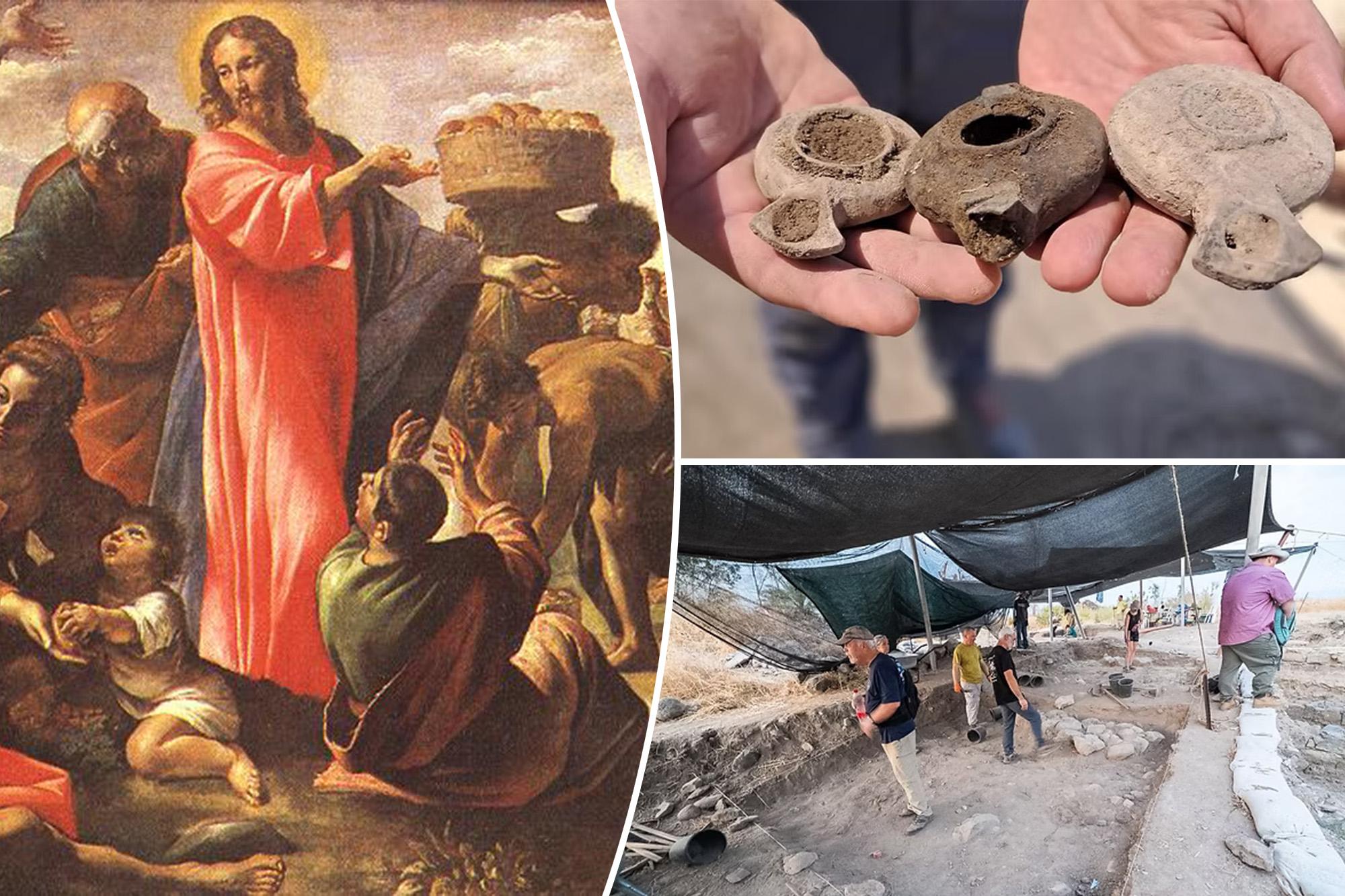
The Bethsaida-Julias excavation team recovered lamps, make-up tools, coins and dozens of other artifacts from the shores of the Sea of Galilee in its 10th season of digging, solidifying their longtime theory that it was once the ancient city where Jesus is said to have performed a litany of miracles.
“What we try to take into account is the accumulation of collected evidence from all the squares that paints a portrait of the historical profile of the ancient site. That picture is becoming clearer with each season,” Dr. Steven Notley, the excavation’s academic director, wrote in a blog post earlier this month.
Notley and his team have spent the past decade digging through the ruins of the historical site, today known as el-Araj.
This 10th season greatly expanded their understanding of Bethsaida-Julias in the Roman period, which ranged from the first through third century — but artifacts from other ancient eras were found scattered throughout the sprawling area.
They also found “Roman-period walls, a basalt mortar (grinding stone), coins, and a fascinating half Doric capital that likely decorated a public building” — as well as hints that an earlier Hellenistic settlement was hiding below the dirt, Notley wrote.
The team determined that the Ottoman-period Syrian owner of Beit Habek had built his stables on top of earlier Roman structures without relying on a foundation — an ancient decision that shockingly did not result in the stone walls cracking or collapsing by the time the Bethsaida-Julias team discovered them.
The crew also found chalk stoneware and several intact Herodian lamps, which were only made in Jerusalem before 70 CE — definitive markers that Jewish people lived in the city in the first century, when it transitioned from Bethsaida to a Roman-period polis called Julias, according to the blog.
The extravagant findings seemingly challenge the notions that the people of Galilee were poor, illiterate peasants — instead suggesting that the towns and villages Jesus visited were thriving, even under Roman occupation.
The successful season only confirms claims Notley has made years earlier that the site is the lost city of Bethsaida.
“Everything we bring out of the ground affirms and strengthens that identification. Nothing that we have found would challenge it at all,” Notley told the Daily Mail.
“I have no difficulty seeing Jesus spending considerable time there,” he said, adding that he calls it “the last lost city of the Gospels.”
Jesus restored a blind man’s sight in the city, according to the Bible, and fed thousands with five loaves of bread and two fish.
Apostles Peter, Andrew and Philip are also believed to have called Bethsaida home.
The Bethsaida-Julias excavation team has been digging the site at El-Araj since 2016 and has uncovered mosaic masterpieces, churches, house walls and more over the years.