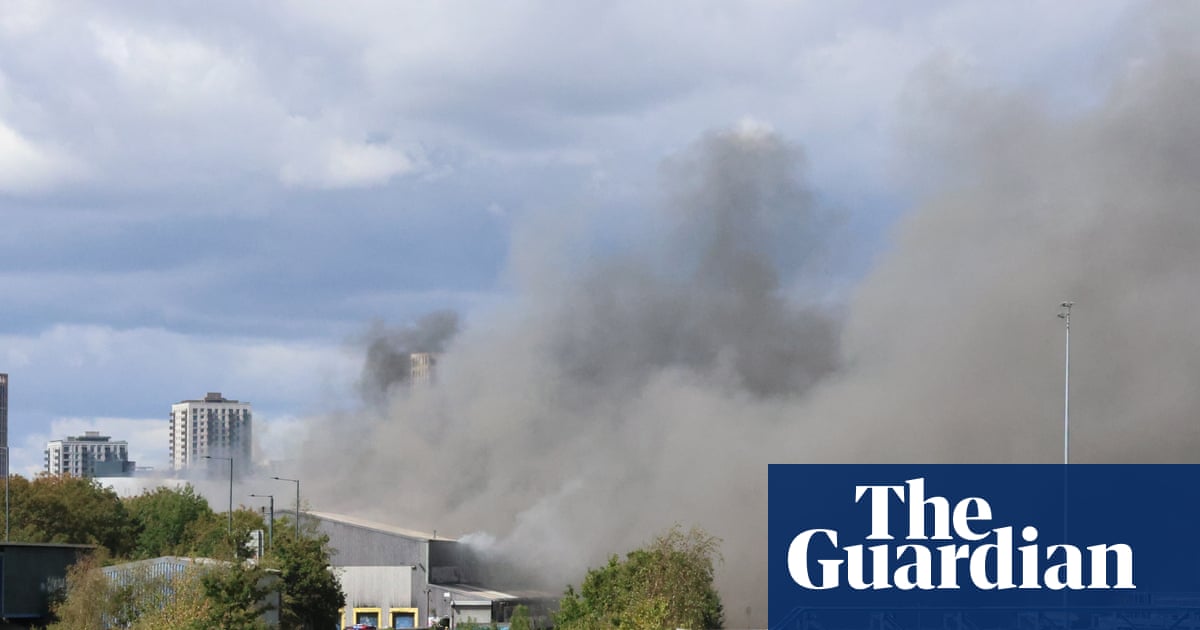
Thick smoke from the fire billows over railway lines near the waste facility in Neasden. Photograph: Martin Evans/PAView image in fullscreenThick smoke from the fire billows over railway lines near the waste facility in Neasden. Photograph: Martin Evans/PALarge fire near Wembley Stadium disrupts tube and rail servicesAbout 125 firefighters tackle blaze at Neasden waste facility as nearby Amazon warehouse is evacuated
A large fire has broken out at a waste facility close to Wembley Stadium in north-west London, disrupting tube and train lines in the area.
Twenty fire engines and about 125 firefighters were sent to tackle the blaze at a mixed-waste facility on an industrial estate in Neasden, just under a mile from the venue.
Huge plumes of smoke could be seen in videos posted on social media, and more than 70 calls were made about the blaze.
There was no service on the entire Metropolitan line, which runs close to the blaze, and no service between Wembley Park and West Hampstead on the Jubilee line, with severe delays on the rest of the line, Transport for London said.
Rail services into London Marylebone were also disrupted.
View image in fullscreenAbout 125 firefighters and 20 fire engines were sent to tackle the blaze. Photograph: Rasid Necati Aslim/Anadolu/Getty ImagesA nearby Amazon warehouse, which is not related to the industrial unit involved, has been evacuated, according to PA Media.
The London fire brigade said: “Tube services on the Metropolitan and Jubilee lines will be impacted as crews respond. Rail services into London Marylebone are also disrupted as a result of this fire.”
It is the third major fire at a recycling centre in London this summer after two incidents at the Landmann Way Reuse and Recycling Centre in south-east London.
Fires at recycling centres caused by wrongly discarded lithium batteries, such as those found in vapes, are occurring at the rate of more than 10 a week, according to figures from the Environmental Services Association.
Battery fires at waste facilities are estimated to cost £1bn a year and are causing growing frustration among fire chiefs.